Battlefield Atlas
World War II · 1942 First 3 stages free

Stalingrad, August 1942 - February 1943

From August 1942 to February 1943 the German Sixth Army and Fourth Panzer Army, with Romanian, Italian and other Axis allies on their flanks, fought the Red Army for Stalingrad, the industrial city on the Volga that carried Stalin's name. Reaching the river on 23 August, the Germans spent the autumn taking the city block by block, factory by factory, while Vasily Chuikov's 62nd Army clung to a strip of the west bank fed by night crossings. On 19 November the Soviet Operation Uranus broke the Romanian armies guarding the flanks and on the 23rd closed a ring around the Sixth Army. Manstein's relief attempt stalled in December, and the Don Front's Operation Ring destroyed the pocket in January. Field Marshal Friedrich Paulus surrendered in the basement of the Univermag on 31 January, and the last Germans in the factory district on 2 February 1943. The U.S. Army's official history estimates German losses in the pocket at somewhat over 200,000 men; by Soviet figures, as the official histories cite them, about 91,000 were taken prisoner, including 24 generals, and about 147,000 German dead were counted; Soviet losses, never fully released, were also very heavy, and much of the city's civilian population was killed or displaced.

Play the first 3 stages free8 stages on modern satellite imagery and terrain, with 3D elevation

The first 3 of its 8 stages are free to play. The rest opens with Battlefield Explorer ($4.99 a month or $39 a year), which unlocks every battle in the atlas and every one added later. Lifetime access and war packs are one-time options. Free battles include Thermopylae, Plataea, Actium, Viking raid on Lindisfarne, Hastings, Hattin, Agincourt, Vítkov Hill, Kutná Hora, Fall of Constantinople, First St Albans, Lützen, Siege of Buda, Culloden, Fort William Henry, Yorktown, Lake Erie, Waterloo, The Alamo, Monterrey, Antietam, Little Bighorn, Manila Bay, Belleau Wood, Saint-Mihiel, Omaha Beach, Inchon, Ia Drang, Goose Green, 73 Easting, Wanat, Baghdad Thunder Runs, Manbij, Battle of Raqqa, Donetsk Airport, Ilovaisk, Debaltseve, Battle of Kyiv, Battle of Hostomel Airport, Siege of Mariupol, Bilohorivka (Siverskyi Donets crossing), Kharkiv counteroffensive, Kherson counteroffensive, Bakhmut, Vuhledar, Mala Tokmachka and Robotyne, Avdiivka, Kursk incursion.

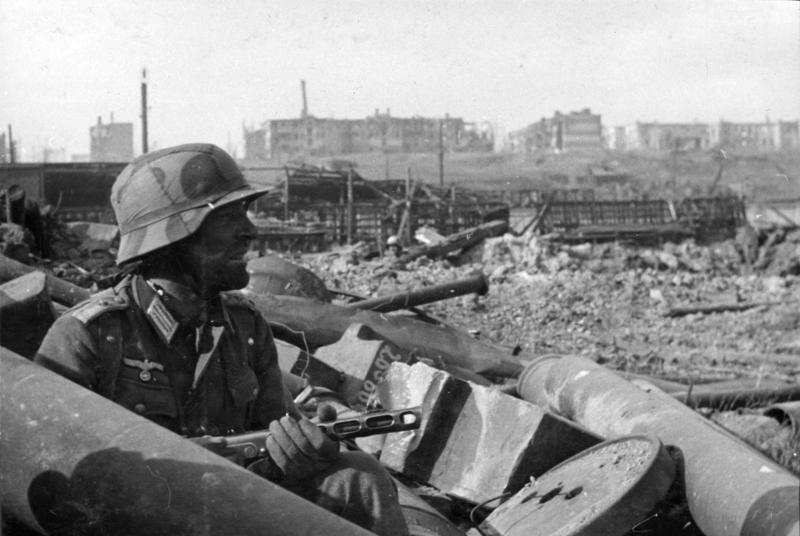
24th Panzer Division at the southern station
24th Panzer Division at the southern station — Propaganda-Kompanie (Geller) · public domain

The battle, stage by stage

  1. 23 August 1942

    To the Volga

    Before dawn on 23 August the XIV Panzer Corps breaks out of the Sixth Army's bridgehead over the Don at Vertyachy behind a curtain of bombs laid by the Luftwaffe's VIII Air Corps. In a little over twelve hours the 16th Panzer Division covers about 36 miles and reaches the Volga at Rynok, just north of Stalingrad's factory district, with the 3rd and 60th Motorized Infantry Divisions strung out behind it along a narrow corridor. The same day the bombers drop, by the U.S. Army official history's count, about 1,000 tons ahead of the panzer corps and on the northern quarter of the city (other research suggests the total covers several days); large parts of the city burn over the following days and civilian deaths are heavy (estimates vary widely). The authorities begin evacuating non-essential civilians across the river. Workers' militia, NKVD troops and anti-aircraft gunners meet the panzers at the edge of the tractor factory. On the 26th the corps reports it cannot hold the Volga without help; Paulus replies: 'Do not retreat.'

  2. 13-27 September 1942

    The center, the kurgan and the crossing

    On 12 September Lieutenant General Vasily Chuikov takes command of the 62nd Army. The next day the LI Corps (Seydlitz) attacks the center. The LI Corps (71st Infantry Division) takes the main station by midday on the 14th; it changes hands repeatedly until about 18 September. The 71st reaches the Volga at the waterworks, while the 295th fights for Mamayev Kurgan (Height 102), the old burial mound that overlooks the whole city. South of the Tsaritsa gorge the XXXXVIII Panzer Corps - 24th Panzer, 94th Infantry and 29th Motorized - pushes toward the river; the concrete grain elevator, held by remnants of the 35th Guards Rifle Division and 10th Rifle Brigade with naval infantry of the 92nd Rifle Brigade, holds out until the night of 21-22 September. On the night of 14-15 September Major General Aleksandr Rodimtsev's 13th Guards Rifle Division, about 10,000 men, crosses under fire to the central landing stage. The kurgan changes hands repeatedly (Soviet and German records disagree on who held its crest). On 26 September Paulus reports the center taken, but the Guards keep a strip along the bank; from the 27th a platoon holds the apartment block on 9 January Square now known as Pavlov's House.

  3. 14-31 October 1942

    The factory district

    After a pause to regroup - by 6 October Sixth Army's average infantry battalion is down to about 3 officers, 11 NCOs and 62 men - the main assault falls on the factories. On 14 October, after one of the heaviest air attacks of the battle, the 14th Panzer Division, with the 305th Infantry on its left, attacks the Dzerzhinsky Tractor Factory; they are into the tractor factory by 10 AM, and by 7 AM on the 15th a panzer grenadier regiment has reached the Volga, splitting the 62nd Army and surrounding the remnants of the 37th Guards Rifle Division in the workshops. The 305th then turns south: the Barrikady gun factory is half taken on the 16th and largely taken on the 17th. The 37th Guards' surviving 118th Rifle Regiment comes under Colonel Ivan Lyudnikov's 138th Rifle Division, which holds the bank east of the Barrikady. On 23 October the 79th Infantry Division storms the Red October steel works, defended by the 39th Guards and the 193rd Rifle Division, but cannot take the furnace hall in its south-eastern corner. To the north Colonel Gorokhov's group holds out at Rynok and Spartanovka. By late October the 62nd Army holds only bridgeheads about half a mile deep along the river.

  4. 11 November 1942

    Hubertus and Lyudnikov's Island

    Sixth Army's last attempt to clear the bank is a set-piece assault by seven assault engineer battalions brought in for the purpose, backed by the 305th and 389th Infantry Divisions. Four hours before daylight on 11 November they attack east of the Barrikady; by nightfall one spearhead has reached the cliff above the river and another the shore, and the engineers have lost about 30 percent of their men. Colonel Ivan Lyudnikov's 138th Rifle Division, with the survivors of the 37th Guards and 308th, is cut off on a strip of riverbank a few hundred yards wide - 'Lyudnikov's Island' - and holds it until relieved on 21 December. A secondary attack at Red October, including the Croatian 369th Infantry Regiment, makes little headway. Sixth Army calls the day 'a partial success'.

  5. 19-23 November 1942

    Operation Uranus

    At 7:30 AM on 19 November some 3,500 Soviet guns and mortars open fire on the Romanian Third Army along the Don. The 5th Tank Army and 21st Army of the Southwestern Front break through from the Serafimovich and Kletskaya bridgeheads by noon, and the Romanian line collapses; the XXXXVIII Panzer Corps, the only armored reserve, fails to stop them and falls back to the Chir. On the 20th the Stalingrad Front's 57th and 51st Armies break the Romanian Fourth Army south of the city. Before dawn on the 22nd a detachment of the 26th Tank Corps, led by captured vehicles, seizes the Don bridge at Kalach intact. Late on the 23rd the 4th Tank Corps meets the 4th Mechanized Corps at Sovetsky: the Sixth Army and part of the Fourth Panzer Army - a force the official history puts 'in the hundreds of thousands' - are encircled. On the 24th Hitler orders Paulus to hold, trusting Goering's promise to supply the pocket by air.

  6. 12-24 December 1942

    Winter Storm

    Field Marshal Erich von Manstein's Army Group Don attempts a relief. On 12 December the LVII Panzer Corps, with the 6th and 23rd Panzer Divisions, attacks north-east from Kotelnikovo; it forces the Aksay and on the 19th reaches the Myshkova River, about 35 miles from the pocket, joined late by the 17th Panzer Division. On 19 December, by the official histories' account, Hitler refuses to approve a breakout by the Sixth Army ('Donnerschlag'). The Soviet 2nd Guards Army moves in to block the Myshkova, and from 16 December the Southwest Front's offensive on the middle Don (Operation Little Saturn), which Moscow to Stalingrad records breaking the Italian Eighth Army's line, threatens Army Group Don's rear. From the 24th the relief force is driven back toward Kotelnikovo. The airlift, needing several hundred tons a day, averages about 90 tons a day through 23 December.

  7. 10-26 January 1943

    Operation Ring

    After Paulus rejects a surrender demand, the Don Front under Colonel General Konstantin Rokossovsky opens Operation Ring (Koltso) on 10 January, attacking from the west. The pocket's main airfield at Pitomnik falls on 16 January, and landings at Gumrak are interrupted from the 17th; starving, frozen troops fall back into the ruins of the city. On 26 January the 21st Army's tanks meet the 62nd Army at Mamayev Kurgan, splitting what is left of the Sixth Army into a southern pocket around the city center and a northern pocket in the factory district.

  8. 31 January - 2 February 1943

    Surrender

    Hitler promotes Paulus to field marshal on 30 January; no German field marshal had ever been captured. The next morning troops of the 64th Army's 38th Motorized Rifle Brigade under Colonel I. D. Burmakov reach the square outside the Univermag department store, whose basement holds the Sixth Army's headquarters; officers go down to negotiate, and the 64th Army's chief of staff, I. A. Laskin, arrives to receive the surrender of Paulus and the southern enclave on 31 January; the remnants of the LI and VIII Corps nearby surrender the same day (the XIV Panzer Corps had ceased to exist on the 29th). The northern pocket under General Karl Strecker, about 33,000 men around the tractor factory, sends its last message at 8:40 AM on 2 February. By Soviet figures, as the U.S. Army official histories cite them, about 91,000 prisoners, including 24 generals, go into captivity, and about 147,000 German dead are counted on the field.

Forces

Sixth Army and its allies were outnumbered once the Soviets massed for Uranus: about 246,000 were drawing rations in the pocket in December (German records), against a Don Front of 281,000 men in January by Soviet figures, while the Romanian armies on the flanks numbered about 231,000. Totals vary by source and by date.

Axis (German Sixth Army and Fourth Panzer Army; Romanian Third and Fourth Armies)

Ration strength in the pocket, 18 December 1942246,000 (about 200,000–250,000)

Sixth Army's report (Arntz, from German records, cited by the U.S. Army history), including 13,000 Romanians, 19,300 Russian auxiliaries and 6,000 wounded, and not a combat strength; a Soviet official history gives 250,000. Rokossovsky expected 80,000–85,000 and found closer to 200,000; the CMH's own estimate is 'somewhat over 200,000'. Ziemke & Bauer, Moscow to Stalingrad: Decision in the East (CMH Pub 30-12), ch. XXIII, Stalingrad, Finale; Ziemke, Stalingrad to Berlin: The German Defeat in the East (CMH Pub 30-5), ch. 4

Front-line infantry, Sixth Army66,500 in mid-October; 25,000 by 21 December

Sixth Army reports cited by the U.S. Army history; by early October the average battalion was down to 3 officers, 11 NCOs and 62 men. Ziemke & Bauer, Moscow to Stalingrad: Decision in the East (CMH Pub 30-12), ch. XXIII, Stalingrad, Finale; Ziemke & Bauer, Moscow to Stalingrad: Decision in the East (CMH Pub 30-12), ch. XIX, From the Don to the Volga

Romanian Third and Fourth Armies, November 1942about 231,000 (230,782–235,000)

Boaru's table gives 230,782 (Antonescu's memorandum 231,916); World War II Today gives some 235,000. Gheorghe Boaru, '82 Years Since the Battle of Stalingrad', Annals of the Academy of Romanian Scientists, Series on Military Sciences (2025); World War II Today, 'Stalingrad: the fate of the Romanians'

Tanks in the pocketabout 100 (early December) (100–300)

Sixth Army's own report as of early December; Soviet histories credited it with 250 or 300 tanks. Ziemke & Bauer, Moscow to Stalingrad: Decision in the East (CMH Pub 30-12), ch. XXIII, Stalingrad, Finale

Soviet (62nd Army under Chuikov; Stalingrad, Don and Southwestern Fronts)

Don Front around the pocket, early January 1943281,000 men and 250 tanks (212,000–281,000)

Soviet figures cited in the U.S. Army history (seven armies); another Soviet official history gives 212,000. Ziemke, Stalingrad to Berlin: The German Defeat in the East (CMH Pub 30-5), ch. 4; Ziemke & Bauer, Moscow to Stalingrad: Decision in the East (CMH Pub 30-12), ch. XXIII, Stalingrad, Finale

Guns and mortars opening Operation Uranus, 19 Novemberabout 3,500

Against the Romanian Third Army (U.S. Army history). For Operation Ring Soviet histories give 6,200 or 6,860 Soviet guns against 3,770 or 4,130 German. Ziemke & Bauer, Moscow to Stalingrad: Decision in the East (CMH Pub 30-12), ch. XXII, Thrust and Counterthrust; Ziemke & Bauer, Moscow to Stalingrad: Decision in the East (CMH Pub 30-12), ch. XXIII, Stalingrad, Finale

Ferried across the Volga, 1–19 November160,000 troops, 430 tanks

Carried by the Volga Flotilla in the buildup for the counteroffensive, with 600 guns and 14,000 vehicles (U.S. Army history). Johnson puts the Soviet force that struck the flanks at about 1.2 million. Ziemke & Bauer, Moscow to Stalingrad: Decision in the East (CMH Pub 30-12), ch. XXII, Thrust and Counterthrust; Ian Johnson, 'Stalingrad at 75, the Turning Point of World War II in Europe', Origins (Ohio State University), 2017

Casualties

Stalingrad was one of the costliest battles in history: the Germans lost somewhat over 200,000 men in the pocket alone (U.S. Army estimate), about 91,000 of them captured by Soviet count, the Romanian armies about 157,000, and the Red Army more than a million casualties by post-1991 Russian figures. Totals are approximate and Soviet and civilian losses especially uncertain. Certainty: fair.

Axis (German Sixth Army and Fourth Panzer Army; Romanian Third and Fourth Armies)

German losses in the Stalingrad pocket (all causes)somewhat over 200,000

The U.S. Army official history's own estimate; it says the exact total was apparently never determined, and that about 30,000 wounded were flown out during the siege. Sixth Army had already reported losses of 1,068 officers and 39,000 men from crossing the Don on 21 August to 17 October, and 28,000 men from 22 November to 23 December. Ziemke & Bauer, Moscow to Stalingrad: Decision in the East (CMH Pub 30-12), ch. XXIII, Stalingrad, Finale; Ziemke, Stalingrad to Berlin: The German Defeat in the East (CMH Pub 30-5), ch. 4; Ziemke & Bauer, Moscow to Stalingrad: Decision in the East (CMH Pub 30-12), ch. XXII, Thrust and Counterthrust

Killed (Soviet count)about 147,000

A Soviet figure: Moscow to Stalingrad cites Soviet accounts that 147,000 German dead were counted on the battlefield, while Stalingrad to Berlin cites the same Soviet history as 147,200 killed and wounded; the U.S. Army historians call the Soviet figures apparently high. Ziemke & Bauer, Moscow to Stalingrad: Decision in the East (CMH Pub 30-12), ch. XXIII, Stalingrad, Finale; Ziemke, Stalingrad to Berlin: The German Defeat in the East (CMH Pub 30-5), ch. 4

Romanian Third and Fourth Armies (killed, wounded and missing)about 157,000 (156,854–160,000)

Marshal Antonescu's memorandum of 7 January 1943 gave 156,854 lost, other Romanian sources 158,458 (as cited by Boaru); World War II Today gives about 160,000 dead, wounded or missing of some 235,000 men. Gheorghe Boaru, '82 Years Since the Battle of Stalingrad', Annals of the Academy of Romanian Scientists, Series on Military Sciences (2025); World War II Today, 'Stalingrad: the fate of the Romanians'

Axis killed or captured, whole Stalingrad campaignmore than 600,000

Glantz's estimate for the five Axis armies (two German) destroyed or badly damaged; it covers the wider campaign, including the Romanian and Italian armies, not only the city and the pocket. Encyclopedia.com, 'Stalingrad, Battle of': entries by David M. Glantz (Encyclopedia of Russian History) and Bruce W. Menning (Encyclopedia of Modern Europe)

Soviet (62nd Army under Chuikov; Stalingrad, Don and Southwestern Fronts)

Casualties (killed, missing, captured, wounded and sick)more than 1,000,000

The Soviet Union did not release figures (the U.S. Army history, 1987, says so); post-1991 Russian figures put Soviet casualties at slightly more than a million (Menning), and Glantz gives more than one million for the defensive and offensive operations together. Encyclopedia.com, 'Stalingrad, Battle of': entries by David M. Glantz (Encyclopedia of Russian History) and Bruce W. Menning (Encyclopedia of Modern Europe); Ziemke & Bauer, Moscow to Stalingrad: Decision in the East (CMH Pub 30-12), ch. XXIII, Stalingrad, Finale

Killed, missing or capturedabout 480,000–500,000 (480,000 to almost 500,000)

Menning gives 480,000 dead or missing from post-1991 Russian figures; Glantz gives almost 500,000 dead, missing or captured. Encyclopedia.com, 'Stalingrad, Battle of': entries by David M. Glantz (Encyclopedia of Russian History) and Bruce W. Menning (Encyclopedia of Modern Europe)

Captured by Sixth Army, 21 August–17 October 194257,800

Sixth Army's own report, used by its staff to gauge Soviet losses: 17,900 of them taken after 13 September. Ziemke & Bauer, Moscow to Stalingrad: Decision in the East (CMH Pub 30-12), ch. XXII, Thrust and Counterthrust

Civilians

Civilians killedunknown; estimates range from a few thousand to tens of thousands (3,931 (local count, July–October) to up to 70,000)

Kucherenko (National WWII Museum) gives up to 70,000 civilian deaths from the bombing that began on 23 August and notes the figures are contested; warhistory.org calls 40,000 the standard figure but argues it is exaggerated, citing a Soviet assessment of over 1,815 dead for the six days of heaviest raids and a local civil defense count of 3,931 deaths from July to October 1942. Olga Kucherenko, 'Unsung Witnesses of the Battle of Stalingrad', The National WWII Museum; warhistory.org, 'The Luftwaffe Bombing of Stalingrad' (2020)

Population and displacementabout 500,000 in the city in late summer 1942

The U.S. Army history gives a population just under half a million; Kucherenko says about 100,000 had been evacuated by the evening of 23 August, about 250,000 remained in the German-held part of the city in mid-October, and no more than 15,000 by the end of the year. Ziemke & Bauer, Moscow to Stalingrad: Decision in the East (CMH Pub 30-12), ch. XIX, From the Don to the Volga; Olga Kucherenko, 'Unsung Witnesses of the Battle of Stalingrad', The National WWII Museum

Then and now: how the ground has changed

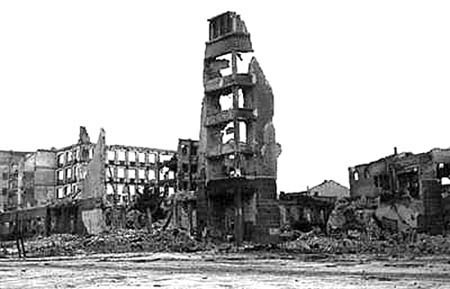
The city the armies fought over is gone: more than 90 percent of its housing was destroyed and Stalingrad was rebuilt on the same site from 1943, so only a few deliberately kept ruins (the mill, Lyudnikov's Island) survive among postwar streets, rebuilt factories and the memorial landscape of Mamayev Kurgan. The Volga itself has been dammed just upstream and joined to the Don by canal since the battle.

Weapons

Axis (German Sixth Army and Fourth Panzer Army; Romanian Third and Fourth Armies)

Panzer IV (long-barrelled)

Panzer IV (long-barrelled)

Medium tank · 1939–1945

At Stalingrad: Long-barreled Panzer IVs led the drives of XIV Panzer Corps.

The long-gunned Panzer IV 'Special' formed the hitting power of the 10th and 21st Panzer Divisions in Tunisia. With Panzer IIIs it caught Alger's Shermans in the open near Sidi Bou Zid on 15 February.

Crew
5
Armament
7.5 cm KwK 40 L/43 (Ausf. F2/G)
Weight
about 23–25 metric tons
Photo: Bundesarchiv, Bild 101I-788-0017-20 / Dullin · CC BY-SA 3.0 de
MG 42

MG 42

General-purpose machine gun · 1942–1945 (German service; derivatives still in use)

At Stalingrad: German infantry fought through the factory district with MG 42s.

Built largely from stamped steel parts, the MG 42 was cheap to make and fired so fast that its sound was often likened to ripping cloth. Its quick-change barrel let a crew keep up heavy fire, and its design lives on in postwar guns such as the MG3.

Caliber
7.92×57mm Mauser
Rate of fire
about 1,200 rounds/min
Weight
about 11.6 kg (gun on bipod)
Photo: baku13 · CC BY-SA 3.0
Karabiner 98k

Karabiner 98k

Bolt-action rifle · 1935–1945

At Stalingrad: Standard German infantry rifle.

A shortened, modernized descendant of the Gewehr 98, the Kar98k was the standard rifle of the German armed forces in World War II. Accurate and robust, it was produced in the millions.

Caliber
7.92×57mm Mauser
Effective range
about 500 m (iron sights)
Magazine
5-round internal box
Photo: Armémuseum (Swedish Army Museum) · Public domain

Soviet (62nd Army under Chuikov; Stalingrad, Don and Southwestern Fronts)

PPSh-41

PPSh-41

7.62 mm submachine gun · 1941–1950s (Chinese Type 50 copy in Korea)

At Stalingrad: Soviet storm groups in the ruins relied on PPSh-41 submachine guns.

The Soviet wartime submachine gun, simple to make and fast-firing. China copied it as the Type 50, and Chinese assault troops used it in great numbers in the night attacks of the Korean War.

Caliber
7.62×25 mm
Magazine
71-round drum or 35-round box
Rate
about 900–1,000 rounds a minute
Photo: PPSh-41, National Museum of Scotland · 501ghost · CC0

Paintings and photographs

24th Panzer Division at the southern station
24th Panzer Division at the southern station German soldiers of the 24th Panzer Division in action in the fight for Stalingrad's southern station, 15 September 1942. The station is not marked on this map; pinned with the 24th Panzer Division, approximate. Propaganda-Kompanie (Geller) · public domain · source
Aerial photograph of Stalingrad, August 1942
Aerial photograph of Stalingrad, August 1942 German aerial photograph of Stalingrad, 13 August 1942 (Bundesarchiv Bild 146-1987-103-28A). The area shown is not recorded; pinned at the city center by the main station, approximate. Bundesarchiv, Bild 146-1987-103-28A · CC BY-SA 3.0 de · source
Burning houses on the advance
Burning houses on the advance Burning houses mark the Sixth Army's fighting on its advance toward Stalingrad, summer 1942. Place not recorded; pinned with the Sixth Army closing up from the Don, approximate. Bundesarchiv, Bild 169-0900 · CC BY-SA 3.0 de · source
Field service before Stalingrad
Field service before Stalingrad A German field church service before Stalingrad, August 1942. Place not recorded; pinned with the Sixth Army closing up from the Don, approximate. Bundesarchiv, Bild 169-0950 · CC BY-SA 3.0 de · source
Knocked-out KV-1 in the steppe
Knocked-out KV-1 in the steppe A knocked-out Soviet KV-1 tank after the tank battle in the steppe before Stalingrad, August 1942. Place not recorded; pinned with the 62nd Army on the approaches west of the city, approximate. Bundesarchiv, Bild 169-0441 · CC BY-SA 3.0 de · source
Knocked-out KV-1 in the steppe (2)
Knocked-out KV-1 in the steppe (2) Another knocked-out KV-1 after the August 1942 tank battle in the steppe before the city. Place not recorded; pinned with the 62nd Army west of the city, approximate. Bundesarchiv, Bild 169-0443 · CC BY-SA 3.0 de · source
Knocked-out KV-1 in the steppe (3)
Knocked-out KV-1 in the steppe (3) A third view from the aftermath of the August 1942 tank battle in the steppe before Stalingrad. Place not recorded; pinned with the 62nd Army west of the city, approximate. Bundesarchiv, Bild 169-0444 · CC BY-SA 3.0 de · source
Briefing in the Kalmyk steppe
Briefing in the Kalmyk steppe A company commander and a platoon leader confer in the Kalmyk steppe before Stalingrad, late summer 1942. Place not recorded; pinned with the Fourth Panzer Army south-west of the city, approximate. Bundesarchiv, Bild 169-0952 · CC BY-SA 3.0 de · source
Soviet aircraft over the front
Soviet aircraft over the front A formation of Soviet aircraft flies over the front before Stalingrad, 1942. Place not recorded; pinned on the western approaches, approximate. Bundesarchiv, Bild 169-0019 · CC BY-SA 3.0 de · source
Road sign near Stalingrad
Road sign near Stalingrad A German road sign near Stalingrad, 1942 (Bundesarchiv Bild 101I-218-0506-31). Place not recorded; pinned on the western approaches, approximate. Bundesarchiv, Bild 101I-218-0506-31 / Sautter · CC BY-SA 3.0 de · source
A rifle section moves up to attack
A rifle section moves up to attack A Soviet rifle section moves up to its attack line in the Stalingrad area, August-September 1942. Photograph by Arkady Shaikhet. Place not recorded; pinned with the 62nd Army west of the city, approximate. Arkady Shaikhet (Moscow Main Archive) · CC BY 4.0 · source
The Children's Khorovod fountain, 23 August 1942
The Children's Khorovod fountain, 23 August 1942 Emmanuil Evzerikhin's photograph of the "Children's Khorovod" fountain on the station square after the German air raid of 23 August 1942, the day the station was bombed. Emmanuil Evzerikhin · public domain · source
A bombed railway station
A bombed railway station German photograph of a railway station in Stalingrad after bombing by the Luftwaffe, late August 1942. The station is not named; pinned at the main station, approximate. Bundesarchiv, Bild 183-B22081 · CC BY-SA 3.0 de · source
Buildings after German bombing
Buildings after German bombing Buildings in Stalingrad after German bombing, 1942. Place not recorded; pinned with the bombing of the northern quarter on 23 August, approximate. Unknown photographer · public domain · source
Buildings after German bombing (2)
Buildings after German bombing (2) Buildings in Stalingrad after German bombing, 1942. Place not recorded; pinned with the bombing of the northern quarter, approximate. Unknown photographer · public domain · source
Buildings after German bombing (3)
Buildings after German bombing (3) Buildings in Stalingrad after German bombing, 1942. Place not recorded; pinned with the bombing of the northern quarter, approximate. Unknown photographer · public domain · source
NKVD patrol checks papers
NKVD patrol checks papers A patrol of the 10th NKVD Rifle Division checks documents in the streets of Stalingrad, before the division was withdrawn on 28 September 1942. Place not recorded; pinned with the city defenders, approximate. Unknown Soviet photographer · CC BY-SA 3.0 · source
Civilians in flight
Civilians in flight Civilians fleeing in Stalingrad, 1942 (Bundesarchiv Bild 101I-617-2574-03). Place not recorded; pinned at the city center by the main station, approximate. Bundesarchiv, Bild 101I-617-2574-03 / Ollig · CC BY-SA 3.0 de · source
Soldier in a steppe village
Soldier in a steppe village A German soldier in one of the small villages of the steppe before Stalingrad, which the caption says were given up almost without a fight, September 1942. Place not recorded; pinned with the Sixth Army west of the city, approximate. Bundesarchiv, Bild 169-0020 · CC BY-SA 3.0 de · source
Soldier in a steppe village (2)
Soldier in a steppe village (2) Another photograph from the same series in a steppe village before Stalingrad, September 1942. Place not recorded; pinned with the Sixth Army west of the city, approximate. Bundesarchiv, Bild 169-0022 · CC BY-SA 3.0 de · source
Steppe fire before Stalingrad
Steppe fire before Stalingrad A steppe fire before Stalingrad, autumn 1942. Place not recorded; pinned on the western approaches, approximate. Bundesarchiv, Bild 169-0938 · CC BY-SA 3.0 de · source
Soldiers in house-to-house fighting
Soldiers in house-to-house fighting German soldiers in house-to-house fighting in Stalingrad, 1942 (Bundesarchiv Bild 101I-617-2571-04). Place not recorded; pinned with the 71st Infantry Division in the center, approximate. Bundesarchiv, Bild 101I-617-2571-04 / Ollig · CC BY-SA 3.0 de · source
Infantry with a flamethrower
Infantry with a flamethrower German infantry with a flamethrower in Stalingrad, 1942 (Bundesarchiv Bild 101I-083-3371-11). Place not recorded; pinned with the fighting in the center, approximate. Bundesarchiv, Bild 101I-083-3371-11 · CC BY-SA 3.0 de · source
German infantry in the fight for Stalingrad
German infantry in the fight for Stalingrad German infantry in the fight for Stalingrad, 1942 (Bundesarchiv Bild 146-1971-107-24). Place not recorded; pinned with the fighting in the center, approximate. Bundesarchiv, Bild 146-1971-107-24 · CC BY-SA 3.0 de · source
German infantry in the fight for Stalingrad (2)
German infantry in the fight for Stalingrad (2) German infantry in the fight for Stalingrad, 1942 (Bundesarchiv Bild 146-1971-107-40). Place not recorded; pinned with the fighting in the center, approximate. Bundesarchiv, Bild 146-1971-107-40 · CC BY-SA 3.0 de · source
German infantry in the fight for Stalingrad (3)
German infantry in the fight for Stalingrad (3) German infantry in the fight for Stalingrad, 1942 (Bundesarchiv Bild 146-1974-107-66). Place not recorded; pinned with the fighting in the center, approximate. Bundesarchiv, Bild 146-1974-107-66 · CC BY-SA 3.0 de · source
Infantryman before Stalingrad
Infantryman before Stalingrad A German infantryman in the house-to-house fighting for Stalingrad, September 1942, from a propaganda series. Place not recorded; pinned with the fighting in the center, approximate. Bundesarchiv, Bild 183-B22173 / Kaufmann · CC BY-SA 3.0 de · source
Sniper in position
Sniper in position A Sixth Army sniper in his position before Stalingrad, September 1942. Place not recorded; pinned with the fighting in the center, approximate. Bundesarchiv, Bild 169-0526 · CC BY-SA 3.0 de · source
View of southern Stalingrad
View of southern Stalingrad View over southern Stalingrad, autumn 1942. Place not recorded; pinned with the 94th Infantry Division south of the Tsaritsa, approximate. Bundesarchiv, Bild 169-0882 · CC BY-SA 3.0 de · source
Ruins of southern Stalingrad
Ruins of southern Stalingrad Ruins in southern Stalingrad, autumn 1942. Place not recorded; pinned with the 94th Infantry Division south of the Tsaritsa, approximate. Bundesarchiv, Bild 169-0902 · CC BY-SA 3.0 de · source
German soldiers in the ruins
German soldiers in the ruins Luftwaffe ground troops moving through destroyed streets in Stalingrad. Photographed by Rothkopf in October 1942. Place not recorded; pinned in the city center, approximate. Bundesarchiv, Bild 183-B22478 / Rothkopf · CC BY-SA 3.0 de · source
Rodimtsev with men of the 13th Guards
Rodimtsev with men of the 13th Guards Major General Aleksandr Rodimtsev with soldiers of his 13th Guards Rifle Division in Stalingrad, 1942. Photograph by Yakov Ryumkin. Pinned with the division in the center. Yakov Ryumkin · CC BY 4.0 · source
Soviet troops in a lull
Soviet troops in a lull Soviet troops during a lull in the fighting at Stalingrad. Photographed by Georgy Zelma on 7 January 1943. Place not recorded; pinned with the 13th Guards Rifle Division by Pavlov's House, approximate. RIA Novosti archive, #137429 / Georgy Zelma · CC BY-SA 3.0 · source
Soviet naval infantry on the Volga bank
Soviet naval infantry on the Volga bank Soviet naval infantry on the banks of the Volga at Stalingrad. Place not recorded; pinned at the central landing stage, approximate. Unknown Soviet photographer · public domain · source
In the city, 1942
In the city, 1942 Soviet photograph by Georgy Zelma in Stalingrad, 1942. Place not recorded; pinned at the city center by the main station, approximate. Georgy Zelma · public domain · source
Soldiers crawling through the rubble
Soldiers crawling through the rubble Soviet soldiers crawling through the rubble of Stalingrad, photographed by Georgy Zelma. Place not recorded; pinned at the city center by the main station, approximate. Georgy Zelma · public domain · source
Resting troops
Resting troops Troops resting in Stalingrad, 1942. Place not recorded; pinned at the city center by the main station, approximate. Unknown Soviet photographer · public domain · source
Stalingrad at war, 1942
Stalingrad at war, 1942 Stalingrad at war, 1942. Place not recorded; pinned at the city center by the main station, approximate. Unknown Soviet photographer · public domain · source
62nd Army soldiers in the ruins
62nd Army soldiers in the ruins Soviet soldiers of the 62nd Army in action in the ruins of Stalingrad, December 1942. Place not recorded; pinned with the 62nd Army on the Volga, approximate. Unknown Soviet photographer · public domain · source
At the 62nd Army command post
At the 62nd Army command post At the 62nd Army command post, 1942. The post's place is not recorded; pinned with the 62nd Army on the Volga, approximate. Unknown Soviet photographer · public domain · source
A woman cooking in the ruins
A woman cooking in the ruins A Stalingrad resident cooks on the wrecked stove of her house, October 1942. Place not recorded; pinned at the city center by the main station, approximate. Bundesarchiv, Bild 169-0350 · CC BY-SA 3.0 de · source
An improvised stove
An improvised stove An improvised stove dug into the ground by a Stalingrad resident, October 1942. Place not recorded; pinned at the city center by the main station, approximate. Bundesarchiv, Bild 169-0351 · CC BY-SA 3.0 de · source
City views, October 1942
City views, October 1942 Destroyed buildings in Stalingrad, October 1942. Place not recorded; pinned at the city center by the main station, approximate. Bundesarchiv, Bild 169-0498 · CC BY-SA 3.0 de · source
Stuka over Stalingrad
Stuka over Stalingrad A German Junkers Ju 87 "Stuka" dive bomber over Stalingrad during the battle. Photographed by German war correspondent Opitz in October 1942. Bundesarchiv, Bild 183-J20510 / Opitz · CC BY-SA 3.0 de · source
A Stuka pulls out over Stalingrad
A Stuka pulls out over Stalingrad A Ju 87 dive bomber pulls out after releasing its bombs over Stalingrad, 2 October 1942, from the propaganda series "We dive on Stalingrad". Place not recorded; pinned with the dive bombers over the factory district, approximate. Bundesarchiv, Bild 183-1992-0903-502 / Klose · CC BY-SA 3.0 de · source
Ruins after the dive bombers
Ruins after the dive bombers Ruin after ruin in Stalingrad after German bomber attacks, 2 October 1942. Place not recorded; pinned in the factory district, approximate. Bundesarchiv, Bild 183-1992-0903-503 / Klose · CC BY-SA 3.0 de · source
Captain Traub in the rubble
Captain Traub in the rubble Hauptmann Wilhelm Traub, with a captured Soviet PPSh-41 submachine gun, takes cover in the rubble during the fighting in the stores yards, late autumn 1942. Place not recorded; pinned in the factory district at the Barrikady, approximate. Bundesarchiv, Bild 116-168-618 · CC BY-SA 3.0 de · source
305th Infantry Division assault troops in a factory
305th Infantry Division assault troops in a factory Assault troops of the 305th Infantry Division in action in one of Stalingrad's factories, autumn 1942. The factory is not named; pinned with the 305th Infantry Division, approximate. Unknown German photographer · public domain · source
Machine gunner in the line
Machine gunner in the line A German machine gunner in the main battle line, in a switch position before Stalingrad, October 1942. Place not recorded; pinned with the German line north of the city, approximate. Bundesarchiv, Bild 169-0485 · CC BY-SA 3.0 de · source
A burned-out factory
A burned-out factory The burned-out halls of a Stalingrad works wrecked by Stuka bombs, released 16 November 1942. The works is not named; pinned at the Red October steel works, approximate. Bundesarchiv, Bild 146-1978-093-03 / Niermann · CC BY-SA 3.0 de · source
The destroyed Tractor Factory
The destroyed Tractor Factory The destroyed Dzerzhinsky Tractor Factory, released 7 November 1942. Bundesarchiv, Bild 183-B22631 / Bauer-Altvater · CC BY-SA 3.0 de · source
Red October Factory, December 1942
Red October Factory, December 1942 The Red October factory in December 1942, photographed by Georgy Zelma. Georgy Zelma · public domain · source
Food carriers in the gun factory
Food carriers in the gun factory At dawn, food carriers bring rations to the forward German infantry positions in the captured halls of a gun factory in Stalingrad, 22 December 1942. Photograph by Friedrich Gehrmann. Bundesarchiv, Bild 146-2006-0106 / Friedrich Gehrmann · CC BY-SA 3.0 de · source
Command post of the 95th Rifle Division
Command post of the 95th Rifle Division The command post of the 95th Rifle Division in Stalingrad, 1942: Colonel V. A. Gorishny, the division commander, commissar Colonel I. A. Vlasenko (seated), Major G. G. Slutsky and artillery chief Colonel A. A. Dalakishvili. The post's place is not recorded; pinned with the division, approximate. Unknown Soviet photographer · public domain · source
Lyudnikov at the memorial sign
Lyudnikov at the memorial sign Ivan Lyudnikov, Hero of the Soviet Union, at the memorial sign on "Lyudnikov's Island". Mchpv · CC BY-SA 4.0 · source
Ruins of the 138th Rifle Division's command post
Ruins of the 138th Rifle Division's command post The ruins of the 138th Rifle Division's command post beside the football fields of the Rotor training base, 2013. Place not recorded in this map's data; pinned at the Lyudnikov's Island memorial, approximate. Volgograd Oblast Government · CC BY-SA 3.0 · source
View from the 138th Rifle Division's command post
View from the 138th Rifle Division's command post View from the ruins of the 138th Rifle Division's command post at the Rotor training base, 2012. Pinned at the Lyudnikov's Island memorial, approximate. Volgograd Oblast Government · CC BY-SA 3.0 · source
"Rolik" signal dugout memorial
"Rolik" signal dugout memorial The site of the "Rolik" signal dugout of Colonel Lyudnikov's 138th Rifle Division on the Volga bank in Lower Barrikady, 2018. Pinned at the Lyudnikov's Island memorial, approximate. Pavel Belyaev · CC BY-SA 4.0 · source
Monument to four signalmen
Monument to four signalmen The monument at the site of the 138th Rifle Division's "Rolik" signal dugout on the Volga bank in Lower Barrikady, 2018. Pinned at the Lyudnikov's Island memorial, approximate. Yasashka903 · CC BY-SA 4.0 · source
Monument to four signalmen (2)
Monument to four signalmen (2) Another view of the monument at the "Rolik" signal dugout site in Lower Barrikady, 2018. Pinned at the Lyudnikov's Island memorial, approximate. Yasashka903 · CC BY-SA 4.0 · source
Mass grave of the 138th Division's signalmen
Mass grave of the 138th Division's signalmen Mass grave of signalmen of the 138th Rifle Division killed defending Stalingrad, on the Volga bank in Lower Barrikady, 2018. Pinned at the Lyudnikov's Island memorial, approximate. Yasashka903 · CC BY-SA 4.0 · source
Mass grave of the 138th Rifle Division
Mass grave of the 138th Rifle Division Mass grave of soldiers of the 138th Rifle Division killed defending Stalingrad, in a square in Lower Barrikady, 2015. Pinned at the Lyudnikov's Island memorial, approximate. AntiSR · CC BY-SA 4.0 · source
Mass grave of the Barrikady militia
Mass grave of the Barrikady militia Mass grave of the Barrikady factory's workers' militia killed defending Stalingrad, on the Volga bank in Lower Barrikady, 2018. Pinned at the Lyudnikov's Island memorial, approximate. Yasashka903 · CC BY-SA 4.0 · source
Plaque on the militia grave
Plaque on the militia grave The plaque on the mass grave of the Barrikady factory militia, Lower Barrikady, 2018. Pinned at the Lyudnikov's Island memorial, approximate. Pavel Belyaev · CC BY-SA 4.0 · source
The militia grave from the city side
The militia grave from the city side The mass grave of the Barrikady factory militia seen from the city side, Lower Barrikady, 2018. Pinned at the Lyudnikov's Island memorial, approximate. Pavel Belyaev · CC BY-SA 4.0 · source
The militia grave from the river side
The militia grave from the river side The mass grave of the Barrikady factory militia seen from the back, Lower Barrikady, 2018. Pinned at the Lyudnikov's Island memorial, approximate. Pavel Belyaev · CC BY-SA 4.0 · source
Major General Vasily Volsky
Major General Vasily Volsky Major General Vasily T. Volsky, commander of the 4th Mechanized Corps in Operation Uranus, 1942. Pinned with his corps at the closing of the ring. Unknown Soviet photographer · public domain · source
The Stalingrad Madonna
The Stalingrad Madonna The "Stalingrad Madonna", the charcoal drawing Dr. Kurt Reuber made inside the pocket for Christmas 1942. Place not recorded; pinned at Pitomnik airfield in the middle of the pocket, approximate. Kurt Reuber · public domain · source
Bezdetko's mortar battery
Bezdetko's mortar battery Soldiers of Bezdetko's battery of regimental 120 mm mortars fire on German positions, 22 January 1943 (RIA Novosti 58807). Photograph by Georgy Zelma. Place not recorded; pinned with the 62nd Army, approximate. Georgy Zelma (RIA Novosti) · CC BY-SA 3.0 · source
21st and 62nd Armies meet at Mamayev Kurgan
21st and 62nd Armies meet at Mamayev Kurgan Soldiers of the 21st and 62nd Armies meet on the north-western slopes of Mamayev Kurgan, 26 January 1943. Photograph by Yakov Ryumkin. Yakov Ryumkin · public domain · source
An abandoned German airfield
An abandoned German airfield An airfield abandoned by the Germans at Stalingrad, February-March 1943. Photograph by Sergey Strunnikov. The airfield is not named; pinned at Gumrak, approximate. Sergey Strunnikov (Moscow Main Archive) · CC BY 4.0 · source
Red flag over the square, 2 February 1943
Red flag over the square, 2 February 1943 A Red Army soldier raises the Red Banner for the liberation of the city on the square where Paulus's headquarters was, in the central department store (background), 2 February 1943. Photograph by Abram Krichevsky (TASS). Abram Krichevsky (TASS) · public domain · source
Graphic photo: Soviet troops attack, February 1943. This photograph shows a fallen soldier. Tap to view.
Soviet troops attack, February 1943
Soviet troops attack, February 1943 Soviet troops attack German positions with rifles and machine guns, February 1943, with a fallen soldier in the foreground. Photograph by Georgy Zelma. Place not recorded; pinned with the southern pocket, approximate. Georgy Zelma · CC BY-SA 3.0 · source
Graphic photo: The dead of Stalingrad. This photograph shows the dead. Tap to view.
The dead of Stalingrad
The dead of Stalingrad Dead bodies at Stalingrad, 1943. Place not recorded; pinned with the southern pocket, approximate. Unknown Soviet photographer · public domain · source
95th Rifle Division men at the Barrikady
95th Rifle Division men at the Barrikady Soldiers of the 95th Rifle Division (62nd Army) after the liberation of the Barrikady factory, February 1943. Unknown Soviet photographer · public domain · source
The 95th Rifle Division on the last day
The 95th Rifle Division on the last day Men of the 95th Rifle Division on the day the fighting in Stalingrad ended, with Colonel V. A. Gorishny, the division commander, first on the right in the front row and his deputy Colonel I. A. Vlasenko beside him. Place not recorded; pinned with the division, approximate. Unknown Soviet photographer · public domain · source
39th Guards scouts at Red October
39th Guards scouts at Red October A reconnaissance group of the 39th Guards Rifle Division sets out on a mission at the Red October factory, 1943. Unknown Soviet photographer · public domain · source
German prisoners by the grain elevator
German prisoners by the grain elevator Captured German soldiers being led to prisoner camps in Stalingrad, 1943, with the grain elevator and silos behind them. Unknown Soviet photographer · public domain · source
At the elevator, 1943
At the elevator, 1943 At the grain elevator, Stalingrad, February-March 1943. Photograph by Sergey Strunnikov. Sergey Strunnikov (Moscow Main Archive) · CC BY 4.0 · source
The fountain after the battle
The fountain after the battle The "Children's Khorovod" fountain on the station square after the end of the battle, 1943. Photograph by Sergey Strunnikov. Sergey Strunnikov · public domain · source
Destroyed city blocks
Destroyed city blocks Destroyed city blocks, Stalingrad, February-March 1943. Photograph by Sergey Strunnikov. Place not recorded; pinned at the city center by the main station, approximate. Sergey Strunnikov (Moscow Main Archive) · CC BY 4.0 · source
The northern outskirts
The northern outskirts On the northern outskirts of Stalingrad, February-March 1943. Photograph by Sergey Strunnikov. Place not recorded; pinned with the northern pocket, approximate. Sergey Strunnikov (Moscow Main Archive) · CC BY 4.0 · source
Ersatz footwear
Ersatz footwear Improvised German footwear photographed by Sergey Strunnikov at Stalingrad, February 1943. Place not recorded; pinned with the southern pocket, approximate. Sergey Strunnikov (Moscow Main Archive) · CC BY 4.0 · source
German cemetery at Gorodishche
German cemetery at Gorodishche A German cemetery in the village of Gorodishche, February 1943. Photograph by Sergey Strunnikov. Gorodishche is not marked on this map; pinned at Gumrak airfield, approximate. Sergey Strunnikov (Moscow Main Archive) · CC BY 4.0 · source
Stalingrad after the battle
Stalingrad after the battle Stalingrad after the battle. Place not recorded; pinned at the city center by the main station, approximate. Unknown photographer · public domain · source
Panorama museum and Gerhardt mill
Panorama museum and Gerhardt mill The Panorama Museum and the mill ruin left standing as a memorial to the battle, Volgograd, October 2018. Bärbel Miemietz · CC BY-SA 4.0 · source
Colonel Gorokhov's sector from the left bank
Colonel Gorokhov's sector from the left bank Panorama of the sector held by Colonel Gorokhov's group, photographed from the left bank of the Volga near the former settlement of Priverkh, the group's supply point (2016). Pinned with Gorokhov's group. P.Fisxo · CC BY-SA 4.0 · source
Where Gorokhov's group linked up
Where Gorokhov's group linked up The place where Colonel S. F. Gorokhov's group linked up with the troops of the Don Front, 2013. Ufo Snake · CC BY-SA 3.0 · source

Free for everyone every year on its anniversary: August 23 and November 19 and February 2.

Accuracy score: 72/100 (good)

How the accuracy score works

Sources and method

Stalingrad, August 1942 - February 1943. The course of the battle, dates, corps and division assignments, the air raid of 23 August, the crossing of the 13th Guards, the October factory assaults, Uranus, Winter Storm, Operation Ring, the surrender and the casualty and prisoner figures follow, as the key source, the U.S. Army Center of Military History official history: Earl F. Ziemke and Magna E. Bauer, Moscow to Stalingrad: Decision in the East (CMH Pub 30-12, 1987), chapters XIX, From the Don to the Volga, XXII, Thrust and Counterthrust and XXIII, Stalingrad, Finale (HyperWar transcription). Winter Storm follows Earl F. Ziemke, Stalingrad to Berlin: The German Defeat in the East (CMH Pub 30-5), chapters 3 and 4. Prisoner and German-dead figures are Soviet figures as these histories cite them; 'somewhat over 200,000' German losses is the CMH's own estimate. Dispositions on 11 November follow 'Stalingrad - the final German attack' (warhistory.org), and the encirclement of the 37th Guards Rifle Division on 14 October David M. Glantz and Jonathan M. House, Armageddon in Stalingrad (University Press of Kansas, 2009), as cited in reference works. The grain elevator follows Stalingrad Tours; the Univermag surrender details (38th Motorized Rifle Brigade, Burmakov, Laskin) the history of the Square of the Fallen Fighters. The U.S. Army University Press has published a Stalingrad Virtual Staff Ride (2017), a terrain-model package for Army units; no printed staff ride handbook exists. Fixed points: Mamayev Kurgan, Pavlov's House and the Univermag from published point-of-interest coordinates; the Gerhardt mill from Sygic Travel; the tractor factory from ww2db and dark-tourism.com; the Red October plant from the Global Energy Monitor wiki; the Barrikady plant, Pitomnik, Gumrak and Kalach from Wikipedia; the Rynok link-up memorial and the Lyudnikov's Island memorial (pocket held 17 October - 21 December) from TracesOfWar. The Kalach bridge, Sovetsky and the central landing stage are placed approximately from descriptions. Unit blocks show sectors held, not exact lines, and are interpretive, especially in the wide-area stages.

Where the positions come from

Further reading