Battlefield Atlas
World War II · 1944 First 3 stages free

Monte Cassino, January–May 1944

Between January and May 1944 the Allies fought four battles for Cassino, the hinge of Germany's Gustav Line across Italy, where Monte Cassino and its Benedictine abbey overlook the entrance to the Liri valley and the road to Rome. The U.S. Fifth Army's 36th Division failed to cross the Rapido in January and the 34th Division fought its way into the mountains above the town; in February the New Zealand Corps bombed the abbey and failed on Point 593 and at the railway station; in March it bombed the town and fought for Castle Hill and Hangman's Hill. In May the combined offensive Operation Diadem, with the French breaking through the Aurunci Mountains and the British crossing into the Liri valley, forced the German 1st Parachute Division off the massif, and the Polish II Corps took the ruins on 18 May. The Center of Military History counts more than 43,000 Allied and about 38,000 German losses in the campaign that followed to Rome. Thousands of Italian civilians were killed or displaced, and the town of Cassino and the abbey were destroyed; both were rebuilt.

Play the first 3 stages free8 stages on modern satellite imagery and terrain, with 3D elevation

The first 3 of its 8 stages are free to play. The rest opens with Battlefield Explorer ($4.99 a month or $39 a year), which unlocks every battle in the atlas and every one added later. Lifetime access and war packs are one-time options. Free battles include Thermopylae, Plataea, Actium, Viking raid on Lindisfarne, Hastings, Hattin, Agincourt, Vítkov Hill, Kutná Hora, Fall of Constantinople, First St Albans, Lützen, Siege of Buda, Culloden, Fort William Henry, Yorktown, Lake Erie, Waterloo, The Alamo, Monterrey, Antietam, Little Bighorn, Manila Bay, Belleau Wood, Saint-Mihiel, Omaha Beach, Inchon, Ia Drang, Goose Green, 73 Easting, Wanat, Baghdad Thunder Runs, Manbij, Battle of Raqqa, Donetsk Airport, Ilovaisk, Debaltseve, Battle of Kyiv, Battle of Hostomel Airport, Siege of Mariupol, Bilohorivka (Siverskyi Donets crossing), Kharkiv counteroffensive, Kherson counteroffensive, Bakhmut, Vuhledar, Mala Tokmachka and Robotyne, Avdiivka, Kursk incursion.
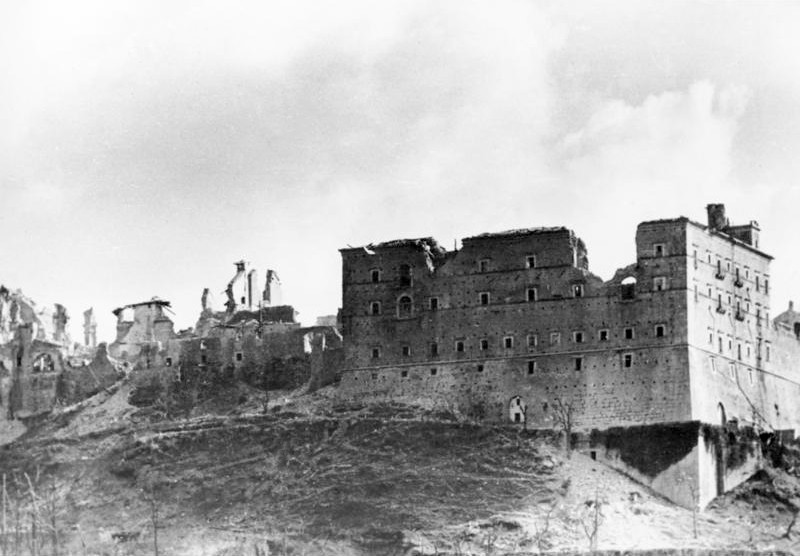
Monte Cassino in ruins
Monte Cassino in ruins — Bundesarchiv, Bild 146-2005-0004 / Wittke · CC BY-SA 3.0 de

The battle, stage by stage

  1. 20-22 January 1944

    The Rapido crossing

    The Gustav Line ran along the Rapido and Gari rivers below Monte Cassino, held here by General Fridolin von Senger's XIV Panzer Corps. To open the Liri valley and draw German reserves away from the Anzio landing on 22 January, the U.S. II Corps sent the 36th (Texas) Division across the narrow, swift, high-banked river at Sant'Angelo, a village on a bluff about forty feet above it. The 141st Infantry crossed at one site north of the village and the 143d at two sites south of it, beginning about 8 PM on 20 January in fog, through minefields, carrying boats under fire from Generalmajor Eberhard Rodt's 15th Panzer Grenadier Division. Few men got over, footbridges were shot away, and a second try on 21 January put most of the 141st across, only to be cut off. By 22 January the 141st's men across the river were cut off and the 143d had pulled back to the east bank. In 48 hours the two regiments lost 2,128 men by the Center of Military History's count (155 killed, 1,052 wounded, 921 missing or captured; the official history gives 1,681 for the division's own units). The official history calls German losses negligible.

  2. 24 January - 11 February 1944

    Into the massif

    Clark shifted the attack north of Cassino. The 34th Division crossed the upper Rapido flats against mines, mud and mired tanks: the 168th Infantry took Hills 213 and 56 and the village of Cairo (Caira) by 30 January, the 133d Infantry seized the Italian barracks and on 3 February briefly fought into the northern edge of Cassino but could not hold it, and the 135th, with the 142d Infantry of the 36th Division, climbed onto Monte Castellone and the ridges toward the abbey, reaching Monte Albaneta and the slopes of Point 593. On their right the French Expeditionary Corps' 3d Algerian Division took Colle Belvedere in two days of fighting but could not hold on to Monte Abate. Renewed attacks from 8 to 11 February came within sight of the monastery but no closer, and the two American divisions were worn down far below effective strength; by Blumenson's count the 1st and 3d Battalions of one regiment together numbered 22 officers and 160 men, and rifle companies averaged about 30 men.

  3. 15 February 1944

    The abbey is bombed

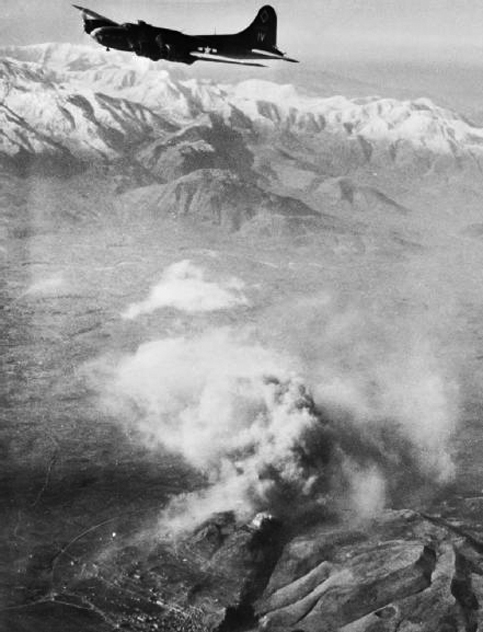
    The New Zealand Corps under Lieutenant General Bernard Freyberg — the 2d New Zealand and 4th Indian Divisions — took over. Convinced the Germans were using the 6th-century Benedictine abbey, Freyberg asked for it to be bombed. Beginning at 9:45 AM on 15 February, waves of B-17 heavy bombers and B-25 and B-26 medium bombers struck the monastery, followed by artillery; U.S. Army accounts give between about 600 and 1,150 tons of bombs. Civilians who had sheltered there were killed. The abbey's monks and civilians said no German troops were inside; by a civilian account in Blumenson's history the nearest German position was about 50 yards outside the wall. The ruins now became a defensive position, occupied by German paratroopers. On Snakeshead Ridge, where the 4th Indian Division's and the Germans' outpost lines were only a few yards apart (Tiger Triumphs), stray bombs caused 24 casualties, and the 1st Royal Sussex's company attack that night failed.

  4. 16-18 February 1944

    Point 593 and the railway station

    On the night of 16-17 February the Royal Sussex reached Point 593 at heavy cost but withdrew before dawn. The next night the 4/6th Rajputana Rifles attacked the summit while the 1/9th and 1/2d Gurkhas struck down into the scrub toward Point 445, about 800 yards behind the abbey; the 1/2d Gurkhas lost two-thirds of their leading companies within minutes in a minefield, and the 1/9th Gurkhas reached the Point 445 area but had to withdraw. Down in the valley the 28th (Maori) Battalion crossed the flooded flats along the railway causeway on the night of 17 February and took Cassino railway station. Sappers could not finish the crossings behind them, no tanks or antitank guns came up, and on the afternoon of 18 February German infantry and tanks drove the isolated battalion out; it lost more than 150 men killed, wounded or captured.

  5. 15-16 March 1944

    Cassino town and Hangman's Hill

    After weeks of rain, the third battle opened at 8:30 AM on 15 March: 514 bombers dropped about 1,100 tons on Cassino town, by the New Zealand and 4th Indian Division histories (the CMH brochure gives a 750-ton bomb plan), then several hundred guns fired. Men of the German 1st Parachute Division survived in the cellars and rubble, which also blocked the New Zealand tanks. The 25th New Zealand Battalion fought into the town from the north, and its D Company under Major Hewitt held Castle Hill (Point 193, the medieval Rocca Janula) by late afternoon (about 4:45 PM); the 1/4th Essex of the 5th Indian Brigade finished relieving it after midnight. Point 165 below the castle was held and handed to the Essex; the 1/6th Rajputana Rifles failed twice at Point 236 on 16 March, which stayed in German hands; but C Company of the 1/9th Gurkhas, under Captain M. R. Drinkall, slipped past the fighting and reached Hangman's Hill (Point 435), about 200 yards below the abbey, before dawn on 16 March.

  6. 17-23 March 1944

    Holding on in the rubble

    The rest of the 1/9th Gurkhas climbed up to Hangman's Hill and beat off a counterattack from the monastery, supplied by night porters and by air drops, many of which rolled out of reach down the slope. On 17 March the 26th Battalion, led out of the convent by tanks of A Squadron, 19th Armored Regiment, reached the railway station "perhaps by 1 p.m." (Phillips), and C Company, 24th Battalion held Point 202 below the Gurkhas. German paratroopers counterattacked Castle Hill and reached its walls, and fought on from the Continental Hotel and other strongpoints at the foot of Monastery Hill. On 19 March a tank force (the 7th Indian Brigade's reconnaissance squadron, the U.S. 760th Tank Battalion and C Squadron, 20th NZ Armored Regiment) drove up the Cavendish Road, a track built behind Snakeshead Ridge, and pushed between Albaneta and Point 593, but without infantry it lost at least nine New Zealand tanks, with more American and Indian tanks. Alexander halted the offensive on 23 March. The Gurkhas came down from Hangman's Hill on the night of 24 March, 10 officers and 247 men (4th Indian Division history; Phillips gives 12 officers and 255 others), and 3 officers and 42 men came back from Point 202. The New Zealanders lost 1,316 men and the Indians about 3,000 in March, by CMH figures.

  7. 11-13 May 1944

    Operation Diadem

    Alexander secretly moved most of the British Eighth Army to the Cassino front. At 11 PM on 11 May some 1,660 guns opened fire along the whole line and the Fifth and Eighth Armies attacked. The Polish II Corps of Lieutenant General Wladyslaw Anders attacked the massif from the north: the 3d Carpathian Rifle Division against Point 593 and toward Albaneta, the 5th Kresowa Division against Phantom Ridge and Colle Sant'Angelo. They gained footholds but by the night of 12-13 May were back near their start lines with very heavy losses. In the valley, XIII Corps' British 4th and 8th Indian Divisions forced the Gari near Sant'Angelo and held small bridgeheads; the 4th Division had a bridge across on the morning of 13 May. Far to the south the French Expeditionary Corps broke into the Aurunci Mountains, and its 4th Moroccan Mountain Division took Monte Majo on 13 May (Laurie).

  8. 17-18 May 1944

    The Polish flag over the ruins

    With the French through the mountains and the U.S. II Corps advancing on the coast, the Gustav Line was breaking. The British 78th Division pushed through the Liri bridgehead to cut Highway 6 west of Cassino, and on 17 May the Poles attacked again, taking Phantom Ridge and much of Colle Sant'Angelo and fighting on Point 593 and around Albaneta. Threatened with encirclement, the 1st Parachute Division withdrew overnight. On the morning of 18 May a patrol of the 12th Podolian Lancers entered the empty ruins of the abbey and raised a Polish flag at about 10 AM (2korpus.pl). Polish losses at Monte Cassino and Piedimonte are given as 860 killed, 2,822 wounded and 97 missing. More than 1,000 Polish soldiers lie in the cemetery below Point 593, and General Anders was buried among them in 1970.

Forces

By late April 1944 the U.S. Fifth Army counted more than 350,000 men and the British Eighth Army about 265,000, against about 365,000 men in the German Tenth and Fourteenth Armies (CMH); at Cassino itself the Germans held the massif and town with a few battalions of paratroopers while the attacking Allied units were repeatedly worn down to a fraction of their strength. Army-level figures are good; strength on the Cassino front itself is poorly documented.

German forces (XIV Panzer Corps; 1st Parachute Division)

Tenth and Fourteenth Armies (Cassino and Anzio fronts), May 1944about 365,000

CMH figure for the two armies, most of the 412,000 German troops in Italy south of the Alps; Tenth Army held the Cassino front. Clayton D. Laurie, Rome-Arno, 22 January–9 September 1944 (U.S. Army Center of Military History, CMH Pub 72-20)

Garrison of Monastery Hill and Cassino town, March 19447 paratroop battalions

The 4th Indian Division history says seven battalions of paratroopers held Monastery Hill and the town, covered by 180 German guns; it gives no headcount. The Tiger Triumphs, chapter 6 (4th Indian Division history, HMSO, 1946)

Allied forces (U.S. Fifth Army, British Eighth Army; New Zealand, Indian, Polish and French corps)

U.S. Fifth Army, late April 1944more than 350,276

CMH figure; the Fifth Army included the French Expeditionary Corps and the Anzio beachhead. Clayton D. Laurie, Rome-Arno, 22 January–9 September 1944 (U.S. Army Center of Military History, CMH Pub 72-20)

British Eighth Army, May 1944about 265,000

CMH describes it as a multinational force of 265,000 men, including the Polish II Corps. Clayton D. Laurie, Rome-Arno, 22 January–9 September 1944 (U.S. Army Center of Military History, CMH Pub 72-20)

Guns opening Operation Diadem, 11 May1,660

Artillery pieces along the whole front from Cassino to the sea (CMH). Clayton D. Laurie, Rome-Arno, 22 January–9 September 1944 (U.S. Army Center of Military History, CMH Pub 72-20)

Casualties

The four battles of Cassino cost the Allies tens of thousands of casualties, part of more than 43,000 Allied and about 38,000 German losses in the campaign to Rome (CMH), and killed perhaps 2,000 Italian civilians, among them refugees in the abbey. Allied unit figures are well documented; German figures for Cassino alone and the civilian toll are uncertain. Certainty: fair.

German forces (XIV Panzer Corps; 1st Parachute Division)

Losses, Tenth and Fourteenth Armies, campaign to Romeabout 38,000

The Center of Military History's estimate for the German armies in the Cassino, Anzio and Diadem fighting to Rome, not counting 15,606 prisoners of war; it is not limited to the Cassino battles. Clayton D. Laurie, Rome-Arno, 22 January–9 September 1944 (U.S. Army Center of Military History, CMH Pub 72-20)

Casualties, first three weeks of February 19444,470

Figure given in the UK Ministry of Defence's Monte Cassino commemorative booklet for the German defenders. UK Ministry of Defence, 'Monte Cassino' (Second World War commemorative booklet)

Losses at the Rapido, 20–22 Januarynegligible

The U.S. official history calls German losses negligible and gives no number; the 15th Panzer Grenadier Division reported capturing 500 Americans. Martin Blumenson, Salerno to Cassino, ch. XIX, 'The Rapido River Crossings' (CMH, 1969)

Dead buried at the German war cemetery, Cassino (Caira)about 20,100

The Volksbund's count for the cemetery, which holds German dead from the whole southern Italian campaign (Salerno, the Adriatic and Cassino), not only the Cassino battles. Volksbund Deutsche Kriegsgräberfürsorge, Cassino military cemetery

Allied forces (U.S. Fifth Army, British Eighth Army; New Zealand, Indian, Polish and French corps)

Allied losses, campaign to Romemore than 43,000

The Center of Military History's total for the campaign from January to the capture of Rome, including Anzio; of the Diadem offensive from 11 May it counts 17,931 American, 10,635 French and 3,355 British casualties, and 11,639 for the Eighth Army. Clayton D. Laurie, Rome-Arno, 22 January–9 September 1944 (U.S. Army Center of Military History, CMH Pub 72-20)

Casualties, 36th Division at the Rapido, 20–22 January2,128 or 1,681 (1,681–2,128)

Laurie (CMH) gives 2,128 for the 141st and 143d Infantry (155 killed, 1,052 wounded, 921 missing or captured); Blumenson's official history gives 1,681 for the division's own units (143 killed, 663 wounded, 875 missing), excluding attached units. Clayton D. Laurie, Rome-Arno, 22 January–9 September 1944 (U.S. Army Center of Military History, CMH Pub 72-20); Martin Blumenson, Salerno to Cassino, ch. XIX, 'The Rapido River Crossings' (CMH, 1969)

Casualties, second battle (February)4th Indian Division 590; 2d New Zealand Division 226

Figures from the UK Ministry of Defence booklet, which also gives the 28th (Maori) Battalion 124 casualties of the 200 who made the railway station attack; the map's caption, after the New Zealand history, says the battalion lost more than 150 killed, wounded or captured. UK Ministry of Defence, 'Monte Cassino' (Second World War commemorative booklet)

Casualties, third battle (March)1,316 New Zealand; about 3,000 Indian

CMH figures (Laurie). The 4th Indian Division's own history says the division had lost 4,000 men by the time it left Cassino, a figure covering its February and March fighting. Clayton D. Laurie, Rome-Arno, 22 January–9 September 1944 (U.S. Army Center of Military History, CMH Pub 72-20); The Tiger Triumphs, chapter 6 (4th Indian Division history, HMSO, 1946)

Polish II Corps, Monte Cassino and Piedimonte (May)860 killed, 2,822 wounded, 97 missing

2korpus.pl's figures; Olgierd Terlecki, Poles in the Italian Campaign (1972), as quoted by custermen.com, gives 923 killed, 2,931 wounded and 94 missing for 24 April–31 May. 2korpus.pl, 2nd Polish Corps: Monte Cassino; custermen.com, Polish II Corps organization (citing O. Terlecki, Poles in the Italian Campaign, Warsaw, 1972)

Civilians

Refugees killed in the abbey bombing, 15 Februaryabout 115 to 250 (115–250)

The National WWII Museum estimates 115 refugees died; Legion Magazine gives some 250 and a Cassino tourism history at least 230. The abbot spoke of about 800 guests of the monastery and a civilian told U.S. officers about 2,500 had been inside; the U.S. official history gives no verified death toll. The National WWII Museum, 'The Destruction of Monte Cassino, 1944'; Legion Magazine (Canada), Cassino article; Discover Places, 'The Destruction of Cassino: war at any cost'; Martin Blumenson, Salerno to Cassino, ch. XXIII (CMH, 1969)

Monks at the abbeysurvived

Accounts differ on how many monks remained (the National WWII Museum names two, one of them Martino Matronola; a civilian in Blumenson's history said about six); the elderly abbot and the monks survived in the abbey's underground shelter, and the abbot left the ruins at dawn on 17 February. The National WWII Museum, 'The Destruction of Monte Cassino, 1944'; Martin Blumenson, Salerno to Cassino, ch. XXIII (CMH, 1969); La Gazzetta Italiana, 'The Bombardment of Monte Cassino: February 14–16, 1944'

Civilians killed, Cassino town and mountainabout 2,000

Legion Magazine says 2,026 of the town's prewar population of 20,000 were killed; La Gazzetta Italiana says 2,000 civilians died on the mountain between January and May 1944. Neither gives its underlying source. Legion Magazine (Canada), Cassino article; La Gazzetta Italiana, 'The Bombardment of Monte Cassino: February 14–16, 1944'

Equipment and ships

Tanks lost on the Cavendish Road thrust, 19 Marchat least 9 New Zealand, plus American and Indian

The New Zealand official history gives at least nine New Zealand tanks lost, with more American and Indian tanks; no full total is given. N. C. Phillips, Italy, Volume I: The Sangro to Cassino (Wellington, 1957), ch. 13

Bridging and boats at the Rapidoabout half the bridges; at least 25% of assault equipment

Blumenson: at least a quarter of the engineers' assault equipment was lost before H-hour and about half the bridges carried forward were damaged beyond use before reaching the river. Martin Blumenson, Salerno to Cassino, ch. XIX, 'The Rapido River Crossings' (CMH, 1969)

Then and now: how the ground has changed

The mountains and the river line are much as they were, but almost everything built on them is postwar: the abbey was rebuilt on its old plan and reconsecrated in 1964, Cassino town was rebuilt on a new plan, and Polish, Commonwealth and German war cemeteries now stand on and around the battlefield.

Weapons

German forces (XIV Panzer Corps; 1st Parachute Division)

MG 42

MG 42

General-purpose machine gun · 1942–1945 (German service; derivatives still in use)

At Monte Cassino: German paratroopers held the rubble of the town and the abbey with machine guns.

Built largely from stamped steel parts, the MG 42 was cheap to make and fired so fast that its sound was often likened to ripping cloth. Its quick-change barrel let a crew keep up heavy fire, and its design lives on in postwar guns such as the MG3.

Caliber
7.92×57mm Mauser
Rate of fire
about 1,200 rounds/min
Weight
about 11.6 kg (gun on bipod)
Photo: baku13 · CC BY-SA 3.0
Karabiner 98k

Karabiner 98k

Bolt-action rifle · 1935–1945

At Monte Cassino: Standard German infantry rifle.

A shortened, modernized descendant of the Gewehr 98, the Kar98k was the standard rifle of the German armed forces in World War II. Accurate and robust, it was produced in the millions.

Caliber
7.92×57mm Mauser
Effective range
about 500 m (iron sights)
Magazine
5-round internal box
Photo: Armémuseum (Swedish Army Museum) · Public domain

Allied forces (U.S. Fifth Army, British Eighth Army; New Zealand, Indian, Polish and French corps)

M4 Sherman

M4 Sherman

Medium tank · 1942–1950s (US service)

At Monte Cassino: Shermans of the 760th Tank Battalion and New Zealand squadrons fought in the town and along Cavendish Road.

The Sherman was the most widely used American tank of World War II, valued for its reliability and ease of production. Specialized versions included the Duplex Drive (DD) amphibious tank and flamethrower conversions.

Crew
5
Armament
75 mm gun M3 (most early versions)
Weight
about 30 metric tons
Photo: Public domain · Wikimedia Commons
M1 Garand

M1 Garand

Semi-automatic rifle · 1936–1958 (US standard rifle)

At Monte Cassino: U.S. infantry of the 34th and 36th Divisions.

The M1 Garand was the first semi-automatic rifle adopted as a nation's standard infantry weapon. It gave the American rifleman much more firepower than a bolt-action rifle, and General George Patton called it "the greatest battle implement ever devised."

Caliber
.30-06 Springfield
Effective range
about 460 m (500 yd)
Feed
8-round en-bloc clip
Photo: Armémuseum (Swedish Army Museum) · Public domain
Lee-Enfield No. 4 rifle

Lee-Enfield No. 4 rifle

.303 bolt-action rifle · 1941–1950s (British service)

At Monte Cassino: British and Commonwealth infantry rifle.

The wartime simplification of the Lee-Enfield, issued from 1941. Its ten-round magazine and smooth bolt let trained riflemen fire quickly; it armed British and Commonwealth infantry, including the airborne battalions, from Normandy to the Rhine.

Caliber
.303 British
Magazine
10 rounds
Action
bolt, fast-cycling cock-on-closing
Photo: Lee-Enfield No. 4 Mk I (1943) · Armémuseum (Swedish Army Museum) · public domain

Paintings and photographs

Monte Cassino in ruins
Monte Cassino in ruins The abbey of Monte Cassino reduced to rubble after the Allied bombing of 15 February 1944. German photograph by Wittke, February 1944. Bundesarchiv, Bild 146-2005-0004 / Wittke · CC BY-SA 3.0 de · source
Tank repair under fire
Tank repair under fire German crewmen repair a damaged tank under mortar fire during the fighting for Cassino, January 1944 (Bild 101I-312-0998-27). Place not recorded; pinned on Monastery Hill, approximate. Bundesarchiv / Enz · CC BY-SA 3.0 de · source
Moroccan soldiers at Monte Cassino
Moroccan soldiers at Monte Cassino Moroccan soldiers of the French Expeditionary Corps at Monte Cassino, January 1944. Place not recorded; pinned with the French at Belvedere, approximate. Unknown photographer · public domain · source
2nd Moroccan Infantry Division, Belvedere
2nd Moroccan Infantry Division, Belvedere Men of the 2nd Moroccan Infantry Division at the Belvedere, winter 1943–44. Pinned with the French at Belvedere; exact spot not recorded, approximate. Sgt. Lambert · public domain · source
German vehicles destroyed north of Cassino
German vehicles destroyed north of Cassino German vehicles destroyed by an air attack north of Cassino in 1944; the half-track artillery tractor carries the plate "WH 1028 348." Pinned north of the town, approximate. U.S. Office of War Information · public domain · source
Lt. Gen. Bernard Freyberg
Lt. Gen. Bernard Freyberg Lt. Gen. Sir Bernard Freyberg, commander of the New Zealand Corps (2nd New Zealand and 4th Indian Divisions) at Cassino, photographed 3 January 1944. Place not recorded; pinned with the New Zealand Corps at Cassino, approximate. Sgt. Dawson, No. 2 Army Film and Photographic Unit (IWM) · public domain · source
Paratroopers with a map
Paratroopers with a map German paratroopers with a map at Monte Cassino (Bild 101I-577-1910-36; the archive dates it January 1944). Place not recorded; pinned on Monastery Hill, approximate. Bundesarchiv / Benschel · CC BY-SA 3.0 de · source
Paratroopers with a mortar
Paratroopers with a mortar German paratroopers with a mortar at Monte Cassino, 1944 (Bild 101I-577-1917-08). Place not recorded; pinned on Monastery Hill, approximate. Bundesarchiv / Haas · CC BY-SA 3.0 de · source
Paratrooper at the scissors periscope
Paratrooper at the scissors periscope A German paratrooper with scissors periscope binoculars at Monte Cassino (Bild 101I-577-1917-12A). Place not recorded; pinned on Monastery Hill, approximate. Bundesarchiv / Haas · CC BY-SA 3.0 de · source
Paratroopers with a machine gun
Paratroopers with a machine gun German paratroopers with a machine gun at Monte Cassino (Bild 101I-577-1923-37). Place not recorded; pinned on Monastery Hill, approximate. Bundesarchiv / Zeischle · CC BY-SA 3.0 de · source
Col. Heilmann and Gen. Heidrich
Col. Heilmann and Gen. Heidrich Col. Ludwig Heilmann and Gen. Richard Heidrich of the 1st Parachute Division at Monte Cassino (Bild 101I-577-1920-31). Place not recorded; pinned on Monastery Hill, approximate. Bundesarchiv / Zscheile · CC BY-SA 3.0 de · source
B-17 over the abbey
B-17 over the abbey A B-17 Flying Fortress over Monte Cassino on 15 February 1944, the day the abbey was bombed. Pinned at the abbey. U.S. Army Air Forces · public domain · source
"Air raid at Monte Cassino" (painting)
"Air raid at Monte Cassino" (painting) Peter McIntyre's painting of the air raid on Monte Cassino, February 1944. Pinned at the abbey it depicts. Peter McIntyre (Archives New Zealand) · CC BY-SA 2.0 · source
The abbey, February 1944
The abbey, February 1944 The exterior of the Benedictine abbey on Monte Cassino, with part of a courtyard, February 1944 (photographer Frass). Frass (NAC) · public domain · source
The abbey and the hillside, February 1944
The abbey and the hillside, February 1944 The exterior of the abbey with part of the hillside, February 1944 (photographer Frass). Frass (NAC) · public domain · source
The abbey administrators' statement
The abbey administrators' statement Photocopy of a statement of 16 February 1944 by the abbey's administrators, Don Nicola Clemente and Don Francesco Falconio, after the bombing, declaring that there had been no German defensive positions, troops or equipment in the church or its surroundings. Pinned at the abbey. Unknown photographer (NAC) · public domain · source
The ruined basilica
The ruined basilica The collapsed vaults of the abbey basilica after the bombing and shelling, March 1944; the German caption notes a surviving pillar inscribed "Pax" (Bild 183-J24083). Bundesarchiv / Czirnich · CC BY-SA 3.0 de · source
Paratroopers in the abbey ruins
Paratroopers in the abbey ruins German paratroop artillery dug in among the collapsed vaults of the abbey, which became part of the German main line after the bombing, March 1944 (Bild 183-J24084). Bundesarchiv / Czirnich · CC BY-SA 3.0 de · source
Observer on the slope of Monte Cassino
Observer on the slope of Monte Cassino A German observer with a Scherenfernrohr scissors telescope, camouflaged with cloth, on the slope of Monte Cassino, March 1944 (photographer Engel). Place not recorded; pinned on Monastery Hill, approximate. Engel (NAC) · public domain · source
Paratroopers in a cave bunker
Paratroopers in a cave bunker A German paratroop squad living in a cave used as a bunker during the fighting for Cassino, March 1944; they keep their helmets on under constant shellfire (Bild 183-J16902). Place not recorded; pinned on Monastery Hill, approximate. Bundesarchiv / Engel · CC BY-SA 3.0 de · source
Paratroopers above the Cassino valley
Paratroopers above the Cassino valley German paratroopers on the Cassino front, February 1944; the caption speaks of the Cassino valley held against British and American attacks (Bild 146-1974-006-62). Place not recorded; pinned on Monastery Hill, approximate. Bundesarchiv / Czirnich · CC BY-SA 3.0 de · source
Paratroopers on watch near Monte Cassino
Paratroopers on watch near Monte Cassino German paratroopers near Monte Cassino (Bild 101I-578-1932-11A; the archive dates it 1943 or early 1944). Place not recorded; pinned on Monastery Hill, approximate. Bundesarchiv / Haas · CC BY-SA 3.0 de · source
Paratroop sergeant near Monte Cassino
Paratroop sergeant near Monte Cassino German paratroopers near Monte Cassino (Bild 101I-578-1934-18; the archive dates it 1943 or early 1944). Place not recorded; pinned on Monastery Hill, approximate. Bundesarchiv / Benschel · CC BY-SA 3.0 de · source
Paratroopers with machine gun and ammunition
Paratroopers with machine gun and ammunition German paratroopers near Monte Cassino (Bild 101I-578-1939-20; the archive dates it 1943 or early 1944). Place not recorded; pinned on Monastery Hill, approximate. Bundesarchiv / Gremmelsbacher · CC BY-SA 3.0 de · source
Machine-gun position near Monte Cassino
Machine-gun position near Monte Cassino German paratroopers near Monte Cassino (Bild 101I-578-1939-27; the archive dates it 1943 or early 1944). Place not recorded; pinned on Monastery Hill, approximate. Bundesarchiv / Gremmelsbacher · CC BY-SA 3.0 de · source
German paratroopers near Monte Cassino
German paratroopers near Monte Cassino German paratroopers near Monte Cassino (Bild 101I-578-1940-03A; the archive dates it 1943 or early 1944). Place not recorded; pinned on Monastery Hill, approximate. Bundesarchiv / Gremmelsbacher · CC BY-SA 3.0 de · source
Cassino under the bombs, 15 March
Cassino under the bombs, 15 March The town of Cassino shrouded in black smoke during the Allied bombing of 15 March 1944, which opened the third battle; the IWM caption gives over 1,250 tons of bombs. Pinned in Cassino town. Imperial War Museum · public domain · source
New Zealand 6-pounder in action
New Zealand 6-pounder in action A New Zealand 6-pounder antitank gun in action against German positions at Cassino, 15 March 1944. Place not recorded; pinned with the 25th New Zealand Battalion in the town, approximate. Sgt. McConville, No. 2 Army Film and Photographic Unit (IWM) · public domain · source
Looking toward Cassino, 17 March
Looking toward Cassino, 17 March A view looking toward Cassino, 17 March 1944, the day New Zealand troops reached the railway station. Camera position not recorded; pinned at the railway station, approximate. Sgt. McConville, No. 2 Army Film and Photographic Unit (IWM) · public domain · source
An RAMC orderly under the Red Cross flag
An RAMC orderly under the Red Cross flag An RAMC medical orderly goes forward under cover of the Red Cross flag to recover a casualty during the fighting at Cassino, 24 March 1944. Place not recorded; pinned in Cassino town, approximate. Sgt. Menzies, No. 2 Army Film and Photographic Unit (IWM) · public domain · source
Recovering the wounded
Recovering the wounded German paratroop medics recover their wounded during a lull, carrying Red Cross flags so that the exposed ground could be searched without either side firing (Bild 183-J26141, Zscheile). Place not recorded; pinned in Cassino town, approximate. Bundesarchiv / Zscheile · CC BY-SA 3.0 de · source
"Wounded at Cassino" (painting)
"Wounded at Cassino" (painting) Peter McIntyre's painting "Wounded at Cassino," March 1944. Place not recorded; pinned in Cassino town, approximate. Peter McIntyre (Archives New Zealand) · CC BY-SA 2.0 · source
Paratroopers in the rubble
Paratroopers in the rubble "Under the ruins of Cassino": German paratroopers fight on, April 1944 (Bild 146-1993-015-36). Place not recorded; pinned in Cassino town, approximate. Bundesarchiv / Unknown photographer · CC BY-SA 3.0 de · source
Paratroopers among the ruins
Paratroopers among the ruins German paratroopers in the ruins of Cassino, March 1944; the propaganda caption says they turned every ruin into a fortress (Bild 183-J24116). Place not recorded; pinned in Cassino town, approximate. Bundesarchiv / Lüthge · CC BY-SA 3.0 de · source
Moving from cover to cover
Moving from cover to cover "In the ruins of Cassino": German paratroopers can cross even the shortest gaps between houses only at a run, March 1944 (Bild 183-J24117). Place not recorded; pinned in Cassino town, approximate. Bundesarchiv / Lüthge · CC BY-SA 3.0 de · source
Mortar position in the ruins
Mortar position in the ruins A German mortar position hidden behind a last wall in the ruined houses of Cassino (Bild 146-1983-107-31A; the archive date of 1943 is uncertain). Place not recorded; pinned in Cassino town, approximate. Bundesarchiv / Luethge · CC BY-SA 3.0 de · source
Paratroop command post in a cellar
Paratroop command post in a cellar A German paratroop captain's command post set up in the cellar of a ruined house in Cassino (Bild 101I-578-1928-20A). Place not recorded; pinned in Cassino town, approximate. Bundesarchiv / Wahner · CC BY-SA 3.0 de · source
Command post of the 3rd Parachute Regiment
Command post of the 3rd Parachute Regiment The command post of a captain of the 3rd Parachute Regiment in a destroyed house in Cassino, with paratroopers watching through binoculars, March 1944. Place not recorded; pinned in Cassino town, approximate. Unknown photographer (NAC) · public domain · source
Paratroopers in a building
Paratroopers in a building German paratroopers inside a building at Monte Cassino, 1944 (Bild 101I-578-1928-22A). Place not recorded; pinned in Cassino town, approximate. Bundesarchiv / Wahner · CC BY-SA 3.0 de · source
Paratroopers in a building (2)
Paratroopers in a building (2) German paratroopers inside a building at Monte Cassino, 1944 (Bild 101I-578-1928-23A). Place not recorded; pinned in Cassino town, approximate. Bundesarchiv / Wagner · CC BY-SA 3.0 de · source
MG 42 in the ruined church
MG 42 in the ruined church A German soldier with an MG 42 machine gun in the rubble of a church in Cassino, April 1944. Which church is not recorded; pinned in Cassino town, approximate. Czirnich (NAC) · public domain · source
German prisoners at Cassino
German prisoners at Cassino German prisoners taken in the battle for Cassino and Monastery Hill, which began with the bombing of 15 March 1944 (Bild 146-1975-014-31). Place not recorded; pinned in Cassino town, approximate. Bundesarchiv / Unknown photographer · CC BY-SA 3.0 de · source
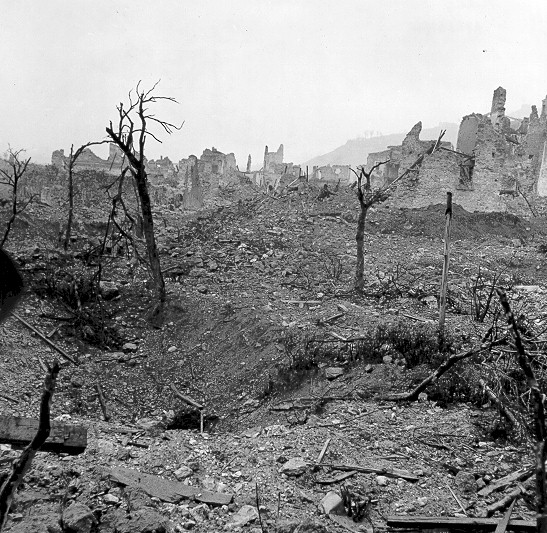
The destroyed town
The destroyed town Part of the destroyed town of Cassino, spring 1944 (Bild 183-J26131). Place not recorded; pinned in Cassino town, approximate. Bundesarchiv / Enz · CC BY-SA 3.0 de · source
A village in the battle area
A village in the battle area Aerial panorama of a village in the Monte Cassino battle area, with smoke rising from the fighting, March 1944. The village is not named; pinned at Cassino town, approximate. Czirnich (NAC) · public domain · source
New Zealand Sherman supports infantry (reconstruction)
New Zealand Sherman supports infantry (reconstruction) A Sherman of the 19th Armored Regiment supports infantry of the 24th Battalion, 6th New Zealand Brigade, in a reconstruction of recent action in Cassino, 8 April 1944. Pinned with the New Zealand infantry in the town, approximate. Sgt. Hewitt, No. 2 Army Film and Photographic Unit (IWM) · public domain · source
Signallers on Monastery Hill
Signallers on Monastery Hill Signallers of the 6th Battalion, Royal West Kent Regiment, use a radio in a dugout on Monastery Hill, between February and May 1944. Exact spot not recorded; pinned on Monastery Hill, approximate. No. 2 AFPU, No. 2 Army Film and Photographic Unit (IWM) · public domain · source
Kesselring inspects a gun near Cassino
Kesselring inspects a gun near Cassino A gun commander explains his target to Field Marshal Albert Kesselring near Cassino, April 1944 (Bild 101I-580-1983-19A). Place not recorded; pinned on the German side of the massif, approximate. Bundesarchiv / Wahner · CC BY-SA 3.0 de · source
Allied soldiers below Monte Cassino
Allied soldiers below Monte Cassino Allied soldiers at the foot of Monte Cassino. Place not recorded; pinned in Cassino town, approximate. Goran Obradović · CC BY-SA 2.0 · source
German leaflet for the Poles
German leaflet for the Poles A German leaflet in Polish dropped during the Cassino battle ("Poles! You are going to Cassino!"), May 1944. Pinned with the Polish II Corps, approximate. Unknown (scan by Michał Obarski) · CC BY-SA 4.0 · source
British 4.2-inch mortar in action
British 4.2-inch mortar in action A 4.2-inch mortar of S Troop, 307th Battery, 99th Light Antiaircraft Regiment, in action for the first time at Cassino, 12 May 1944. Place not recorded; pinned with the British XIII Corps on the Gari, approximate. No. 2 AFPU, No. 2 Army Film and Photographic Unit (IWM) · public domain · source
Polish Shermans readied for battle
Polish Shermans readied for battle Men of the 6th Armored Regiment "Children of Lwów," 2nd Polish Armored Brigade, weld extra armor plates onto their M4 Shermans before the Monte Cassino battle, May 1944. Place not recorded; pinned with the Polish armor at Albaneta, approximate. Tadeusz Szumański Photographic Archive (NAC) · public domain · source
Lt. Budzianowski's Sherman heads for the Gorge
Lt. Budzianowski's Sherman heads for the Gorge An M4 Sherman of the 2nd Polish Armored Brigade under Lt. Edward Budzianowski moves with sappers toward the "Gorge," 13 May 1944. Pinned with the Polish armor at Albaneta, approximate. Tadeusz Szumański Photographic Archive (NAC) · public domain · source
Sappers ride a Sherman to the Gorge
Sappers ride a Sherman to the Gorge Sappers of 2nd Lt. Leszek Skonieczny's platoon ride an M4 Sherman of the 2nd Polish Armored Brigade toward the "Gorge," May 1944. Pinned with the Polish armor at Albaneta, approximate. Tadeusz Szumański Photographic Archive (NAC) · public domain · source
Soldiers of the 2nd Polish Corps
Soldiers of the 2nd Polish Corps Soldiers of the 2nd Polish Corps in the battle of Monte Cassino, May 1944. Place not recorded; pinned with the Polish II Corps on the massif, approximate. Unknown photographer · public domain · source
Carrying ammunition forward
Carrying ammunition forward Polish soldiers carry ammunition to the front lines during the battle, May 1944. Place not recorded; pinned with the Polish II Corps on the massif, approximate. Unknown photographer · public domain · source
Polish field gun in a camouflaged position
Polish field gun in a camouflaged position A gun and crew of the 6th Light Artillery Regiment, 2nd Polish Corps, in a camouflaged position during the battle, May 1944. Place not recorded; pinned with the Polish II Corps on the massif, approximate. Tadeusz Szumański Photographic Archive (NAC) · public domain · source
Supply base in the Inferno ravine
Supply base in the Inferno ravine A 2nd Polish Corps supply base with Willys Jeeps in the Inferno ravine during the battle, May 1944. The ravine is not on this map; pinned with the Polish II Corps, approximate. Tadeusz Szumański Photographic Archive (NAC) · public domain · source
Unloading artillery shells
Unloading artillery shells Artillery shells being unloaded for the 2nd Polish Corps during the battle, May 1944. Place not recorded; pinned with the Polish II Corps on the massif, approximate. Tadeusz Szumański Photographic Archive (NAC) · public domain · source
Polish 40 mm Bofors gun
Polish 40 mm Bofors gun A 40 mm Bofors antiaircraft gun of the 2nd Polish Corps in the battle, May 1944. Place not recorded; pinned with the Polish II Corps on the massif, approximate. Tadeusz Szumański Photographic Archive (NAC) · public domain · source
Evacuating the wounded
Evacuating the wounded Stretcher bearers evacuate wounded men of the 2nd Polish Corps along the Polish Sappers' Road, May 1944. The road is not on this map; pinned with the Polish II Corps, approximate. Tadeusz Szumański Photographic Archive (NAC) · public domain · source
Polish infantry briefing
Polish infantry briefing Infantry of the 2nd Polish Corps at a briefing before going into action, among them 2nd Lt. Władysław Matulewicz and Rifleman Stanisław Skopiec, dated 19 May 1944. Place not recorded; pinned with the Polish II Corps on the massif, approximate. Tadeusz Szumański Photographic Archive (NAC) · public domain · source
Polish and British flags over the abbey
Polish and British flags over the abbey Polish and British flags fly over the ruins of the abbey, May 1944 (NAC 24-452-15). Tadeusz Szumański Photographic Archive (NAC) · public domain · source
The Polish bugler
The Polish bugler A Polish bugler at Monte Cassino, 18 May 1944, the day the abbey ruins were taken (Polish Institute and Sikorski Museum). Pinned at the abbey, approximate. Polish Institute and Sikorski Museum · public domain · source
Polish and British soldiers in the abbey ruins
Polish and British soldiers in the abbey ruins Polish and British soldiers in the ruins of the abbey on the summit of Monte Cassino at the end of the fighting, May 1944. Tadeusz Szumański Photographic Archive (NAC) · public domain · source
The destroyed monastery from the air
The destroyed monastery from the air A low aerial view of the monastery showing its complete destruction, taken during the last phase of the battle, 11–18 May 1944 (IWM C 4363). F/O Roy Baker, Royal Air Force (IWM) · public domain · source
Ruins of the abbey, 1944
Ruins of the abbey, 1944 The ruins of the Abbey of Montecassino, 1944. Unknown photographer · public domain · source
Polish tank men walk to the abbey ruins
Polish tank men walk to the abbey ruins Soldiers of the 2nd Polish Armored Brigade on the battlefield, on their way to the ruins of the abbey, May 1944. Pinned near the abbey, approximate. Tadeusz Szumański Photographic Archive (NAC) · public domain · source
Carpathian Lancers on a captured ridge
Carpathian Lancers on a captured ridge 2nd Lt. Tomaszewski's detachment of the Carpathian Lancers Regiment, 2nd Polish Corps, on a captured ridge with a Bren gun and a Thompson submachine gun, May 1944. The ridge is not named; pinned at Point 593, approximate. Tadeusz Szumański Photographic Archive (NAC) · public domain · source
Polish soldiers leave their positions
Polish soldiers leave their positions Soldiers of the 2nd Polish Corps leave their positions on the battlefield after the fighting ended, May 1944. Place not recorded; pinned with the Polish II Corps on the massif, approximate. Tadeusz Szumański Photographic Archive (NAC) · public domain · source
British Sherman and Jeep enter Cassino
British Sherman and Jeep enter Cassino A Sherman tank and Jeep of the British 4th Armored Brigade enter the ruins of Cassino, 18 May 1944. Pinned in Cassino town. No. 2 AFPU, No. 2 Army Film and Photographic Unit (IWM) · public domain · source
Trophy flag in the ruins
Trophy flag in the ruins British and South African soldiers hold up a captured swastika flag while engineers bulldoze a path through the rubble of Cassino, 18 May 1944. Place not recorded; pinned in Cassino town, approximate. World War II In View · public domain · source
The ruins of Cassino, May 1944
The ruins of Cassino, May 1944 The ruins of Cassino in May 1944: a knocked-out Sherman and a Bailey bridge in the foreground, Monastery Ridge and Castle Hill behind. Camera position not recorded; pinned in Cassino town, approximate. Tanner, War Office (IWM) · public domain · source
Cassino casualty: a wrecked Sherman
Cassino casualty: a wrecked Sherman "Cassino Casualty!": a Sherman tank wrecked in the final fighting for the Gustav Line stronghold lies between two shattered trees, May 1944. Place not recorded; pinned in Cassino town, approximate. U.S. Army Signal Corps (National WWII Museum) · public domain · source
Knocked-out StuG III
Knocked-out StuG III British troops examine a German StuG III assault gun knocked out near Cassino, 18 May 1944; two 75 mm rounds from a Sherman penetrated its front armor. Place not recorded; pinned with the British 4th Division, approximate. Sgt. Loughlin, No. 2 Army Film and Photographic Unit (IWM) · public domain · source
"Into Cassino" (painting)
"Into Cassino" (painting) Peter McIntyre's painting "Into Cassino," May 1944. Place not recorded; pinned in Cassino town, approximate. Peter McIntyre (Archives New Zealand) · CC BY-SA 2.0 · source
"Bombing of Cassino monastery and town" (painting)
"Bombing of Cassino monastery and town" (painting) Peter McIntyre's painting of the bombing of the Cassino monastery and town. Pinned at the abbey. Peter McIntyre (Archives New Zealand) · CC BY-SA 2.0 · source
Kesselring and Heidrich at a command post
Kesselring and Heidrich at a command post Field Marshal Albert Kesselring (far right) and Gen. Richard Heidrich (second from right) at a command post near Monte Cassino, May 1944. Place not recorded; pinned on the German side of the massif, approximate. Stocker (NAC) · public domain · source
German shelter among the rocks
German shelter among the rocks Two German soldiers eat a meal in a rough shelter among the rocks on the Monte Cassino front, May 1944. Place not recorded; pinned on Monastery Hill, approximate. Schmidt (NAC) · public domain · source
TIME map of the battle, 1944
TIME map of the battle, 1944 M. Chapin Jr.'s 1944 map of the battle of Monte Cassino for TIME magazine. Pinned at the abbey, near the center of the area it covers, approximate. M. Chapin Jr. · public domain · source
1:25,000 artillery fire plan, Cassino–Piedimonte
1:25,000 artillery fire plan, Cassino–Piedimonte A 1:25,000 map of the Cassino–Piedimonte area issued by the 12th Geographic Company of the Polish II Corps as an artillery fire plan, based on ground survey and aerial photographs of May 1944. Pinned at the abbey, near the center of the area it covers, approximate. 12th Geographic Company, Polish II Corps · public domain · source
Map: the Polish II Corps at Monte Cassino
Map: the Polish II Corps at Monte Cassino Map of the 2nd Polish Corps' fighting at Monte Cassino, 11–19 May 1944 (drawn 2008). Pinned at the center of the Polish attack sector. Lonio17 · CC BY-SA 4.0 · source
Consecration of the Polish War Cemetery, 1945
Consecration of the Polish War Cemetery, 1945 The consecration of the Polish War Cemetery at Monte Cassino on 1 November 1945, with the ruins of the abbey behind. Tadeusz Szumański Photographic Archive (NAC) · public domain · source
Polish War Cemetery and the abbey
Polish War Cemetery and the abbey The Polish War Cemetery, with the rebuilt Benedictine abbey in the background. Pietro Scerrato · CC BY 3.0 · source
Polish War Cemetery and the abbey (2)
Polish War Cemetery and the abbey (2) The Polish War Cemetery and the Benedictine abbey. Pietro Scerrato · CC BY 3.0 · source
Polish War Cemetery
Polish War Cemetery The Polish War Cemetery at Monte Cassino. Pietro Scerrato · CC BY 3.0 · source
Polish War Cemetery, 2002
Polish War Cemetery, 2002 The Polish War Cemetery at Monte Cassino, September 2002. Jerzy Strzelecki · CC BY-SA 3.0 · source
Polish War Cemetery, 2002 (2)
Polish War Cemetery, 2002 (2) The Polish War Cemetery at Monte Cassino, September 2002. Jerzy Strzelecki · CC BY-SA 3.0 · source
Polish War Cemetery, 2022
Polish War Cemetery, 2022 The Polish War Cemetery at Montecassino, May 2022. Marica Massaro · CC BY-SA 4.0 · source
Polish War Cemetery, 2025
Polish War Cemetery, 2025 The Polish War Cemetery at Montecassino, 2025. Aniello Bizzoco · CC BY-SA 4.0 · source

Free for everyone every year on its anniversary: January 20 and May 18.

Accuracy score: 68/100 (moderate)

How the accuracy score works

Sources and method

Monte Cassino, January–May 1944. No U.S. Army staff ride handbook for Cassino was found. The course of the fighting follows the U.S. Army's official histories: Martin Blumenson, Salerno to Cassino, ch. XIX, 'The Rapido River Crossings', ch. XXI, 'Attacks on Cassino' and ch. XXIII (U.S. Army Center of Military History, 1969); Ernest F. Fisher Jr., Cassino to the Alps (CMH, 1977); and Clayton D. Laurie, Rome-Arno, 22 January–9 September 1944 (CMH Pub 72-20) — casualty figures, bombing times and tonnages, Diadem's artillery and the French at Monte Majo. The 4th Indian Division's fighting follows its official history, The Tiger Triumphs, chapter 5 and chapter 6 (HMSO, 1946). New Zealand actions follow the New Zealand official history, N. C. Phillips, Italy, Volume I: The Sangro to Cassino (Wellington, 1957), chapters 12–13 (Castle Hill, the railway station, Point 202, the Cavendish Road tanks and the Hangman's Hill withdrawal), and Manatū Taonga's NZHistory: Cassino and map of the Cassino area, 1944 (after Ian McGibbon, ed., The Oxford Companion to New Zealand Military History), and the 28th Maori Battalion site; the Gurkhas on Hangman's Hill follow the Gurkha Museum. Polish II Corps objectives and losses follow 2korpus.pl and the Kresy Family archive. Fixed points: Point 593, Point 575, Albaneta, Hangman's Hill and the Sant'Angelo crossing memorials from TracesOfWar; the abbey, Polish cemetery and Rocca Janula (Castle Hill) from published coordinates. Many intermediate points (Point 445, Point 202, Points 165 and 236, the barracks, Monte Castellone, Belvedere, Monte Majo, the 1944 railway station and the crossing sites) are placed approximately from the histories' descriptions, and unit frontages are schematic. Images from Wikimedia Commons.

Where the positions come from

Further reading