Battlefield Atlas
World War II · 1944 First 3 stages free

Brécourt Manor, 6 June 1944

Also known as Band of Brothers

On the morning of D-Day, 6 June 1944, 1st Lt. Richard Winters — acting commander of Easy Company, 2nd Battalion, 506th Parachute Infantry, 101st Airborne Division, after his commander was killed in the night drop — led about a dozen paratroopers, later reinforced from D and F Companies and battalion, against a battery of four German 105 mm howitzers dug in along a hedgerow near Brecourt Manor, about 500 meters south / south-west of Le Grand Chemin and north of Sainte-Marie-du-Mont. The guns were firing toward the causeways inland from Utah Beach. Using a base of machine-gun fire and the battery's own connecting trench, the attackers took the guns one at a time from the north; Lt. Ronald Speirs's D Company men overran the last. In about three hours, against a position held by some 50 to 60 men, Winters's force destroyed all four guns and captured a map of German positions, at a reported cost of four killed and two to six wounded. Winters received the Distinguished Service Cross. The fight became widely known through Stephen Ambrose's Band of Brothers and the HBO series, and the Army still teaches it as an example of small-unit leadership.

Play the first 3 stages free7 stages on modern satellite imagery and terrain, with 3D elevation

The first 3 of its 7 stages are free to play. The rest opens with Battlefield Explorer ($4.99 a month or $39 a year), which unlocks every battle in the atlas and every one added later. Lifetime access and war packs are one-time options. Free battles include Thermopylae, Plataea, Actium, Viking raid on Lindisfarne, Hastings, Hattin, Agincourt, Vítkov Hill, Kutná Hora, Fall of Constantinople, First St Albans, Lützen, Siege of Buda, Culloden, Fort William Henry, Yorktown, Lake Erie, Waterloo, The Alamo, Monterrey, Antietam, Little Bighorn, Manila Bay, Belleau Wood, Saint-Mihiel, Omaha Beach, Inchon, Ia Drang, Goose Green, 73 Easting, Wanat, Baghdad Thunder Runs, Manbij, Battle of Raqqa, Donetsk Airport, Ilovaisk, Debaltseve, Battle of Kyiv, Battle of Hostomel Airport, Siege of Mariupol, Bilohorivka (Siverskyi Donets crossing), Kharkiv counteroffensive, Kherson counteroffensive, Bakhmut, Vuhledar, Mala Tokmachka and Robotyne, Avdiivka, Kursk incursion.

Brécourt Manor
Brécourt Manor — ReiAbreu · CC BY-SA 3.0

The battle, stage by stage

  1. 6 June 1944, about 8 AM

    After the night drop

    The 101st Airborne Division's night drop behind Utah Beach is badly scattered by cloud and flak. Easy Company, 2nd Battalion, 506th Parachute Infantry, has lost its commander, 1st Lt. Thomas Meehan, whose C-47 was hit by antiaircraft fire, and the executive officer, 1st Lt. Richard Winters, is now in command of whatever men he can gather. By about 8 AM he has around a dozen of them at Le Grand Chemin, a hamlet on the road north of Sainte-Marie-du-Mont where the battalion command post has been set up. Some 480 to 500 meters to the south-west, a German battery of four 105 mm howitzers dug in along a hedgerow near Brecourt Manor is firing toward the causeways leading inland from Utah Beach, where the 4th Infantry Division has been coming ashore since 6:30 AM. The battery's identity is debated: Winters and Lipton believed its men were paratroopers of the 6th Fallschirmjäger Regiment; the most-cited identification is the 6th Battery, II. Abteilung, Artillerie-Regiment 191 of the 91st Air Landing (Luftlande) Division (Hymel, after Winters's report, says the 90th), and the Utah Beach Museum's excavation suggests artillerymen rather than paratroopers. The position held roughly 50 to 60 men.

  2. About 8:30–9 AM

    Fire and maneuver

    Capt. Clarence Hester of battalion staff tells Winters to 'take care of' the guns. There is almost no reconnaissance. Winters goes forward alone, finds four guns linked by a trench — really a drainage ditch along the treeline, strengthened with logs and sandbags — three facing east and one facing north, with machine guns covering the open field behind them, and makes a simple fire-and-maneuver plan. Two .30-caliber machine guns (Petty and Liebgott; Plesha and Hendrix) set up along the hedges to fire into the position; Sgt. Carwood Lipton and Ranney work out to the right flank and climb into trees to fire down into the trench; Lt. Lynn 'Buck' Compton, Sgt. Bill Guarnere and Pvt. Don Malarkey go to the left, by Lipton's account to hit the first gun from its right front; and Winters leads the rest straight down the hedgerow at the first gun. The men leave their packs and carry only weapons, ammunition and TNT. Exact positions here are drawn from the published sketches and are approximate.

  3. About 9:15 AM

    Into the trench: gun 1

    Under the covering fire the assault teams reach the trench. The Germans are surprised and slow to react. Compton's Thompson jams, but grenades from Compton and Guarnere drive the crew of the first gun out, and the Americans are in the trench, where the hedgerow protects them from the open field. Winters shoots several Germans falling back down the trench and others setting up a machine gun to sweep it — an act often credited with saving the assault. At the first gun Winters finds a map of German artillery and machine-gun positions across the Cotentin area. The gun is disabled with a block of TNT and a German stick grenade dropped down the barrel.

  4. About 10 AM

    Guns two and three

    Working south along the trench, attacking each gun from its exposed flank, the paratroopers take the second gun in a rush and then the third. The cost rises: Pvt. Robert 'Popeye' Wynn is wounded, Joe Toye survives a grenade that his rifle stock absorbs, Warrant Officer Andrew Hill is killed by a shot near the trench, and Pvt. John D. Halls is killed in the charge on the third gun. Petty is hit at his machine gun and Malarkey takes it over. Two more machine-gun crews come up from battalion, and Hester brings forward more TNT. The surviving Germans pull back toward the fourth gun, the hedgerows on the far side of the field and Brecourt Manor.

  5. About 10:30–11 AM

    Speirs takes the fourth gun

    2nd Lt. Ronald Speirs arrives from D Company with five men. Rather than work down the trench, he leads them out of it and charges the last gun across open ground under fire from the manor, with Sgt. Julius 'Rusty' Houck and Hicks of F Company alongside (Hymel names Privates Art DiMarzio and Ray Taylor among the D Company men). Houck and one of the D Company men are killed and Hicks is wounded, but the fourth gun is overrun. Six Germans surrender and are escorted back to Le Grand Chemin. By Hymel's account, Hicks and Kimberling of Headquarters Company spike guns 2 and 3 with TNT and grenades.

  6. About 11:30 AM

    Out of ammunition, back to Le Grand Chemin

    With the guns destroyed, too few men left to storm the manor, ammunition nearly gone and machine-gun fire still coming from the manor and the far hedgerows, Winters pulls his men out: machine-gun crews first, then the riflemen, Winters last. Malarkey covers the withdrawal with a 60 mm mortar fired without its baseplate, and Guarnere and Toye fire machine guns across the field. The action has lasted about three hours. Winters reported 4 Americans killed and 6 wounded (some accounts give 2 wounded), against 15 Germans killed and 12 captured (other accounts give about 20 killed). Winters hands the captured map to Lt. Lewis Nixon, the battalion intelligence officer, who takes it to the beach.

  7. 6 June 1944, afternoon

    The guns fall silent over Utah Beach

    Commanders on Utah Beach send the first two Sherman tanks inland to Le Grand Chemin with Nixon, and the 3rd Battalion, 8th Infantry, coming up from the beach, secures the hamlet. With about 30 more Easy Company men under Lts. Harry Welsh and Warren Roush (Hymel's figure), the tanks fire into the hedgerows and sweep the battery position and the manor, meeting little or no resistance. With the guns gone, a threat to troops moving off the beach along the causeways has been removed. Winters was recommended for the Medal of Honor; he received the Distinguished Service Cross (First U.S. Army General Orders No. 31, 1 July 1944), whose citation, written within weeks, speaks of seven enlisted men and four '88 mm' guns, two of them taken with tank support. Civilians were caught up too: Michel de Vallavieille, son of the manor's owner, was accidentally and severely wounded by American paratroopers; he survived and in 1962 founded the Utah Beach Museum. The 2022 excavations and the de Vallavieille family indicate a U.S. field hospital (Field Hospital 42) was later set up on the manor grounds. The action at Brecourt is still studied by the Army as a model of small-unit fire and maneuver.

Forces

Roughly a dozen paratroopers at the start, rising to about 17 to 24 with reinforcements, attacked a dug-in battery of four 105 mm guns held by about 50 to 60 Germans. The figures come from Winters's report and participants' accounts and vary a little between them.

German battery (Artillerie-Regiment 191 / 6th Fallschirmjäger, as sources name them)

In the positionabout 50-60 (50-60)

About 50 (Hymel); at least 60 by Winters's estimate (Lipton); about 60 (Beaches of Normandy; D-Day Overlord gives about sixty of Artillery Regiment 191 garrisoning Le Grand Chemin). Kevin Hymel, Warfare History Network; C. Carwood Lipton, D-Day; Beaches of Normandy, Dick Winters' first battle

Guns4 x 105 mm howitzers

leFH 18/40 per D-Day Overlord; 105 mm confirmed by the 2022 excavation; '88 mm' in the 1944 DSC citation. D-Day Overlord, Le Grand Chemin; Utah Beach Museum excavation

U.S. 101st Airborne — E Company, 506th PIR, with D and F Company men

Initial assault forceabout 12-17 (12-17)

'About a dozen' (U.S. Army); 12 (Normandy War Guide, Beaches of Normandy); 13 (Lipton); 17 including men of A, F and HQ Companies (Hymel). The 1944 citation speaks of seven enlisted men. U.S. Army, Normandy monument dedicated to Maj. Richard Winters; C. Carwood Lipton, D-Day; Kevin Hymel, Warfare History Network

With reinforcementsabout 24

Beaches of Normandy gives 24 including Speirs's men and the battalion machine-gun crews. Beaches of Normandy, Dick Winters' first battle

Casualties

A small fight with small, fairly well-recorded losses: four Americans killed and two to six wounded, against about 15 to 20 Germans killed and 12 captured, by Winters's report and later accounts. One French civilian was badly wounded. Certainty: fair.

German battery (Artillerie-Regiment 191 / 6th Fallschirmjäger, as sources name them)

Killedabout 15-20 (15-20)

Winters reported 15 Germans killed (Hymel, after his report; Lipton gives 15, three of them by Winters); Beaches of Normandy says about 20. Kevin Hymel, Warfare History Network; C. Carwood Lipton, D-Day; Beaches of Normandy, Dick Winters' first battle

Captured12

Winters's count, given by Hymel, Lipton and Beaches of Normandy alike; six surrendered after the fourth gun fell. Kevin Hymel, Warfare History Network; C. Carwood Lipton, D-Day

Woundedunknown

Lipton says 'many wounded'; no figure is given. C. Carwood Lipton, D-Day

U.S. 101st Airborne — E Company, 506th PIR, with D and F Company men

Killed4

Pfc. John D. Halls, Warrant Officer Andrew Hill, Sgt. Julius Houck (F Company) and one D Company man in Speirs's group (SOFREP; Hymel names the first three; D-Day Overlord and Beaches of Normandy give 4). Lipton's account, counting E Company only, gives one killed. SOFREP, Easy Company at Brécourt Manor; Kevin Hymel, Warfare History Network; D-Day Overlord, Le Grand Chemin

Wounded2-6 (2-6)

Winters reported 6 wounded (Hymel; D-Day Overlord); Beaches of Normandy gives 2. Named wounded include Wynn, Petty, Hicks and Toye (slightly). Kevin Hymel, Warfare History Network; D-Day Overlord, Le Grand Chemin; Beaches of Normandy, Dick Winters' first battle

Civilians

Wounded1 (Michel de Vallavieille)

The son of the manor's owner was accidentally and severely wounded by American paratroopers during the fighting for the manor; he was treated at a field hospital on the grounds, survived and in 1962 founded the Utah Beach Museum. DVIDS, Brecourt Manor: a historical account handed down through generations; Beaches of Normandy, Dick Winters' first battle

Equipment and ships

Howitzers destroyed (German)4 x 105 mm

All four guns were wrecked with TNT and grenades. Winters's 1944 citation calls them 88 mm guns; the excavation confirms 105 mm. Utah Beach Museum, The battle of Brécourt Manor, a buried memory; U.S. Army, Normandy monument dedicated to Maj. Richard Winters

Then and now: how the ground has changed

The ground has changed little: Brécourt Manor still stands and the battle field remains a hedged pasture north of the house. The gun pits and trenches were filled in after 1944, and memorials now stand by the roads at Le Grand Chemin and on the Utah Beach road.

Weapons

German battery (Artillerie-Regiment 191 / 6th Fallschirmjäger, as sources name them)

10.5 cm leichte Feldhaubitze 18 (leFH 18)

10.5 cm leichte Feldhaubitze 18 (leFH 18)

Light field howitzer · 1935–1945

At Brécourt Manor: The battery's four 10.5 cm howitzers (D-Day Overlord gives the leFH 18/40; another account says Gebirgshaubitze 40 mountain howitzers) fired toward the Utah Beach causeways. The excavation found a pit of shell cases from heavy firing that morning.

The standard German divisional light howitzer of the Second World War; the leFH 18/40 put the barrel on a lighter carriage. At Brécourt four 105 mm pieces dug in along a hedgerow fired toward Utah Beach until Easy Company destroyed them.

Caliber
105 mm
Max range
about 10,600 m (leFH 18)
Shell
about 14.8 kg
Photo: George Chernilevsky · public domain
MG 42

MG 42

General-purpose machine gun · 1942–1945 (German service; derivatives still in use)

At Brécourt Manor: MG 42s covered the rear of the battery from the hedgerows; one at the north end of the trench was the first target of Compton's grenades. The excavation found MG 42 cases.

Built largely from stamped steel parts, the MG 42 was cheap to make and fired so fast that its sound was often likened to ripping cloth. Its quick-change barrel let a crew keep up heavy fire, and its design lives on in postwar guns such as the MG3.

Caliber
7.92×57mm Mauser
Rate of fire
about 1,200 rounds/min
Weight
about 11.6 kg (gun on bipod)
Photo: baku13 · CC BY-SA 3.0
Karabiner 98k

Karabiner 98k

Bolt-action rifle · 1935–1945

At Brécourt Manor: The standard rifle of the gunners and riflemen in the connecting trench.

A shortened, modernized descendant of the Gewehr 98, the Kar98k was the standard rifle of the German armed forces in World War II. Accurate and robust, it was produced in the millions.

Caliber
7.92×57mm Mauser
Effective range
about 500 m (iron sights)
Magazine
5-round internal box
Photo: Armémuseum (Swedish Army Museum) · Public domain
Model 24 stick grenade (Stielhandgranate 24)

Model 24 stick grenade (Stielhandgranate 24)

Hand grenade · 1924–1945

At Brécourt Manor: German stick grenades wounded Wynn and burst near Toye and Speirs; the paratroopers also used captured ones with TNT to wreck the guns.

The German 'potato masher' blast grenade, thrown by its wooden handle. Its long handle let it be thrown far, and a charge in its head relied on blast more than fragments.

Weight
about 0.6 kg
Fuse
pull cord in the hollow handle, about 4.5 seconds
Photo: Quickload · public domain

U.S. 101st Airborne — E Company, 506th PIR, with D and F Company men

M1 Garand

M1 Garand

Semi-automatic rifle · 1936–1958 (US standard rifle)

At Brécourt Manor: Most of Winters's riflemen carried the M1; Winters himself shot several Germans in the trench.

The M1 Garand was the first semi-automatic rifle adopted as a nation's standard infantry weapon. It gave the American rifleman much more firepower than a bolt-action rifle, and General George Patton called it "the greatest battle implement ever devised."

Caliber
.30-06 Springfield
Effective range
about 460 m (500 yd)
Feed
8-round en-bloc clip
Photo: Armémuseum (Swedish Army Museum) · Public domain
Thompson submachine gun (M1928A1 / M1)

Thompson submachine gun (M1928A1 / M1)

Submachine gun · 1938–1945 (US service)

At Brécourt Manor: Compton's Thompson jammed at the first gun; Guarnere also carried one.

The 'Tommy gun' was carried by NCOs and officers in many U.S. airborne and infantry units in 1944. Heavy and expensive, it gave close-range firepower in hedgerows and trenches.

Caliber
.45 ACP
Rate of fire
about 600–700 rounds a minute
Magazine
20 or 30 rounds
Photo: Joe Mabel · CC BY-SA 3.0
Browning M1919A4 machine gun

Browning M1919A4 machine gun

Light (air-cooled) machine gun · 1919–1960s (US service)

At Brécourt Manor: Two .30-caliber machine guns (Petty and Liebgott; Plesha and Hendrix) were the base of fire; battalion sent two more crews.

The U.S. Army's standard .30-caliber company machine gun in the Second World War, fired from a low tripod by a two-man crew. Paratroopers jumped with it in Normandy.

Caliber
.30-06
Rate of fire
about 400–600 rounds a minute
Weight
about 14 kg (gun only)
Photo: U.S. Marine Corps · public domain
M2 60 mm mortar

M2 60 mm mortar

Light infantry mortar · 1940–1950s

At Brécourt Manor: Malarkey covered the withdrawal with a 60 mm mortar fired without its baseplate.

The company mortar of U.S. infantry and airborne units in the Second World War. Without its baseplate it could still be fired by hand at short range, as Malarkey did at Brécourt.

Caliber
60 mm
Max range
about 1,800 m
Weight
about 19 kg
Photo: Daderot · CC0
M4 Sherman

M4 Sherman

Medium tank · 1942–1950s (US service)

At Brécourt Manor: The first two Shermans inland from Utah Beach came up to Le Grand Chemin and fired into the hedgerows around the battery and the manor.

The Sherman was the most widely used American tank of World War II, valued for its reliability and ease of production. Specialized versions included the Duplex Drive (DD) amphibious tank and flamethrower conversions.

Crew
5
Armament
75 mm gun M3 (most early versions)
Weight
about 30 metric tons
Photo: Public domain · Wikimedia Commons

Paintings and photographs

Brécourt Manor
Brécourt Manor Brécourt Manor, Sainte-Marie-du-Mont, today. Germans fired on the paratroopers from the manor and its outbuildings during the assault on the battery. ReiAbreu · CC BY-SA 3.0 · source
Richard D. Winters
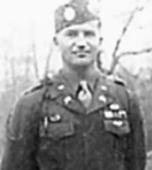
Richard D. Winters Richard D. Winters, who led the assault as a first lieutenant commanding Easy Company. U.S. Army · public domain · source
Staff ride at Brécourt
Staff ride at Brécourt Charles de Vallavieille, owner of Brécourt Manor, shows U.S. soldiers of the 66th Military Intelligence Brigade the gun positions on a staff ride, July 2024. U.S. Army, Cpl. Marvin Lopez · public domain · source
Historian briefing at Brécourt Manor
Historian briefing at Brécourt Manor Retired Col. Keith Nightingale, a World War II historian, briefs U.S. Army paratroopers at Brécourt Manor, Sainte-Marie-du-Mont, 4 June 2024 (DVIDS 8450991). Pinned at the manor; exact spot not recorded, approximate. U.S. Army Reserve (DVIDS) · public domain · source
Paratroopers listen to a briefing at Brécourt
Paratroopers listen to a briefing at Brécourt U.S. Army paratroopers of Civil Affairs and Psychological Operations Command (Airborne) listen to a historical briefing at Brécourt Manor, 4 June 2024 (DVIDS 8450993). Pinned at the manor; exact spot not recorded, approximate. U.S. Army Reserve (DVIDS) · public domain · source
Ronald C. Speirs
Ronald C. Speirs Ronald C. Speirs, whose D Company men took the fourth gun. U.S. Army · public domain · source
Wartime Jeep passes Brécourt Manor
Wartime Jeep passes Brécourt Manor A World War II Willys Jeep drives past Brécourt Manor during the 80th anniversary of D-Day, 4 June 2024 (DVIDS 8451005). U.S. Army Reserve (DVIDS) · public domain · source
Easy Company memorial
Easy Company memorial The Easy Company memorial at Le Grand Chemin, beside the Brécourt battlefield. U.S. Army SMDC · public domain · source
Easy Company monument, Brécourt
Easy Company monument, Brécourt The monument to Easy Company, 506th Parachute Infantry, near Brécourt Manor. hammerone (Panoramio) · CC BY-SA 3.0 · source
Easy Company monument near the manor
Easy Company monument near the manor The Easy Company monument near Brécourt Manor, June 2017. Dyala0504 · CC BY-SA 4.0 · source
Brécourt Manor memorial, 2012
Brécourt Manor memorial, 2012 A visit to the Brécourt Manor memorial, 5 June 2012; the file description says only "Brecourt Manor." Place not recorded; pinned at the Easy Company memorial, approximate. Archangel12 · CC BY 2.0 · source
Brécourt Manor memorial, 2012 (2)
Brécourt Manor memorial, 2012 (2) A second view from the same visit to the Brécourt Manor memorial, 5 June 2012. Place not recorded; pinned at the Easy Company memorial, approximate. Archangel12 · CC BY 2.0 · source

Free for everyone every year on its anniversary: June 6.

Accuracy score: 66/100 (moderate)

How the accuracy score works

Changelog

Corrections and updates to this map since 9 November 2026, newest first. All changes

Sources and method

Brecourt Manor assault, 6 June 1944. No U.S. Army staff ride handbook covering this action was found (searches of Army University Press / Combat Studies Institute and CMH staff ride guides); Army units do visit it on Normandy staff rides (DVIDS, 66th Military Intelligence Brigade staff ride, July 2024). Official: Winters's Distinguished Service Cross, Headquarters First U.S. Army, General Orders No. 31, 1 July 1944 (Hall of Valor); U.S. Army, 'Normandy monument dedicated to Maj. Richard Winters' (2012). Museum and archaeology: Utah Beach Museum, 'The battle of Brécourt Manor, a buried memory' (2022 excavation with Bordeaux Montaigne University: 105 mm guns, attack from the north, field hospital) and '60 years of history' (Michel de Vallavieille); DVIDS, 'Brecourt Manor: a historical account handed down through generations'; SOFREP, 'Easy Company at Brécourt Manor' (the four dead); Database Mémoire, Sgt. Julius A. Houck. Narrative: Stephen E. Ambrose, Band of Brothers (1992); Richard D. Winters, Beyond Band of Brothers (2006); Kevin Hymel, 'Screaming Eagles at Brécourt Manor' (Warfare History Network, after Winters's after-action report and sketch); C. Carwood Lipton's account (carwoodlipton.com); Beaches of Normandy, 'Dick Winters' first battle'; D-Day Overlord, 'Le Grand Chemin – Brécourt' (II./Artillerie-Regiment 191, leFH 18/40). Places: cromwell-intl.com field notes (manor grid reference, field and gun layout); Normandy War Guide (Easy Company memorial, Winters monument, Utah Beach Museum); Repple Depple blog (Winters's sketch: frontage, gun facings); the battle diagram 'E/506th versus German Artillery Battery' (50 m scale), the 1944 reconnaissance photo with the gun positions marked and an annotated IGN map (guns 1–4, MG 1–3), reproduced at The Hobby Butterflies and overlaid on the 1947 aerial by SnakeByte Studios (gun spacing, the hedgerows, the trench, the machine-gun nests); the hedgerow traced on OpenStreetMap and satellite imagery. Wikipedia's article was used only for leads and the battery coordinate. Accounts differ on the German unit, the guns' type, the number of men and the casualties; positions of the individual teams inside the field are interpretive.

Where the positions come from

Further reading