Battlefield Atlas
Plains Wars · 30 September - 5 October 1877

Bear Paw, 30 September - 5 October 1877

Also known as Battle of the Bear's Paw, Bear Paw Mountain Battlefield, Battle of Snake Creek

Accuracy70 /100 · good
Stages8 · over 6 days
On the map20 photos pinned
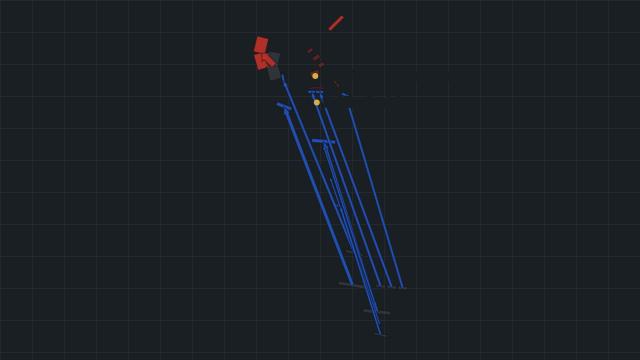
Drawing of the units and movements at Bear PawStages 1–3 freeOpen the interactive map

The first 3 stages are free. No account needed to start.

Bear Paw (C'aynnim Alikinwaaspa, 'Place of the Manure Fire') was the last battle of the Nez Perce War. On 30 September 1877, about 40 miles from Canada, Colonel Nelson A. Miles's column of about 400 soldiers with Cheyenne and Lakota scouts surprised the camp of about 700 Nez Perce (the Park Service says about 800) on Snake Creek in the Bear Paw foothills of Montana. Warriors firing from the bluffs threw back the 7th Cavalry's charge with heavy loss, but the 2nd Cavalry captured most of the horse herd, and the fight became a six-day siege in snow and cold. Ollokot, Toohoolhoolzote, Lean Elk and Looking Glass were killed. On 5 October, after General Howard arrived, Joseph surrendered; White Bird and others escaped to Canada. The words attributed to Joseph that day were recorded by Lieutenant C. E. S. Wood, and their exact wording is disputed.

Battlefield Explorer opens stages 4–8 and every other battle. See the free battles.

Incidents in the defeat and capture of Chief Joseph
Incidents in the defeat and capture of Chief Joseph — G. M. Holland (sketches), Library of Congress · public domain

The battle, stage by stage

  1. 29 September - 30 September 1877, about 9 AM

    The camp at the Place of the Manure Fire

    After four months and some 1,170 miles, about 700 Nez Perce - the bands of Joseph, Looking Glass, White Bird and Toohoolhoolzote, with Husis Kute's Palouses - make camp in the early afternoon of 29 September in a sheltered, crescent-shaped bend on the east side of Snake Creek, about 40 miles short of the Canadian border. They call it C'aynnim Alikinwaaspa, 'Place of the Manure Fire', for the buffalo chips they burn. Most lodges were lost at the Clearwater and the Big Hole; families shelter under hides and in lean-tos. The horse herd grazes on the bench west of the creek. They do not know that Colonel Nelson A. Miles, who set out from the Tongue River cantonment on 18 September, is closing in with about 400 soldiers and some 30 to 50 scouts, most of them Cheyenne and Lakota. On the morning of the 30th his column finds the trail and forms its line about a mile and a half from the camp. (The army's approach is drawn schematically.)

  2. 30 September, shortly after 9 AM

    The charge

    A Nez Perce scout signals 'Enemies right on us!' as the rumble of horses comes from the south. The Cheyenne scouts and Captain Tyler's 2nd Cavalry battalion swing left toward the herd across the creek; Miles sends the 7th Cavalry battalion - Companies K, D and A, 115 officers and men by Captain Moylan's report, many of them recruits - straight at the camp at a gallop. Company K, on the right, is pushed off by a narrowing coulee and checked by warriors firing from a flat ridge. Companies A and D reach the south bluff and are met by a point-blank volley from about twenty men, Yellow Wolf among them, firing from just below the edge. Up to seventy people, mostly men, break out to the north-east with part of the horses.

  3. 30 September, late morning to dusk

    The 7th Cavalry's losses at the bluffs

    A and D fall back about 200 yards and dismount, then advance on foot to join Company K. Captain Owen Hale and Lieutenant Jonathan Biddle are killed; Moylan and Godfrey are wounded; by Moylan's report 53 of the 115 engaged are killed or wounded (Greene: 2 officers and 14 men killed, 2 officers and 29 men wounded). Captain Snyder's mounted 5th Infantry come up onto the bluff and fire volleys at the warriors in the draws; the Hotchkiss gun cannot depress far enough and is abandoned for a time under accurate fire. To the west the 2nd Cavalry runs off most of the herd, leaving the people without their means of escape; Lieutenant McClernand's company chases about 250 more ponies some five miles to the north-east in a pursuit of two to three hours; the map shows it back with the battalion by dusk. Later Lt. Mason Carter's 5th Infantry company charges down the ravine on the left of the infantry's bluff-top line into the south end of the camp, but is pinned down and pulls back at sundown. Ollokot, Joseph's brother, is killed in the opening fighting; Toohoolhoolzote is killed in a rifle pit on the ridge north of his camp, and five more men fall at 'Death's Point of Rocks' below it; Lean Elk (Poker Joe) is shot by mistake by another Nez Perce. By Greene's count 22 Nez Perce die this day; the Park Service gives 26.

  4. Night of 30 September - 1 October

    Snow, pits and the cordon

    Miles cannot take the camp, so he surrounds it. After dark the 7th and 5th trade places: 7th Cavalry detachments hold the south bluff and a ridge west of the creek, the infantry dig rifle pits along the crests east and south-east, and the 2nd Cavalry closes the plateau to the west, north-west and north-east. Rain turns to wind-driven snow. In the camp, women and children dig through the night with camas hooks, butcher knives, pans and trowel bayonets taken at the Big Hole - at least 41 shelter pits - while the warriors dig at least 15 rifle pits on the ravine ridges. 'Children crying with cold,' Yellow Wolf remembered. 'No fire.' Wounded soldiers lie between the lines; warriors who come among them at night mostly take their weapons and ammunition.

  5. 1-3 October

    A truce broken, and the big gun

    On 1 October Joseph walks out under a white flag to talk with Miles. When he will not give up all the arms, Miles holds him - a breach of the truce, as Greene calls it; the Park Service says he was put in chains, and Nez Perce accounts say he was tied and hobbled; Miles and Wood denied it. The Nez Perce in turn keep Lieutenant Lovell Jerome, who had ridden into their lines; he is treated well, and the two men are exchanged on 2 October. A 12-pounder Napoleon gun, which reached the field with the wagon train about 4 PM on 1 October (the Park Service says 2 October), is dug in about 1,000 meters west of the village, where archaeologists found its pit (period accounts say 1,500 yards); it opens fire on 3 October, and its crew sinks the trail into a pit and lobs shells like a mortar. Looking Glass is shot in the forehead after standing up in the open - by Yellow Wolf's account hoping that help was coming from Sitting Bull's camp in Canada; the date is disputed (the Park Service gives 2 October, Greene, following most army accounts, has him killed on 30 September, before the 1 October talks, and some Nez Perce accounts put it on the last day). The 1928 shaft at the shelter pits marks the traditional spot.

  6. 4 October

    Howard arrives

    On 4 October a shell bursts in a shelter pit and buries several people; a girl of about twelve, Atsipeeten, and her grandmother are killed. That evening General Oliver O. Howard, whose column had followed the Nez Perce since June, rides in with only a small party - he had left his main force with Sturgis at Carroll on the Missouri. With him are two Nez Perce from the treaty bands, Captain John and Old George, who will carry messages into the camp.

  7. 5 October, about 2:20 PM

    'I will fight no more forever'

    Captain John and Old George tell the chiefs that no one will be executed and the people will get blankets and food, and probably that they will be sent back to Lapwai. White Bird refuses; Joseph decides to surrender. In the afternoon he rides across the creek bottom and up onto the tableland west of the coulee, flanked by five men on foot, Tom Hill among them, and holds out his rifle to Howard, who gestures him to Miles. His reply to the generals, relayed by Captain John and the interpreter Arthur Chapman, is best known in the words Lieutenant C. E. S. Wood wrote down in pencil: 'I am tired of fighting ... From where the sun now stands I will fight no more forever.' The wording is disputed: Wood's pencil original was lost, he published several differing versions over the years, Howard gave a reporter a different version, the message may have been paraphrased in translation, and the Park Service notes it may have been spoken in a council of chiefs rather than to the officers. Through the rest of the day 67 men and an unknown number of women, children and elders come out and give up their arms.

  8. Night of 5 October 1877

    White Bird's escape

    About 9 PM White Bird's party - perhaps 50 people by Greene's reading, 30 to 50 by the Park Service's - slips north along the Snake Creek bottom past the pickets and makes for Canada, where they join Sitting Bull's Lakota. Altogether about 230 Nez Perce reached Canada from the camp over the course of the fight, by Black Eagle's count. The army lost 2 officers and 19 men killed and 4 officers and 46 men wounded, with 3 more later dying of wounds (Greene); the Park Service gives 23 killed and 45 wounded. Nez Perce losses are uncertain: the Park Service counts about 30 killed and 46 wounded; McWhorter put the dead at no more than 25. Counts of those who surrendered ran from 405 (Tilton) to 448 (Miles's final tally, including stragglers brought in later; the Park Service gives 431 escorted away); instead of going home to Idaho, they were exiled to Kansas and Indian Territory, and only in 1885 were the survivors sent north - 118 to Idaho and about 150, Joseph among them, to the Colville Reservation.

At a glance

When
30 September - 5 October 1877
Where
Bear Paw Battlefield, about 16 miles south of Chinook, Blaine County, Montana, United States.
Forces
Miles brought about 400 soldiers and some 30 to 50 scouts against a camp of about 700 Nez Perce, most of them women, children and elders.
Casualties
The army lost about 21 to 23 killed and some 45 to 50 wounded, most of them in the 7th Cavalry's opening charge; the Nez Perce lost about 25 to 30 dead, among them four leaders, and about 405 to 448 surrendered while about 230…
On the map
8 stages, 20 photos pinned where they were taken

Who fought

  • Nez Perce (Joseph, Looking Glass, White Bird, Ollokot)
  • U.S. Army (Miles; 2nd and 7th Cavalry, 5th Infantry, scouts)

Accuracy score

70/100 · good

Good confidence in where units stood and moved, scored on the quality of the source map, how well independent fixed points agree, the level of detail and corroboration. How scores work

Places on the map

  • Trailhead panels and DAR boulder (1926)
  • Nez Perce Encampment (NPS wayside)
  • 1928 'Brave Warriors' shaft - traditional site of Looking Glass's death; McWhorter Stakes
  • 'We will stand our ground!' - ridge where the charge was stopped (NPS wayside)
  • Soldier Burials: mass-grave depression, field hospital (NPS wayside)
  • Chief Joseph's Surrender (NPS wayside)

Forces

Miles brought about 400 soldiers and some 30 to 50 scouts against a camp of about 700 Nez Perce, most of them women, children and elders. The army's numbers come from the Park Service and its own reports; the number of Nez Perce fighting men is not reliably known.

Nez Perce (Joseph, Looking Glass, White Bird, Ollokot)

People in the camp (all ages)about 700

The atlas's working figure for the whole camp, families included; Park Service accounts give somewhat higher totals for the people on the flight, and no reliable count of the fighting men exists. Jerome A. Greene, Nez Perce Summer 1877 (NPS / Montana Historical Society Press, 2000), ch. 12; National Park Service, Bear Paw Battlefield

Horse herdroughly 500 animals

Greene's figure for the herd grazing on the bench west of Snake Creek. Jerome A. Greene, Nez Perce Summer 1877, ch. 12

U.S. Army (Miles; 2nd and 7th Cavalry, 5th Infantry, scouts)

Soldiers presentabout 400

Park Service figure for Miles's command: elements of the 2nd and 7th Cavalry and the mounted 5th Infantry, with a Hotchkiss gun; a 12-pounder Napoleon came up with the wagon train on 1 or 2 October. National Park Service, Bear Paw Battlefield site brochure; National Park Service, Bear Paw Battlefield brochure

Scouts30-50

The current Park Service brochure gives 50 scouts and an older one 30 to 40 Cheyenne and non-Indian scouts; Greene names about 30 Northern Cheyenne who joined the column as scouts. National Park Service, Bear Paw Battlefield site brochure; National Park Service, Bear Paw Battlefield brochure; Jerome A. Greene, Nez Perce Summer 1877, ch. 11

7th Cavalry battalion in the charge (Cos. K, D and A)115 officers and men

Capt. Myles Moylan's report; many were recruits. Capt. Myles Moylan's report (Friends of the Nez Perce Battlefields)

Casualties

The army lost about 21 to 23 killed and some 45 to 50 wounded, most of them in the 7th Cavalry's opening charge; the Nez Perce lost about 25 to 30 dead, among them four leaders, and about 405 to 448 surrendered while about 230 reached Canada. Army losses are well recorded; Nez Perce losses rest on later counts that disagree. Certainty: fair.

Nez Perce (Joseph, Looking Glass, White Bird, Ollokot)

Killedabout 25-30 (no more than 25 (McWhorter) to about 30 (Park Service))

The Park Service counts about 30 killed; L. V. McWhorter, who collected Nez Perce accounts, put the dead at no more than 25. The dead included Ollokot, Toohoolhoolzote, Lean Elk (Poker Joe) and Looking Glass. National Park Service, Bear Paw Battlefield brochure; Jerome A. Greene, Nez Perce Summer 1877 (NPS / Montana Historical Society Press, 2000), ch. 13

Killed on the first day (30 September)22-26

Greene, following McWhorter, gives 22 killed on the first day; the Park Service gives 26. Jerome A. Greene, Nez Perce Summer 1877, ch. 13; National Park Service, Bear Paw Battlefield

Wounded46

Park Service figure; other contemporary counts differ and the true number is uncertain. National Park Service, Bear Paw Battlefield brochure

Surrenderedabout 405-448 (405-448)

Counts ran from 405 (Tilton) to 448 (Miles's final tally, including stragglers brought in later); the Park Service gives 431 escorted away. They were exiled to Kansas and Indian Territory rather than returned to Idaho. Jerome A. Greene, Nez Perce Summer 1877, ch. 13 and notes; National Park Service, Bear Paw Battlefield brochure

Escaped to Canadaabout 230

Black Eagle's count of those who reached Canada from the camp over the course of the fight, cited by Greene; White Bird's own party on the night of 5 October was perhaps 50 (Greene) or 30 to 50 (Park Service). Jerome A. Greene, Nez Perce Summer 1877, chapter 13 notes; National Park Service, Bear Paw Battlefield

U.S. Army (Miles; 2nd and 7th Cavalry, 5th Infantry, scouts)

Killed21-23 (2 officers and 19 men (Greene); 23 (Park Service))

Greene gives 2 officers and 19 enlisted men killed, with 3 more later dying of wounds; the Park Service gives 23 killed. Jerome A. Greene, Nez Perce Summer 1877, ch. 13; National Park Service, Bear Paw Battlefield brochure

Wounded45-50 (4 officers and 46 men (Greene); 45 (Park Service))

Greene gives 4 officers and 46 enlisted men wounded; the Park Service gives 45. Jerome A. Greene, Nez Perce Summer 1877, ch. 13; National Park Service, Bear Paw Battlefield brochure

Died of wounds3

Enlisted men who died of their wounds after the battle, in addition to the killed (Greene). Jerome A. Greene, Nez Perce Summer 1877, ch. 13

7th Cavalry battalion in the opening charge (killed and wounded)53 of 115 engaged

Capt. Myles Moylan's report; Greene gives the battalion's loss as 2 officers and 14 men killed and 2 officers and 29 men wounded. Capt. Owen Hale and Lt. Jonathan Biddle were killed; Moylan and Capt. Edward Godfrey were wounded. Capt. Myles Moylan's report (Friends of the Nez Perce Battlefields); Jerome A. Greene, Nez Perce Summer 1877, ch. 12

Civilians

Killed by shellfire in the shelter pits (4 October)2

A shell burst in a shelter pit and buried several people; a girl of about twelve and her grandmother were killed. The Nez Perce families' losses are otherwise counted within the Nez Perce totals above, which do not separate warriors from women, children and elders. National Park Service, Bear Paw Battlefield site brochure

Equipment and ships

Horses captured (Nez Perce)most of the herd

The herd on the bench west of the creek numbered roughly 500 animals (Greene); the 2nd Cavalry ran off most of it on 30 September, and Lt. McClernand's company chased about 250 more ponies some five miles to the north-east. Jerome A. Greene, Nez Perce Summer 1877, ch. 12; National Park Service, Bear Paw Battlefield

Then and now: how the ground has changed

The hills, coulees and creek bend look much as they did in 1877; the National Historic Landmark nomination calls the field's integrity 'pristine'. The changes are small: willows now line Snake Creek where the camp found little brush, hay and alfalfa grow in the creek bottoms, a graveled highway, fences and a few ranch buildings sit at the edges, and monuments, waysides and a trail have been added.

Weapons

U.S. Army (Miles; 2nd and 7th Cavalry, 5th Infantry, scouts)

Springfield Model 1873 carbine ("Trapdoor")

Springfield Model 1873 carbine ("Trapdoor")

Single-shot breech-loading carbine · 1873–1892

At Bear Paw: Most cartridge cases found in Scott's 2000 survey of the field are .45-70, the cartridge of the Army's Model 1873 Springfields.

The U.S. Army's standard carbine after 1873: a hinged breechblock (the "trapdoor") flipped up to load one copper-cased cartridge at a time. Rugged and hard-hitting, but slower than a repeater, and the soft copper cases could stick in a fouled chamber.

Caliber
.45-55 (carbine load)
Effective range
about 300 yd; sighted to 1,200
Rate of fire
about 8–12 rounds a minute
Photo: Trapdoor carbine later owned by Geronimo · Smithsonian (NMAH) · Public domain
M1857 12-pounder "Napoleon"

M1857 12-pounder "Napoleon"

Smoothbore field gun (bronze) · 1857-1865 (U.S. service into the 1870s)

At Bear Paw: A 12-pounder Napoleon came up with the wagon train on 1 October; its crew sank the trail into a pit and from 3 October lobbed shells into the camp like a mortar. Scott's survey found its emplacement about 1,000 meters west of the village.

A U.S. copy of a French gun-howitzer named for Emperor Napoleon III, the Napoleon fired a 12-pound ball but was light enough for field batteries. Rifled guns outranged it, but at the short ranges of most Civil War fighting its heavy canister made it the most trusted gun on both sides. It became the most common field piece of the war.

Caliber
4.62 in
Range
About 1,600-1,700 yd (solid shot at 5°)
Shot
Solid shot, shell, case shot, canister
Crew
9
Photo: Hal Jespersen · Public domain

Paintings and photographs

Incidents in the defeat and capture of Chief Joseph
Incidents in the defeat and capture of Chief Joseph "Montana - the Nez Perces War - Incidents in the defeat and capture of Chief Joseph by General Nelson A. Miles", a wood-engraved page from sketches by G. M. Holland, 1877; among its scenes is a portrait of Lieutenant Lovell H. Jerome (LCCN 2001695548). Pinned at the shelter pits where Jerome was held on 1-2 October, approximate. G. M. Holland (sketches), Library of Congress · public domain · source
Chief Joseph's Band, spring 1877
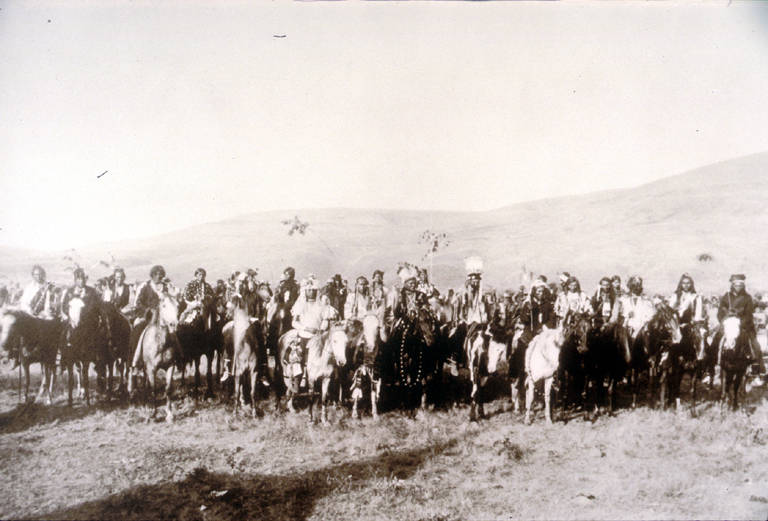
Chief Joseph's Band, spring 1877 A Nez Perce group known as "Chief Joseph's Band", photographed at Lapwai, Idaho, in the spring of 1877, months before the war. Pinned at the camp of Joseph's Wallowas at Bear Paw; the photograph was taken at Lapwai. Unknown photographer · public domain · source
Chief Joseph, three weeks after the surrender
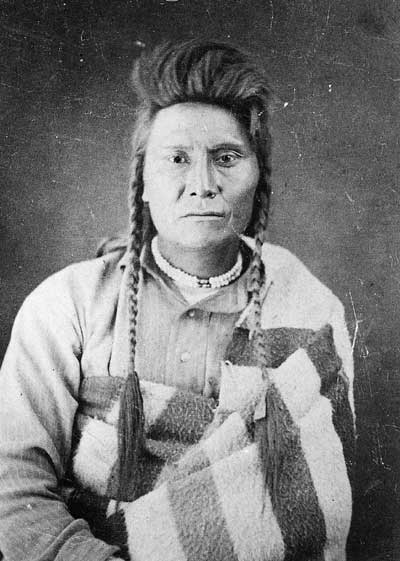
Chief Joseph, three weeks after the surrender Chief Joseph, photographed by John H. Fouch at the Tongue River Cantonment, Montana Territory, shortly after the Nez Perce prisoners arrived on 23 October 1877, three weeks after the surrender (Smithsonian NAA Photo Lot R92-39). Pinned at the camp of Joseph's Wallowas; the portrait was taken at Tongue River. John H. Fouch · public domain · source
Chief Joseph at Bismarck, 1877
Chief Joseph at Bismarck, 1877 Chief Joseph, photographed by Orlando Scott Goff at Bismarck, Dakota Territory, in 1877, after the surrender. Pinned at the camp of Joseph's Wallowas; the portrait was taken at Bismarck. Orlando Scott Goff · public domain · source
Yellow Bull at Chief Joseph's grave, 1905
Yellow Bull at Chief Joseph's grave, 1905 The Nez Perce Yellow Bull in full ceremonial dress at Chief Joseph's tombstone on the Colville Indian Reservation, Washington, photographed by Edward S. Curtis in 1905. Pinned in the Nez Perce camp at Bear Paw, where his own position is not recorded; the photograph was taken at Colville. Edward S. Curtis · public domain · source
Yellow Wolf
Yellow Wolf Him-mim-mox-mox, Yellow Wolf, full-length with rifle and tomahawk. He was among the warriors who met the 7th Cavalry's charge below the south bluff. The Library of Congress dates this photoprint to 1909, three decades after the war, and records no place; pinned with the warriors below the south bluff. Library of Congress · public domain · source
Miles charging the camp
Miles charging the camp "General Miles charging the Indian camp - the dash into the ravine", wood engraving from sketches by G. M. Holland, 1877 (LCCN 96516447). Pinned where Companies A and D of the 7th Cavalry reached the south bluff on 30 September, approximate. G. M. Holland (sketches), Library of Congress · public domain · source
Where Ollokot fell
Where Ollokot fell The Park Service marker at the place where Ollokot, Joseph's younger brother and war leader of the Wallowa band, fell during the battle and siege. The battle map puts his death on the west edge of the south bluff on 30 September; pinned there, approximate. National Park Service · public domain · source
Chief Joseph's coat
Chief Joseph's coat A coat of Sioux origin in the Big Hole National Battlefield collection (BIHO 1256). It is claimed that Joseph wore it during the battle and siege and gave it to Lieutenant Lovell Jerome, who was held in the Nez Perce lines and exchanged for Joseph. Pinned at the shelter pits where Jerome was held, approximate. Nez Perce (National Park Service) · public domain · source
Surrender at Miles's headquarters
Surrender at Miles's headquarters "Surrender of Chief Joseph and his principal warriors at General Miles's headquarters, October 5-6", wood engraving from sketches by G. M. Holland, 1877 (LCCN 2001700454). Pinned at the surrender site. G. M. Holland (sketches), Library of Congress · public domain · source
End of the Nez Perce War
End of the Nez Perce War "End of the Nez Percés War - surrender of Chief Joseph", wood engraving, 1877 (LCCN 91787142). Pinned at the surrender site. Unknown artist, Library of Congress · public domain · source
Nez Perce men before exile
Nez Perce men before exile Nez Perce men posed before their transport to Indian Territory, 1877; the place is not recorded, probably Montana. Pinned with the surrendered Nez Perce at Bear Paw, approximate. Unknown photographer · public domain · source
Prisoners at Tongue River
Prisoners at Tongue River Nez Perce prisoners arrive at the Tongue River Cantonment, Montana Territory, on 23 October 1877, three weeks after the surrender at Bear Paw. Pinned with the surrendered Nez Perce at Bear Paw; the photograph was taken at Tongue River. John H. Fouch · public domain · source
Park Service map of the battlefield
Park Service map of the battlefield National Park Service map of the Bear Paw Battlefield. Pinned at the center of the battlefield, approximate. U.S. National Park Service · public domain · source
Installing the monument, 1931
Installing the monument, 1931 A historic photograph of the monument at Bear Paw being installed in 1931. The description does not say which monument; pinned at the trailhead monuments, approximate. National Park Service · public domain · source
Bear Paw Battlefield today
Bear Paw Battlefield today Bear Paw Battlefield, Montana, where the army attacked and besieged the Nez Perce encampment from 30 September 1877. Viewpoint not recorded; pinned at the camp, approximate. National Park Service · public domain · source
The battlefield where the Nez Perce laid down arms
The battlefield where the Nez Perce laid down arms The Bear Paw Battlefield, where the Nez Perce laid down their arms on 5 October 1877, some forty miles short of the Canadian border. Viewpoint not recorded; pinned at the camp, approximate. National Park Service · public domain · source
Riders at the commemoration, 2010
Riders at the commemoration, 2010 Riders at the Bear Paw Battlefield near Chinook, Montana, during the battle commemoration, October 2010 (photo by Joni Packard). Place on the field not recorded; pinned at the camp, approximate. U.S. Forest Service · public domain · source
Waysides overlooking the battlefield
Waysides overlooking the battlefield Monuments and waysides at the entrance to the Bear Paw Battlefield overlook the field and tell what happened there, 2009. Pinned at the trailhead panels. National Park Service · public domain · source
Bear Paw Battlefield monument
Bear Paw Battlefield monument A monument at Bear Paw Battlefield near Chinook, Montana, 2010. The description does not say which monument; pinned at the trailhead monuments, approximate. U.S. Forest Service, Northern Region · CC BY 2.0 · source

★ Medal of Honor 9 recipients

  • First Lieutenant and Adjutant George W. Baird
    U.S. Army · 5th U.S. Infantry · 1877-09-30
    Most distinguished gallantry in action with the Nez Perce Indians. Issued 27 November 1894.
    Official record (CMOHS) →
  • First Lieutenant Mason Carter
    U.S. Army · 5th U.S. Infantry · 1877-09-30
    Led a charge under a galling fire, in which he inflicted great loss upon the enemy. Issued 27 November 1894.
    Official record (CMOHS) →
  • Captain Edward S. Godfrey
    U.S. Army · Company D, 7th U.S. Cavalry · 1877-09-30
    Led his command into action when he was severely wounded. Issued 27 November 1894.
    Official record (CMOHS) →
  • First Sergeant Henry Hogan
    U.S. Army · Company G, 5th U.S. Infantry · 1877-09-30
    Carried Lt. Romeyn, who was severely wounded, off the field of battle under heavy fire. His second Medal of Honor (the first was for the Cedar Creek fight, 1876).
    Official record (CMOHS) →
  • Second Lieutenant Oscar F. Long
    U.S. Army · 5th U.S. Infantry · 1877-09-30
    Sent to order a troop of cavalry forward and finding both its officers killed, he took command and, under heavy fire, led it to its position (Company K, 7th Cavalry, after Hale and Biddle fell). Issued 22 March 1895.
    Official record (CMOHS) →
  • Second Lieutenant Edward J. McClernand
    U.S. Army · Company G, 2nd U.S. Cavalry · 1877-09-30
    Gallantly attacked a band of hostiles and conducted the combat with excellent skill and boldness. Issued 27 November 1894.
    Official record (CMOHS) →
  • Captain Myles Moylan
    U.S. Army · Company A, 7th U.S. Cavalry · 1877-09-30
    Gallantly led his command in action against Nez Perce Indians until he was severely wounded. Issued 27 November 1894.
    Official record (CMOHS) →
  • First Lieutenant Henry Romeyn
    U.S. Army · 5th U.S. Infantry · 1877-09-30
    Led his command into close range of the enemy, there maintained his position, and vigorously prosecuted the fight until he was severely wounded. Issued 27 November 1894.
    Official record (CMOHS) →
  • Major and Surgeon Henry R. Tilton
    U.S. Army · U.S. Army · 1877-09-30
    Fearlessly risked his life and displayed great gallantry in rescuing and protecting the wounded men. Issued 22 March 1895.
    Official record (CMOHS) →

Links go to the official records: the Congressional Medal of Honor Society and, where they exist, the service's own pages.

Free for everyone every year on its anniversary: September 30 and October 5.

Accuracy score: 70/100 (good)

  • Sources33/40

    Jerome Greene's Nez Perce Summer 1877 (published by the Park Service), Moylan's report, Douglas Scott's 2000 archaeological survey, the National Register nomination and the park's waysides.

  • Fixed points19/30

    Six park markers tie the camp, the charge ridge, the burial site and the surrender site to the ground, and the Napoleon gun sits at the pit Scott found; Snake Creek and the bluff edges are placed from Greene's distances.

  • Movement detail11/20

    Greene gives directions and yardages for the charge, the herd and the siege lines; routes are straight lines and the approach is schematic.

  • Corroboration7/10

    Greene, Moylan, Scott and the Park Service agree on the layout and the sequence; dates for Looking Glass's death and White Bird's escape, and some counts, conflict.

How the accuracy score works

Sources and method

Bear Paw, 30 September - 5 October 1877. No U.S. Army staff ride handbook covers Bear Paw (the Army University Press handbook for the Nez Perce War covers White Bird Canyon). The key source is Jerome A. Greene, Nez Perce Summer 1877: The U.S. Army and the Nee-Me-Poo Crisis (Montana Historical Society Press, 2000; published online by the National Park Service), chapters 11-13 and notes (Bear's Paw: Attack and Defense; Siege and Surrender) - the camp's layout and band positions, the herd, the charge, the siege lines, the pits, the Napoleon gun, the surrender ground, casualty and surrender counts, and the disputes over Looking Glass's death and Joseph's words. Primary: Capt. Myles Moylan's report of the 7th Cavalry battalion's action (Friends of the Nez Perce Battlefields); Yellow Wolf's and other Nez Perce accounts collected by L. V. McWhorter (as quoted by Greene and the NPS); Miles's and Howard's reports as cited by Greene. Positions are anchored on the National Park Service waysides and monuments of the Bear Paw Battlefield unit of Nez Perce National Historical Park, located from the Historical Marker Database (hmdb.org): the Nez Perce Encampment, 'We will stand our ground!', Soldier Burials, Chief Joseph's Surrender, the 1928 'Brave Warriors' shaft and McWhorter Stakes, and the trailhead panels; the National Register nomination (creek, cove, monuments, boundary); the NPS Bear Paw history and site brochure; and Douglas D. Scott's archaeological survey of the battlefield (2000; report; summary), which places the Napoleon gun pit. The line of Snake Creek, the bluff edges, the Hotchkiss site and the army's approach are placed from distances given by Greene and are approximate; the McWhorter-Noyes stake map of the 1930s was not available for this reconstruction.

Where the positions come from

  • Park markers National Park Service waysides and monuments of the Bear Paw Battlefield unit, Nez Perce National Historical Park, located from the Historical Marker Database: Nez Perce Encampment, 'We will stand our ground!', Soldier Burials, Chief Joseph's Surrender, the 1928 shaft and McWhorter Stakes, and the trailhead panels
  • Archaeology Douglas D. Scott's 2000 archaeological survey (NPS Midwest Archeological Center): the 12-pounder Napoleon emplacement about 1,000 m west of the village, army rifle pits south and east of it, and the camp on the creek's primary terrace
  • Official National Register / National Historic Landmark nomination (NPGallery 70000355): Snake Creek, the crescent-shaped cove, the monuments and the boundary along State Secondary Highway 240
  • Scholarship Jerome A. Greene, Nez Perce Summer 1877 (NPS / Montana Historical Society Press, 2000), ch. 11-13: band positions, the herd bench, the charge, the siege lines and the surrender ground
  • Note The line of Snake Creek, the bluff edges, the Hotchkiss site and the army's approach are placed from Greene's distances and are approximate; the 1930s McWhorter-Noyes stake map was not available

Further reading