Fetterman Fight, 21 December 1866
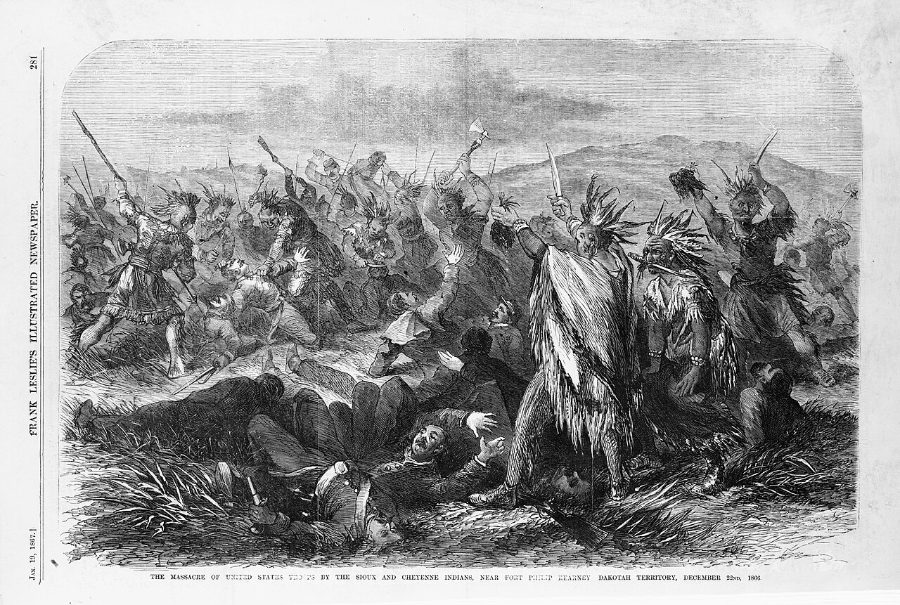
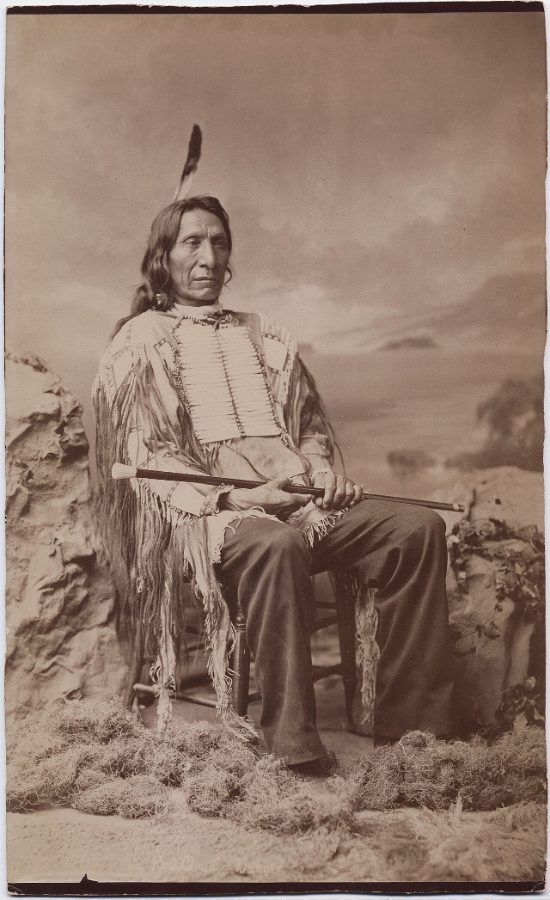
On 21 December 1866, during Red Cloud's War over the Bozeman Trail, Captain William J. Fetterman led 80 soldiers and two civilians out of Fort Phil Kearny in present-day Wyoming to relieve an attacked wood train. Drawn over Lodge Trail Ridge by a decoy party that probably included the young Crazy Horse, they were ambushed by some 1,500–2,000 Lakota, Cheyenne and Arapaho warriors and killed to the last man within about 40 minutes. It was the Army's worst defeat on the Plains until the Little Bighorn ten years later. The disaster helped lead to the Fort Laramie Treaty of 1868, in which the United States abandoned the Bozeman Trail forts — one of the few wars the Plains nations won outright.
Open the interactive map6 stages on modern satellite imagery and terrain, with 3D elevation
This battle is part of the full atlas, open to Patreon members. Free battles include Yorktown, Waterloo, The Alamo, Antietam, Little Bighorn, Belleau Wood, Omaha Beach, Ia Drang.
The battle, stage by stage
- 21 Dec 1866, about 11 AM
The wood train is attacked
Fort Phil Kearny guards the Bozeman Trail through the heart of Lakota hunting grounds; since summer Red Cloud's warriors have harassed it constantly. On a cold morning the wagon train hauling logs from the pinery is attacked on the wood road west of the fort. A small decoy party shows itself near Lodge Trail Ridge, while some 1,500–2,000 Lakota, Cheyenne and Arapaho lie hidden beyond the ridge on both sides of the Bozeman Trail.
- About 11:15 AM
Fetterman marches out
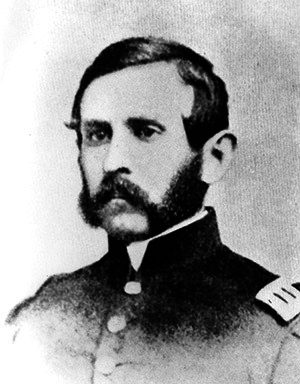
Colonel Carrington sends Captain William Fetterman with 49 infantry and Lieutenant George Grummond with 27 cavalry to relieve the wood train, with orders not to pursue beyond Lodge Trail Ridge. Fetterman instead heads north-west up the ridge, apparently to cut off the attackers; the warriors at the wood train break off and the decoys fall back up the trail, taunting the soldiers.
- About 11:45 AM
Over Lodge Trail Ridge
Following the decoys, Fetterman's command crosses the crest of Lodge Trail Ridge and passes out of sight of the fort, the cavalry ahead, the infantry behind, with two civilians, Wheatley and Fisher, carrying new Henry repeating rifles. The decoy riders cross Peno Creek, then split apart — the signal for the ambush.
- About noon
The ambush
Warriors rise from the ravines on both sides of the ridge, the Cheyenne and Arapaho on the west, the Lakota on the east, while mounted warriors cross the Peno Creek flats at the north end of the ridge. The cavalry, farthest down the slope near Peno Creek, is hit first and falls back up the Bozeman Trail along the ridge; the infantry, strung out behind them near the middle of the ridge, start falling back toward the high ground to the south.
- About 12:15–12:45 PM
No survivors
Within perhaps 40 minutes it is over. The infantry make their last stand among the rocks where the monument now stands, overrun by attacks from the east; Fetterman and Captain Brown are found side by side within a few yards of today's monument wall. About 250 yards north-north-west, Wheatley, Fisher and a few soldiers die fighting from a cluster of rocks. The cavalry's last stand is on the ridge roughly 400 yards north of the infantry, near Massacre Hill. Ten Eyck's 76 men reach a high hill south of the field but cannot intervene.
- Afternoon
Ten Eyck reaches the field
When the warriors withdraw Ten Eyck finds all 81 men dead — the worst defeat the US Army had yet suffered on the Plains. The "Fetterman Massacre" shocked the East; it led to the Fort Laramie Treaty of 1868, in which the government abandoned the Bozeman Trail forts — one of the few wars the Plains tribes won outright.
Paintings and photographs



Sources and method
How to use: pick one entry under "The battle". Tall blocks moved since the previous stage, flat yellow outlines show where they came from, arrows join them, low grey blocks are everyone else. Red = Lakota, Cheyenne and Arapaho, blue = US Army.