Battlefield Atlas
Plains Wars · 1875 Members · from $3

Pecos River fight, 25 April 1875

On 25 April 1875, Lieutenant John L. Bullis and three scouts of the Seminole Negro Indian Scouts from Fort Clark — Sergeant John Ward, Private Pompey Factor and Trumpeter Isaac Payne — caught 25 to 30 raiders (Bullis believed them Comanches from Mexico; some accounts say Lipan Apaches, and one later account about forty men) driving some 75 stolen horses across the Pecos near its mouth. The four attacked from a ridge at about 75 yards and held the raiders at the river for about 45 minutes, until the raiders flanked them. In the retreat Bullis's horse bolted, and while Factor and Payne gave covering fire Ward rode back and carried the lieutenant off behind him. All three scouts received the Medal of Honor. The exact site is unknown: this map follows the Val Verde County Historical Commission's placement near the mouth of the Pecos, within half a mile of the Texas historical marker at the US 90 overlook; the 1875 river bottom is now under Amistad Reservoir.

Open the interactive map7 stages on modern satellite imagery and terrain, with 3D elevation

This battle opens with Battlefield Enjoyer ($3 a month on Patreon), which unlocks every battle in the atlas and every one added later. Free battles include Yorktown, Waterloo, The Alamo, Antietam, Little Bighorn, Belleau Wood, Omaha Beach, Ia Drang.
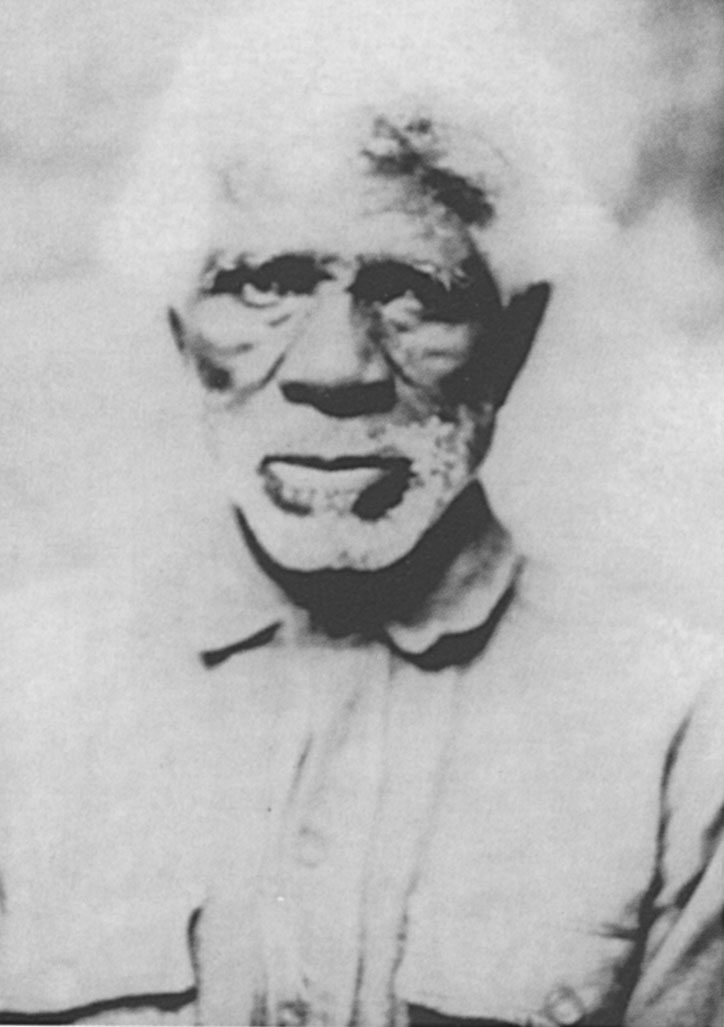
Pompey Factor
Pompey Factor — Public domain

The battle, stage by stage

  1. 25 April 1875, early afternoon

    The fresh trail

    Nine days out of Fort Clark, Lieutenant John L. Bullis and three Black Seminole scouts — Sergeant John Ward, Private Pompey Factor and Trumpeter Isaac Payne — have tracked raiders more than 170 miles across the canyon country of the lower Pecos. That morning they crossed the Pecos about a mile above its mouth; in the afternoon, about three miles east of Seminole Spring, they cut a fresh trail of some 75 horses heading north-west from the settlements around Del Rio, and follow it for about an hour through broken canyon country to the rim of the Pecos canyon. Below — at a crossing whose 1875 channel now lies under Amistad Reservoir — 25 to 30 raiders — Bullis took them for Comanches out of Mexico — are trying to get the herd across to the west bank. One later account says about forty. The site shown is an estimate: no monument marks it.

  2. Afternoon

    Down the ridgeline

    Four against twenty-five or more. The scouts tie their horses in the brush, use an uprooted bush as cover, and creep down the ridgeline along a steep, narrow trail toward the canyon floor. The Val Verde County Historical Commission's study places the fight on a prominent east–west ridgeline leading down to the traditional crossing near the mouth of the Pecos; many accounts, the National Park Service's among them, call it 'Eagle's Nest Crossing', but Bullis used that name for a shallow ford of the Rio Grande at present Langtry.

  3. Afternoon — about 45 minutes

    Seventy-five yards

    Unseen, they get within about 75 yards of the raiders and open fire with their seven-shot Spencer carbines — by one account each man shifting position so four rifles sound like many more. For some three-quarters of an hour they pin the raiders at the water's edge. Bullis reported three raiders killed and a fourth wounded, and twice the scouts nearly scattered the stolen herd.

  4. Later in the afternoon

    The raiders do the math

    The raiders work out how few men are on the ridge, spread out and come round the scouts' flank, firing Winchester repeaters. With far more men and more cartridges between reloads, they threaten to cut the four off from their horses, and the scouts fall back up the ridgeline toward the brush where the horses are tied.

  5. Late afternoon

    The horse that left

    Ward, Factor and Payne reach their mounts; Bullis reaches his, and the horse bolts before he can get into the saddle, leaving the lieutenant on foot on the ridge with the raiders closing in. Factor and Payne turn back into the rocks and boulders and lay down covering fire while Ward rides back toward the raiders to reach him. Positions here are schematic.

  6. Late afternoon

    Two men, one horse

    Bullis swings up behind Ward and the two ride out double-mounted, Factor and Payne following. As they go, by the VVCHC's account of Bullis's report, one bullet shatters the stock of Ward's carbine and another passes through its sling. Nobody is killed; the herd is lost. 'They just saved my hair,' Bullis said of his scouts.

  7. 25 April – 28 May 1875

    Fifty-six miles

    The four ride 12 miles to Paint Creek and camp on good grass and water — 56 miles that day — and by mid-afternoon on 26 April are back at Fort Clark. Bullis wrote that his men were 'brave and trustworthy, and each worthy of a medal'; on 28 May 1875 Ward, Factor and Payne received the Medal of Honor, each cited for 'a charge against 25 hostiles while on a scouting patrol'. General Edward Ord published the report to the department as an example of 'what an officer can do who means business'.

Weapons

Comanche raiders

Winchester Model 1866

Winchester Model 1866

Lever-action repeating rifle and carbine · 1866–1898

At Pecos River Fight: Bullis reported the raiders working round the scouts' flank firing Winchester repeaters once they realised how few men were on the ridge. Which Winchester models they carried is not recorded.

The Henry improved with a loading gate in the side of the receiver and a wooden forend. Widely traded on the Plains, it was among the repeaters carried by Lakota and Cheyenne warriors in the 1870s.

Calibre
.44 Henry rimfire
Capacity
up to 17 rounds
Nickname
"Yellow Boy" for its brass receiver
Photo: Hmaag · CC BY-SA 4.0

Paintings and photographs

Pompey Factor
Pompey Factor Pompey Factor (1849-1928), Black Seminole scout, awarded the Medal of Honor for the Pecos fight. Public domain · source
The Pecos at the US 90 bridge
The Pecos at the US 90 bridge The Pecos canyon at the 1957 US 90 bridge, a short way above the fight. The 1875 river floor is now under Amistad Reservoir. Clinton & Charles Robertson — CC BY-SA 2.0 · source
Pecos River High Bridge
Pecos River High Bridge The railroad high bridge over the Pecos canyon, upstream of the mouth, showing how deep the canyon runs. Public domain · source

Sources and method

Pecos River fight, 25 April 1875. There is no period map and no monument at the site. Placement follows the Val Verde County Historical Commission's narrative of the 'Medal of Honor Fight' (vvchc-org.whiteheadmuseum.org), which traces Bullis's report and places the fight on the east–west ridgeline leading to the traditional crossing near the mouth of the Pecos, and the Texas Historical Commission marker 'Medal of Honor Fight, 1875' (no. 13504, 2005) at the US 90 Pecos River overlook, which puts the fight within half a mile of the marker (THC Atlas 5507013504; HMdb). The crossing, ridge and river line are estimated, and the layout may be off by several hundred metres. Narrative: VVCHC; National Park Service (Amistad NRA, 'Lt. John Bullis'; NPS biographies of John Ward and Pompey Factor); Wikipedia articles on John L. Bullis, Pompey Factor, Isaac Payne, John Ward and the Black Seminole Scouts (which differ on dates and on whether the raiders were Comanche or Lipan). The VVCHC also notes that Bullis's 'Eagle Nest Crossing' was on the Rio Grande, not the Pecos. Medal citations: 'participated in a charge against 25 hostiles while on a scouting patrol' (28 May 1875).

Where the positions come from

Approximate locations