Battlefield Atlas
The Crusades · 1291 First 3 stages free

Fall of Acre, 1291

Between 5 April and 28 May 1291 the Mamluk sultan al-Ashraf Khalil besieged and stormed Acre, capital of what remained of the crusader Kingdom of Jerusalem. A double land wall about 2 km long ran from the sea north of the suburb of Montmusard to the bay. The Templars, Hospitallers, Teutonic Knights, the Order of St Lazarus, the king's men, English and French companies, the Venetians, the Pisans and the commune of Acre each held their own stretch of it (the sector order is as reconstructed by modern historians, chiefly from the Templar of Tyre). Six weeks of bombardment and mining brought down the King's Tower at the north-east salient, and on 18 May a general assault through the Accursed Tower took the city. Thousands died or were enslaved, and many others escaped by sea to Cyprus. The Templar castle held out until 28 May. Acre's fall ended the crusader states on the mainland. This is a reconstruction: the medieval walls were leveled, their course is still debated, and they are drawn from excavation reports and conjecture; the sectors are placed from the chronicles.

Play the first 3 stages free8 stages on modern satellite imagery and terrain, with 3D elevation

The first 3 of its 8 stages are free to play. The rest opens with Battlefield Explorer ($4.99 a month or $39 a year), which unlocks every battle in the atlas and every one added later. Lifetime access and war packs are one-time options. Free battles include Thermopylae, Plataea, Actium, Viking raid on Lindisfarne, Hastings, Hattin, Agincourt, Vítkov Hill, Kutná Hora, Fall of Constantinople, First St Albans, Lützen, Siege of Buda, Culloden, Fort William Henry, Yorktown, Lake Erie, Waterloo, The Alamo, Monterrey, Antietam, Little Bighorn, Manila Bay, Belleau Wood, Saint-Mihiel, Omaha Beach, Inchon, Ia Drang, Goose Green, 73 Easting, Wanat, Baghdad Thunder Runs, Manbij, Battle of Raqqa, Donetsk Airport, Ilovaisk, Debaltseve, Battle of Kyiv, Battle of Hostomel Airport, Siege of Mariupol, Bilohorivka (Siverskyi Donets crossing), Kharkiv counteroffensive, Kherson counteroffensive, Bakhmut, Vuhledar, Mala Tokmachka and Robotyne, Avdiivka, Kursk incursion.

Matthew of Clermont defending the walls of Acre (Papety, 1845)
Matthew of Clermont defending the walls of Acre (Papety, 1845) — Dominique Papety — public domain

The battle, stage by stage

  1. 5–6 April 1291

    The sultan before Acre

    Sultan al-Ashraf Khalil, who succeeded his father Qalawun when he died in November 1290, arrives before Acre on 5 April (the siege is dated from 5 or 6 April). Qalawun had renounced the 1283 truce after crusaders newly arrived from Italy attacked Acre's Muslims in August 1290. The armies of Egypt and Syria, with many siege engines, camp from shore to shore, about 2 km from the walls. The sultan's red tent goes up on a small hill east of the Tower of the Legate, its door facing the city; the Hama army takes the head of the right wing beside the sea, 'according to their custom,' as Abu'l-Fida, who served in it, wrote. Acre is the last great Frankish city on the coast. It is defended by a double land wall about 2 km long, running from the sea north of the suburb of Montmusard to the bay, held sector by sector by the military orders, the king's men and the Italian communes, with no single commander (the sector order shown is as reconstructed by modern historians, chiefly from the Templar of Tyre). Strengths are uncertain: modern estimates of the defenders run from about 600 to 1,200 knights and 13,000 to 18,000 foot (Edbury; Crowley; the Encyclopedia); the Mamluk host was much larger. The figures of 60,000 horse and 160,000 foot, from medieval sources repeated by Howarth, are certainly inflated; one modern estimate is about 45,000 (Welsh).

  2. 6–15 April 1291

    Engines and miners

    The Mamluks close in behind wicker screens and palisades and set up their engines. One modern account names the great trebuchets 'the Victorious' and 'the Furious'; estimates run from about 15 giant trebuchets to some 90 machines in all. They batter the walls day and night, while sappers drive mines toward the north-east salient, where the King's Tower on the outer wall stood in front of the Accursed Tower at the angle of the inner wall. The defenders answer with their own stone-throwers. Abu'l-Fida writes that ships roofed with ox-hides shot arrows and bolts at the Hama troops, and a ship mounting a mangonel bombarded their tents until a storm sank it. The walls shown here are a reconstruction. The Mamluks leveled them in 1291, and the land walls standing today are Ottoman work of the 18th century.

  3. Night of 15–16 April 1291

    The Templar sortie

    On a moonlit night (accounts give 14–15 or 15–16 April) the Master of the Temple, William of Beaujeu, leads a sortie of Templars and Otto of Grandson's English, reportedly about 300 men, out of the Montmusard gates against the Hama camp, meaning to burn an engine with Greek fire. The fire-pot falls short, and in the dark the horses trip over tent ropes. By the account of the Templar of Tyre, 18 Templars and men-at-arms are lost before the rest regain the gate. The map shows the sortie at its furthest point. A Hospitaller sortie a few nights later, in darkness, fares no better. After this the defenders stay behind their walls.

  4. 4–8 May 1291

    Henry II arrives; no truce

    On 4 May King Henry II of Cyprus and Jerusalem lands from Cyprus with about 40 ships. Figures for his force differ: about 700 men (Crowley); 100 knights and 2,000 foot (Welsh); 100–200 knights and at most 500 foot (Edbury); 200–300 knights (the Encyclopedia). His brother Amalric already commands the king's men. On 7 May Henry sends envoys to the sultan's tent to ask for a truce (Crowley, Welsh; some accounts date the embassy later in May). Khalil offers the people their lives and goods if they hand over the city, and is refused. By one account a stone from the walls lands near the tent during the talks and the envoys barely escape with their lives. On 8 May the defenders abandon the undermined barbican of King Hugh, the forework in front of the King's Tower, and burn it as they leave.

  5. 15–16 May 1291

    The King's Tower falls

    Mines bring down the front of the King's Tower and stretches of the outer wall beside it. The Mamluks occupy the rubble, fill the moat and build a causeway of sand and debris up to the inner wall. On 16 May they attack St Anthony's Gate further west, and Templars and Hospitallers beat them back. The defenders still hold the inner wall and the Accursed Tower, but the enemy is now on the outer wall at the salient.

  6. 18 May 1291, dawn to mid-morning

    The general assault

    Before dawn on Friday 18 May the whole Mamluk army attacks to the noise of drums, trumpets and cymbals, which by one account were carried on 300 camels. The main blow falls on the north-east salient. The Accursed Tower is taken, and the attackers divide inside the walls: one column turns west toward St Anthony's Gate, the other south along the east wall against the English, French and Italian sectors. By one modern account the Hama troops on the right break through the Montmusard wall, and the knights of St Lazarus there are said to have been killed to a man; the route drawn for them is conjectural. Templars and Hospitallers counterattack near St Anthony's Gate but cannot retake the Accursed Tower. William of Beaujeu is wounded under the arm (by an arrow or a spear; accounts differ) and carried to the Temple on a shield, where he dies; John of Villiers, Master of the Hospital, is badly wounded. By mid-morning the outcome is no longer in doubt.

  7. 18 May 1291

    The flight to the ships

    The defense collapses and the Mamluks pour through the streets. There are not enough ships, the sea is rough, and the quays are crowded with people trying to escape. King Henry and Amalric sail for Cyprus. Otto of Grandson gets away and takes the wounded John of Grailly with him; the wounded Hospitaller master is carried aboard by his sergeants. Matthew of Clermont is killed in the street fighting. The Patriarch, Nicholas of Hanapes, drowns when his overloaded boat sinks. The Templar Roger Flor is said to have sold places on a galley for huge sums. By nightfall only the Templar castle at the south-western point of the city, crowded with survivors, is still holding out.

  8. 25–28 May 1291

    The Temple falls

    The Templar castle, on the shore at the city's south-western corner, holds out for another ten days. When terms are agreed (by 25 May; some accounts put the first talks on 20 May), Mamluk troops enter to oversee the departure. They begin to seize women and boys, and the Templars kill them and close the gates again. That night the commander Theobald Gaudin sails for Sidon with the order's treasure and a few others. The marshal, Peter of Sevrey, goes out under safe conduct to explain and is beheaded. Sappers then undermine the landward side. On 28 May the great tower collapses as the Mamluks storm it, burying defenders and attackers together. Khalil has the city and its walls leveled. Within three months Tyre, Sidon (14 July), Beirut, Tortosa (3 August) and Atlit (14 August) are given up, and the crusader states on the mainland are gone.

Forces

Modern estimates put Acre's defenders at about 600-1,200 knights and 13,000-18,000 foot, joined in May by a few hundred to about 2,000 men from Cyprus; the Mamluk army was much larger (about 45,000 by Welsh's estimate, perhaps 100,000 by Crowley's), and the medieval figures of 60,000 horse and 160,000 foot are certainly inflated. All figures are estimates.

Mamluk Sultanate (al-Ashraf Khalil)

Present (modern estimate)perhaps 45,000-100,000 (about 45,000 (Welsh) to perhaps 100,000 (Crowley))

Modern estimates differ widely; the Crusades Encyclopedia says only that the Mamluk forces were considerably larger than the defenders. Roger Crowley, 'The Fall of the Knights Templar: The Siege of Acre, 1291', Aspects of History (from Accursed Tower, Yale, 2019); William E. Welsh, 'The 1291 Siege of Acre: The Last Banner Falls', Military Heritage (2016); 'Acre, Siege of (1291)', in A. V. Murray (ed.), The Crusades: An Encyclopedia (ABC-CLIO, 2006)

Present (contemporary claims)60,000 horse and 160,000 foot (about 160,000 (Michaud's seven emirs) to 600,000 (Ludolph of Suchem))

Medieval figures repeated by Howarth and Asili and treated as exaggerated; Ludolph of Suchem's 600,000 is fanciful. Helena P. Schrader, 'The Fall of Acre' (citing S. Howarth), Defending the Crusader Kingdoms (2018); Wikipedia, 'Siege of Acre (1291)' (lead only; cites Asili 1992 and Michaud 1853); Ludolph of Suchem (c. 1350), excerpted in 'The Final Good-Bye', Encyclopedia.com

Siege enginesperhaps 90 (about 90 (Crowley) to about 100 (Cartwright))

Counterweight trebuchets and lighter mangonels, including the great engines 'the Victorious' and 'the Furious'; no exact count survives. Roger Crowley, 'The Fall of the Knights Templar: The Siege of Acre, 1291', Aspects of History (from Accursed Tower, Yale, 2019); Mark Cartwright, 'The Siege of Acre, 1291 CE', World History Encyclopedia (2018)

Frankish defenders of Acre (military orders, Henry II and Amalric, English, French, Venetians, Pisans, commune)

Casualties

The fall of Acre killed or enslaved thousands of defenders and townspeople and ended the crusader states on the mainland, but no reliable count of the dead, the enslaved or those who escaped survives on either side. Contemporary figures (Ludolph of Suchem's hundreds of thousands, the Templar of Tyre's 2,000 Mamluks crushed in the Temple) are exaggerated. Certainty: poor.

Mamluk Sultanate (al-Ashraf Khalil)

Killed over the siegeunknown

No reliable figure exists. Ludolph of Suchem, writing about 60 years later, claims more than 300,000 Saracens slain, which modern writers treat as wildly exaggerated. Ludolph of Suchem (c. 1350), excerpted in 'The Final Good-Bye', Encyclopedia.com; Wikipedia, 'Siege of Acre (1291)' (lead only; cites D. Nicolle, Acre 1291, Osprey 2005; D. Jones, The Templars, 2017; Ludolph of Suchem)

Killed in the Temple, 25 Mayunknown; about 100 to 400 troops entered (about 100 (Schrader) to 400 horsemen, of whom only a handful escaped (Jones))

The Mamluk detachment sent in to oversee the surrender was killed by the Templars; accounts differ on its size. Helena P. Schrader, 'The Fall of Acre', Defending the Crusader Kingdoms (2018); Wikipedia, 'Siege of Acre (1291)' (lead only; cites D. Jones, The Templars, 2017)

Killed when the Temple tower collapsed, 28 Mayunknown

The Templar of Tyre claims 2,000 mounted Mamluks were crushed; Adrian Boas calls this considerably exaggerated, and Mamluk accounts speak of only a few men killed. Adrian J. Boas, 'On the enigmatic Templar palace' (quoting the Templar of Tyre); Wikipedia, 'Siege of Acre (1291)' (lead only)

Frankish defenders of Acre (military orders, Henry II and Amalric, English, French, Venetians, Pisans, commune)

Killed or capturedunknown; most of the garrison

No count survives. The Military Orders lost almost all their brethren in the city: John of Villiers wrote that the Hospital lost its whole convent apart from a few who escaped with him, and the Erfurt chronicle says the Templars and those with them were all killed. Ludolph of Suchem's 106,000 slain or taken is not credible. Erfurt chronicle and letter of John of Villiers, tr. Helen J. Nicholson, De Re Militari; Ludolph of Suchem (c. 1350), excerpted in 'The Final Good-Bye', Encyclopedia.com

Lost in the Templar sortie, mid-April18

The Templar of Tyre's figure for Templars and men-at-arms lost in the night raid on the Hama camp; Abu'l-Fida says only that the Hama troops killed a number of them. Helena P. Schrader, 'The Fall of Acre', Defending the Crusader Kingdoms (2018); Abu'l-Fida, in N. Christie, Muslims and Crusaders (Routledge), doc. 20

Leaders killedTemplar master, Hospitaller and Templar marshals, Patriarch

William of Beaujeu (Templar master) died of his wound on 18 May; the Hospitaller marshal Matthew of Clermont was killed; the Patriarch Nicholas of Hanapes drowned when his overloaded boat sank; the Templar marshal Peter of Sevrey was beheaded during the surrender of the Temple. 'Acre, Siege of (1291)', in A. V. Murray (ed.), The Crusades: An Encyclopedia (ABC-CLIO, 2006)

Prisoners paraded in Damascus280

Fettered Frankish prisoners in al-Ashraf Khalil's triumphal entry into Damascus (Nicolle); this is not a count of all captives. Wikipedia, 'Siege of Acre (1291)' (lead only; cites D. Nicolle, Acre 1291, Osprey 2005, p. 87)

Civilians

Population of Acre30,000-40,000

Modern estimate of the inhabitants before the siege (The Crusades: An Encyclopedia); some had left before or during the siege. 'Acre, Siege of (1291)', in A. V. Murray (ed.), The Crusades: An Encyclopedia (ABC-CLIO, 2006); Mark Cartwright, 'The Siege of Acre, 1291 CE', World History Encyclopedia (2018)

Killed or enslavedunknown; thousands

No count survives. Modern accounts say that those who were neither killed nor evacuated were enslaved; Abu'l-Fida says those who held out in the towers were beheaded. Roger Crowley, 'The Fall of the Knights Templar: The Siege of Acre, 1291', Aspects of History (from Accursed Tower, Yale, 2019); Abu'l-Fida, in N. Christie, Muslims and Crusaders (Routledge), doc. 20; Mark Cartwright, 'The Siege of Acre, 1291 CE', World History Encyclopedia (2018)

Sheltering in the Templeabout 7,000 (contemporary claim)

The Erfurt chronicle says 'a good 7000 people' fled to the Templars' house; modern writers say only thousands of civilians. Erfurt chronicle, tr. Helen J. Nicholson, De Re Militari; Wikipedia, 'Siege of Acre (1291)' (lead only; cites Bird et al. 2013 and Crowley 2019)

Escaped by seaunknown

There were not enough ships for everyone; Ludolph of Suchem's 'more than 100,000 men' escaped to Cyprus is far larger than the city's population and not credible. 'Acre, Siege of (1291)', in A. V. Murray (ed.), The Crusades: An Encyclopedia (ABC-CLIO, 2006); Ludolph of Suchem (c. 1350), excerpted in 'The Final Good-Bye', Encyclopedia.com

Then and now: how the ground has changed

Almost nothing of the 1291 battlefield can be seen today. The Mamluks leveled the medieval walls, the Ottoman town and its 18th- and 19th-century walls stand on top of the crusader city, and modern Acre covers the Montmusard suburb and the plain where the Mamluk army camped. The sea, which has risen since the Middle Ages, now covers the site of the Templar castle and the seaward end of the Montmusard wall.

The interactive map can show the period landscape (3 shapes: Montmusard suburb, now built over (approximate), Templar castle site, land then and shallow sea now (approximate), Seaward end of the Montmusard wall, now under the sea (approximate)) under the units. Open the map.

Weapons

Mamluk Sultanate (al-Ashraf Khalil)

Trebuchet and mangonel

Trebuchet and mangonel

Stone-throwing siege engine · traction type from the 6th c.; counterweight type from the 12th c.

At Fall of Acre: Al-Ashraf Khalil brought a siege train of great trebuchets, perhaps about 15 giant engines and up to about 90 machines in all, to batter the north-east salient.

A long throwing arm on a pivot hurled stones from a sling. Crews hauling on ropes powered the older traction engines; the counterweight trebuchet, spreading in the late 12th century, threw much heavier stones and could bring down walls.

Power
crew hauling ropes (traction) or a heavy counterweight
Missile
stones of several kilograms up to over 100 kg
Use
battering walls and towers
Photo: Reconstruction at Château de Castelnaud · CC BY-SA 3.0
Turkish composite bow

Turkish composite bow

Recurved composite bow · in use for many centuries

At Fall of Acre: Mamluk archers kept up the arrow storm that covered the sappers and the final assault.

Small, very strong recurved bows built up from horn, wood and sinew. Mounted archers could shoot them at the gallop and wheel away before a charge reached them, the tactic that wore down Crusader columns on the march.

Build
horn, wood and sinew, glued and bound
Use
shot from horseback at the gallop
Range
effective to about 100–150 yd; farther for volleys
Photo: Daderot (a later Ottoman example, Higgins Armory Museum) · Public domain

Frankish defenders of Acre (military orders, Henry II and Amalric, English, French, Venetians, Pisans, commune)

Crossbow

Crossbow

Mechanical bow · about 1100–1500 in Western armies

At Fall of Acre: Crossbowmen on the walls and on ships offshore shot into the Mamluk lines.

A short, powerful bow mounted on a stock and spanned with the feet or a hook, shooting a heavy bolt. It took less skill than a longbow and outranged the Turkish horse archer's bow at close quarters, so Crusader armies used crossbowmen to screen their knights.

Draw
spanned by foot stirrup or belt hook
Range
effective to about 150–200 yd
Rate
about 2 bolts a minute
Photo: Metropolitan Museum of Art · CC0
Knightly sword (arming sword)

Knightly sword (arming sword)

Straight, double-edged sword · 10th–14th centuries

At Fall of Acre: The military orders led night sorties and the last counterattacks at the Accursed Tower and St Anthony's Gate.

The knight's sidearm once the lance had broken: a broad, double-edged cutting blade with a simple cross guard and a disc or brazil-nut pommel. Swords were costly, prized and often blessed, and the cross shape of the hilt was not lost on men who had taken the cross.

Blade
about 75–90 cm, broad and fullered
Weight
about 1–1.4 kg
Use
one-handed, with a shield, on foot or horseback
Photo: A 12th–13th-century sword, Kostroma museum-reserve · CC0

Paintings and photographs

Matthew of Clermont defending the walls of Acre (Papety, 1845)
Matthew of Clermont defending the walls of Acre (Papety, 1845) Dominique Papety's painting of the Hospitaller marshal Matthew of Clermont defending the walls of Acre in 1291. Dominique Papety — public domain · source
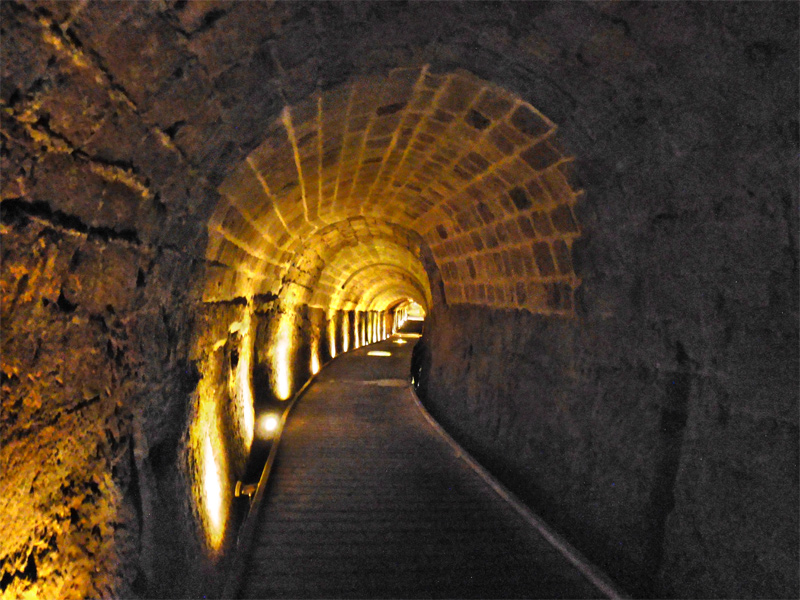
The Templars' Tunnel
The Templars' Tunnel The tunnel, about 350 m long, that the Templars cut under the city to their castle by the sea. Tango7174 — CC BY-SA 4.0 · source
The Old City of Acre from the air
The Old City of Acre from the air Acre today. The medieval land walls are gone; the walls standing today are Ottoman. Ray in Manila — CC BY 2.0 · source

Medieval reconstruction. No troop maps survive for this battle. Positions follow the chronicles of both sides and modern studies, numbers are disputed, and the map shows the shape of the battle rather than exact spots.

Free for everyone every year on its anniversary: April 5 – May 28.

Accuracy score: 51/100 (limited)

How the accuracy score works

Sources and method

Fall of Acre, 5 April – 28 May 1291. A medieval reconstruction: no period troop map exists, and almost nothing of the 1291 land walls survives above ground. The Mamluks leveled them, and the present land walls are Ottoman work of 1750–1814. The medieval wall line is still debated (Roger Crowley, 'In search of the Accursed Tower', 2019, written after visiting the site with Danny Syon of the Israel Antiquities Authority). Walls. Michael S. Fulton, 'The Two Towers: Crusader Acre and its Defences' (Medievalists.net, 2021), gives the Accursed Tower at the angle of the north and east walls, the King's Tower on the outer wall in front of it, St Anthony's Gate where the Montmusard walls joined the northern wall, and an eastern wall reaching the bay up to 500 m beyond the harbor rampart. The Israel Antiquities Authority finds summarized in 'Ancient City of Akko' (Israel MFA / Jewish Virtual Library) include a 60 m stretch of the northern wall near the Ottoman north-east corner, a tower with a 13 m moat further east, and a round corner tower on the seashore about 750 m north of the Old City, thought to be the end of the Montmusard wall. The northern wall follows B. Z. Kedar, 'The Outer Walls of Frankish Acre', 'Atiqot 31 (1997), as summarized by A. J. Boas ('On noticing things'). The course of the Montmusard wall between the sea tower and St Anthony's Gate is not sourced and is drawn as a straight conjectural line, starting about 150 m east of the submerged tower so that it stays on today's land; the outer wall is drawn a uniform 30 m outside the main wall. David Nicolle, Crusader Castles in the Holy Land 1192–1302 (Osprey), describes the double walls and the round King's Tower. The Hospitaller compound is from HMdb 65456. The Templar castle site and the Templars' Tunnel are from BibleWalks and vici.org; Tel Akko from NGA GEOnet and vici.org. Narrative. Dates, sectors and events follow 'Acre, Siege of (1291)' in The Crusades: An Encyclopedia (ABC-CLIO, 2006); Roger Crowley, Accursed Tower (Yale, 2019), summarized in 'The Fall of the Knights Templar' (Aspects of History; the source of the 'about 2 km' of land walls); William E. Welsh, 'The 1291 Siege of Acre: The Last Banner Falls' (Military Heritage, 2016), which quotes the Templar of Tyre (tr. P. Crawford, Ashgate, 2003); Peter W. Edbury, The Kingdom of Cyprus and the Crusades, 1191–1374 (Cambridge, 1991); Stephen Howarth, The Knights Templar (1982), for the medieval army figures; and Helena P. Schrader, 'The Fall of Acre'. Primary sources in translation: Abu'l-Fida, who served with the Hama army, in Niall Christie, Muslims and Crusaders (Routledge), doc. 20; the Erfurt chronicle and John of Villiers's letter, tr. Helen J. Nicholson, De Re Militari. The Frankish sector order is a modern reconstruction, chiefly from the Templar of Tyre; the Arabic sources used here do not give it. Sources disagree on the date of the Templar sortie (14–15 or 15–16 April), on the size of Henry II's force, on the date of the embassy and on the timeline of the Temple's surrender (20–25 May). Strengths are contemporary claims or modern estimates. The Order of St Lazarus's stand and the Hama breakthrough on the Montmusard wall rest on one modern account (the Wikipedia article on the siege, otherwise used only for leads). The placement of the Syrian contingents, the engines and the order of the secular contingents along the east wall is schematic.

Where the positions come from

Further reading