Battlefield Atlas
Wars of the Roses · 30 December 1460

Wakefield, 30 December 1460

Also known as Battle of Wakefield Green

Accuracy44 /100 · limited
Stages7
On the map11 photos pinned
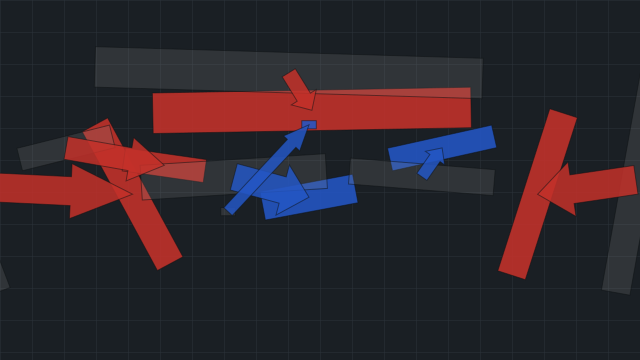
Drawing of the units and movements at WakefieldStages 1–3 freeOpen the interactive map

The first 3 stages are free. No account needed to start.

On 30 December 1460, by the traditional date (Worcester and later legal records give 29 December), Lancastrian lords led by Henry Beaufort, Duke of Somerset, the Earl of Northumberland and Lord Clifford destroyed the army of Richard, Duke of York, near his castle of Sandal, south of Wakefield in Yorkshire. Two months earlier York had been named Henry VI's heir. York was killed, his 17-year-old son Edmund, Earl of Rutland, was cut down near Wakefield Bridge, and the Earl of Salisbury was captured and beheaded at Pontefract. Their heads were set on Micklegate Bar at York. Strengths are uncertain: Helen Cox estimates roughly 5,000 to 6,000 Yorkists against perhaps twice as many Lancastrians, while other modern ranges and some contemporary figures run higher. Why York left the castle is disputed. The chronicles variously blame foragers under attack, a broken truce and a trick with false badges. A 2025 study argues that York was not at Sandal at all and was ambushed rather than defeated in a battle. The field is not on Historic England's Register of Historic Battlefields: it was assessed but left off as too heavily developed, so the positions shown are conjectural.

Battlefield Explorer opens stages 4–7 and every other battle. See the free battles.

The Murder of Rutland by Lord Clifford
The Murder of Rutland by Lord Clifford — Charles Robert Leslie · public domain

The battle, stage by stage

  1. 21–29 December 1460

    Christmas at Sandal

    After the Act of Accord made him heir to Henry VI, Richard, Duke of York, left London in early December with the Earl of Salisbury and his son Edmund, Earl of Rutland, to deal with Lancastrian lords gathering in the north. By most accounts he reached his castle of Sandal, south of the River Calder from Wakefield, on about 21 December, after part of his force was caught in a skirmish at Worksop. Helen Cox estimates his army at 5,000 to 6,000 (Worcester says he came to Sandal 'with six thousand soldiers'; Holinshed says 'not fullie fiue thousand'); the Richard III Society cites 5,000 to 12,000. The castle was small, and Cox places the camp just north of it. Nine miles east, the Lancastrians under Henry Beaufort, Duke of Somerset, the Earl of Northumberland, Lord Clifford and others gathered around Pontefract, perhaps twice as strong by Cox's estimate. The Richard III Society cites 15,000 to 22,000, and Simon Payling notes that York's widow's later lawsuit claimed 20,000 'malefactors', a figure he does not read literally but which matches one chronicle's estimate. A Christmas truce reportedly held. Queen Margaret was not there: she was in Scotland.

  2. 30 December, morning

    Foragers out, enemies close

    With the castle short of supplies, York's men went out to forage. William Worcester's Annales say the Yorkists were 'wandering through the country seeking provisions'; Abbot Whethamstede and the Burgundian Jean de Waurin say the same. The Lancastrians marched over from Pontefract. Cox places their main body on a low hill just south of Wakefield and Fall Ings, at today's Bromley Mount, about a mile from Sandal across open fields and common; the hill's exact spot is not confirmed here. By Hall's account Somerset held the center, with Lord Clifford and the Earl of Wiltshire on the wings, partly out of sight. Which wing stood on which side is not recorded. Waurin says Sir Andrew Trollope had sent about 400 men in the Earl of Warwick's ragged-staff coats, and York took them in as friends; they are shown beside his camp. Historic England assessed the field but left it off the Register because it is too heavily developed (Battlefields Trust), and every position here is conjectural.

  3. 30 December, midday

    York comes out

    York left the castle and marched north onto Wakefield Green, probably along the line of Manygates Lane. Why he did so is disputed, and the chronicles disagree. Worcester and Whethamstede say the Lancastrians fell on York's men while they were out seeking provisions; that York rode out to rescue them is a later reading. Whethamstede says the enemy attacked 'contrary to the promised faith and before the appointed day of battle', and Robert Bale says York was taken after a treaty, 'trayterously and ageinst lawe of armes'. Waurin says Sir Andrew Trollope's men, wearing the Earl of Warwick's ragged-staff badge, had been let in as friends and turned when York marched out; a variant blames John, Lord Neville, a Lancastrian Neville, for a similar betrayal. The Tudor writers Hall and Polydore Vergil tell of a proud York who would not stay behind walls when taunted. Modern historians, including Cox, doubt most of these stories.

  4. 30 December, early afternoon

    Like a fish in a net

    As the Yorkists closed with the Lancastrian center, the wings came in from both sides. Hall wrote that York was 'environed on every side, like a fish in a net'. If Waurin is right, Trollope's company, marching with York, turned on the men beside it. The Yorkists were outnumbered and partly scattered. Polydore Vergil says it was over 'within the moment of an hour', and Hall that York was slain within half an hour. The enveloping wings follow Hall; the ground follows Cox, who herself doubts the hidden-wings story. Positions are in outline only.

  5. 30 December, afternoon

    York falls on Wakefield Green

    Richard, Duke of York, was killed. Tradition and the 1897 monument on Manygates Lane put his death on Wakefield Green, a few hundred yards north of the castle. The Victorian organizer, J. W. Walker, believed he had found the foundations of a memorial said to have been raised by York's son Edward IV, which Parliamentarian soldiers destroyed in the 1640s; Helen Cox says the monument was later moved when its site was built on. Abbot Whethamstede says York was taken alive, mocked by soldiers who crowned him with a wreath of marsh grass, and then beheaded. Sir Thomas Neville, Salisbury's son, died with him, along with Sir Thomas Harrington, Sir Thomas Parr and others named by Worcester.

  6. 30 December, late afternoon

    Rutland at Wakefield Bridge

    The Yorkist army broke. Cox describes the fugitives running north toward the town and being trapped in Fall Ings, a loop of the Calder below the bridge. Edmund, Earl of Rutland, aged 17, fled toward Wakefield. The Annales attributed to William Worcester, the only strictly contemporary chronicle to blame Clifford, say Lord Clifford 'killed, some say murdered' him 'on the bridge at Wakefield', beside the 14th-century chapel of St Mary that still stands there. Edward Hall, writing in the 1540s, has Rutland as a boy of twelve kneeling for mercy and Clifford answering, 'thy father slew myne, and so wil I do the and all thy kyn.' Some modern historians, Dawson and Grummitt among them, regard Hall's scene as invented; Simon Payling argues Hall 'should not be so easily dismissed' and was probably right to blame Clifford. John Leland, writing a little before Hall, put the killing near a memorial cross after a poor woman refused the boy shelter. Salisbury escaped the field but was taken that night by a servant of Andrew Trollope (Worcester). Gregory's chronicle gives 2,500 Yorkist dead for 200 Lancastrians, Worcester about 2,000 commoners, and Hall 2,800.

  7. 31 December 1460 and after

    Heads on Micklegate Bar

    Salisbury was taken to Pontefract Castle and beheaded the next day. Worcester says the Bastard of Exeter killed him; the English Chronicle says he had been promised his life for a ransom, but the 'commune peple of the cuntre' dragged him from the castle and cut off his head. His widow's later lawsuit blamed Sir William Plumpton and retainers of the Earl of Northumberland (Payling). The heads of York, Rutland and Salisbury were set on Micklegate Bar at York, about 25 miles to the northeast; Worcester says York's wore a paper crown. York's body was buried at Pontefract; which religious house is uncertain. Recent work questions much of this story: Paul Dawson and David Grummitt (Battalia 3, Battlefields Trust, 2025) use legal, manorial and household records to argue that York was lodged in Wakefield, not Sandal, and was ambushed and killed on 29 December rather than beaten in a pitched battle. Three months later his son Edward IV won at Towton.

At a glance

When
30 December 1460
Where
Sandal Magna, on the southern edge of Wakefield, West Yorkshire, England.
Forces
The Lancastrians clearly outnumbered York, perhaps two to one by Helen Cox's estimate; modern figures range from 5,000 to 12,000 Yorkists against 15,000 to 22,000 Lancastrians, chronicle figures are rounded, and the 2025…
Casualties
The chronicles put the Yorkist dead at 2,000 to 2,800 against about 200 Lancastrians, and the duke of York, his son Rutland and the Earl of Salisbury all died; modern estimates run from 700 to about 2,500 Yorkists, and the 2025…
On the map
7 stages, 11 photos pinned where they were taken

Who fought

  • Lancastrians (Somerset, Northumberland, Clifford)
  • Yorkists (Richard, Duke of York, with Salisbury and Rutland)

Accuracy score

44/100 · limited

Limited confidence in where units stood and moved, scored on the quality of the source map, how well independent fixed points agree, the level of detail and corroboration. How scores work

Places on the map

  • Sandal Castle (York's base, traditional account)
  • Battle of Wakefield monument, Manygates Lane (1897; traditional site of York's death)
  • Wakefield Bridge and Chantry Chapel of St Mary (Rutland killed, per the Annales)
  • Fall Ings — loop of the River Calder
  • Wakefield (All Saints, now the cathedral)
  • Pontefract Castle (Lancastrian base; Salisbury beheaded)
  • St John's Priory, Pontefract (a suggested site of York's first burial)

More from the Wars of the Roses

Forces

The Lancastrians clearly outnumbered York, perhaps two to one by Helen Cox's estimate; modern figures range from 5,000 to 12,000 Yorkists against 15,000 to 22,000 Lancastrians, chronicle figures are rounded, and the 2025 revisionist reading gives York only 50 to 60 men, so all totals are uncertain.

Lancastrians (Somerset, Northumberland, Clifford)

Present (modern estimates)perhaps twice York's army (15,000–22,000 (Richard III Society))

Helen Cox puts the Lancastrians at perhaps twice York's 5,000 to 6,000; the Richard III Society says the army has been put at between 15,000 and 22,000. Helen Cox, 'The Battle of Wakefield', Military History Matters; Richard III Society, The Battle of Wakefield

Present (early claims)about 18,000–22,000

Holinshed (1577) gives 18,000 'or (as some write) two and twentie thousand'; Simon Payling notes that Thomas Colt's later King's Bench bill claimed 20,000 'malefactors', which he does not read literally but which matches one chronicle's figure. Battle of Wakefield: translated chronicle extracts (Holinshed); Simon Payling, 'Richard, duke of York's last Christmas', History of Parliament (2020)

Yorkists (Richard, Duke of York, with Salisbury and Rutland)

Present (modern estimates)5,000–6,000 (5,000–12,000)

Helen Cox estimates 5,000 to 6,000; the Richard III Society says estimates vary between 5,000 and 12,000. Helen Cox, 'The Battle of Wakefield', Military History Matters; Richard III Society, The Battle of Wakefield

Present (early claims)about 5,000–6,000

The Annales attributed to William Worcester say York reached Sandal 'with six thousand soldiers'; Holinshed says 'not fullie fiue thousand'. Battle of Wakefield: translated chronicle extracts (Worcester, Holinshed)

With York (2025 alternative reading)about 50–60

For the alternative version on this map, Paul Dawson estimates that York left London with relatively few men, probably 50 to 60, lodged in Wakefield town rather than an army camped at Sandal. Wakefield Historical Society, summary of Paul Dawson's talk (2026)

Casualties

The chronicles put the Yorkist dead at 2,000 to 2,800 against about 200 Lancastrians, and the duke of York, his son Rutland and the Earl of Salisbury all died; modern estimates run from 700 to about 2,500 Yorkists, and the 2025 revisionist reading puts the fighting at a small ambush with two dead, so the numbers are very uncertain. Certainty: poor.

Lancastrians (Somerset, Northumberland, Clifford)

Killed (contemporary claim)about 200

Gregory's Chronicle says the Queen's side lost 'but ii c [200] men'; Helen Cox repeats the figure of about 200. No modern study gives an independent count, and no Lancastrian lord is recorded among the dead. Battle of Wakefield: translated chronicle extracts (Gregory); Helen Cox, 'The Battle of Wakefield', Military History Matters

Yorkists (Richard, Duke of York, with Salisbury and Rutland)

Killed (contemporary claims)2,000–2,800

The Annales attributed to William Worcester say about 2,000 commoners were killed on the field; the English Chronicle gives 2,200 'other peple'; Gregory's Chronicle 2,500; Edward Hall (1548) and Holinshed 2,800 besides the lords. Battle of Wakefield: translated chronicle extracts (Worcester, English Chronicle, Gregory, Hall, Holinshed); Simon Payling, 'Richard, duke of York's last Christmas', History of Parliament (2020)

Killed (modern estimates)up to about 2,000 (700–2,500)

Helen Cox says up to 2,000 Yorkists died on the field and the Wakefield Historical Society about 2,000; the Richard III Society says Yorkist losses have been reported as anywhere between 700 and 2,500. No grave pit has been identified, so none of these can be checked. Helen Cox, 'The Battle of Wakefield', Military History Matters; Wakefield Historical Society, Battle of Wakefield; Richard III Society, The Battle of Wakefield

Leaders killed or executedYork, Rutland, Salisbury and others

Richard, Duke of York, was killed (Whethamstede says taken alive and beheaded); his son Edmund, Earl of Rutland, aged 17, was killed near Wakefield Bridge; Salisbury was captured and beheaded at Pontefract the next day. Worcester also names Sir Thomas Neville, Sir Thomas Harrington and Sir Thomas Parr among the dead. Simon Payling, 'Richard, duke of York's last Christmas', History of Parliament (2020); Battle of Wakefield: translated chronicle extracts (Worcester, Whethamstede)

Killed (2025 alternative reading)2 killed, 2 wounded in the ambush

In the alternative version on this map, Paul Dawson and David Grummitt (Battalia 3, 2025) argue there was no pitched battle: York's party, probably 50 to 60 men, was ambushed and robbed at Swillington, where, by the summary of Dawson's talk, two men were killed and two wounded; York, Rutland and Salisbury were then put to death at Pontefract. Wakefield Historical Society, summary of Paul Dawson's talk (2026); Medievalists.net, 'Wars of the Roses battle may not have been a battle at all' (2025)

Then and now: how the ground has changed

In 1460 about a mile of arable fields and rough common lay between Sandal Castle and the Calder; today that ground is almost entirely the streets of Sandal, Portobello and south Wakefield, with only Castle Grove Park, a remnant of Wakefield Green, the castle ruins and the medieval bridge chapel left to read.

The interactive map can show the period landscape (1 shape: Fields and common between Sandal and the Calder (built over since)) under the units. Open the map.

Weapons

Lancastrians (Somerset, Northumberland, Clifford)

English bill

English bill

Polearm · 14th–16th century

At Wakefield: By Hall's account the Lancastrian wings closed on York from both sides, 'like a fish in a net', and the fight on Wakefield Green was over within an hour or less (Vergil, Hall).

A farm billhook on a long shaft, the standard weapon of English infantry in the Wars of the Roses alongside the longbow. Its hook could pull armored men down and its spike and blade finish them.

Length
about 1.8–2.4 m
Head
hooked blade with spike
Users
English foot soldiers
Photo: Monstrelet · CC BY-SA 3.0
Plate armor

Plate armor

Full harness of steel plates · about 1400–1600 (transitional mail and plate earlier)

At Wakefield: Somerset, Northumberland, Clifford and Wiltshire led the Lancastrian battles; Gregory's chronicle puts their losses at only 200.

By 1415 a man-at-arms could be enclosed head to foot in steel. It kept most arrows out, but at Agincourt the French men-at-arms advanced across soaked, plowed ground under arrow fire and arrived exhausted, packed so tightly that many could not lift their weapons. At Poitiers in 1356 armor was still transitional: mail, coats of plates and growing plate limb defenses.

Weight
about 20–30 kg, spread over the body
Protection
proof against most arrows except at short range or weak points
Weakness
heat, exhaustion and mud
Photo: Gothic plate armour · Rama · CC BY-SA 2.0 fr

Yorkists (Richard, Duke of York, with Salisbury and Rutland)

English bill

English bill

Polearm · 14th–16th century

At Wakefield: Bones and weapon fragments found at Portobello, by the Calder, in the 19th century may come from a burial pit; all have since been lost (Cox; Wakefield Historical Society).

A farm billhook on a long shaft, the standard weapon of English infantry in the Wars of the Roses alongside the longbow. Its hook could pull armored men down and its spike and blade finish them.

Length
about 1.8–2.4 m
Head
hooked blade with spike
Users
English foot soldiers
Photo: Monstrelet · CC BY-SA 3.0
Plate armor

Plate armor

Full harness of steel plates · about 1400–1600 (transitional mail and plate earlier)

At Wakefield: York, Salisbury's son Sir Thomas Neville and other Yorkist knights died on or near Wakefield Green; Whethamstede says York was taken alive and beheaded.

By 1415 a man-at-arms could be enclosed head to foot in steel. It kept most arrows out, but at Agincourt the French men-at-arms advanced across soaked, plowed ground under arrow fire and arrived exhausted, packed so tightly that many could not lift their weapons. At Poitiers in 1356 armor was still transitional: mail, coats of plates and growing plate limb defenses.

Weight
about 20–30 kg, spread over the body
Protection
proof against most arrows except at short range or weak points
Weakness
heat, exhaustion and mud
Photo: Gothic plate armour · Rama · CC BY-SA 2.0 fr

Paintings and photographs

The Murder of Rutland by Lord Clifford
The Murder of Rutland by Lord Clifford Charles Robert Leslie's 1815 oil painting (Pennsylvania Academy of the Fine Arts) of the scene told by Hall and Shakespeare, in which Lord Clifford kills the young Earl of Rutland. Pinned at Wakefield Bridge, where William Worcester's Annales put the killing. Charles Robert Leslie · public domain · source
The ruins of Sandal Castle
The ruins of Sandal Castle The ruins of Sandal Castle, York's base over Christmas 1460 in the traditional account. Photographed in 2016. Neil Theasby · CC BY-SA 2.0 · source
Sandal Castle ruins
Sandal Castle ruins The remains of Sandal Castle, a motte-and-bailey castle with a shell keep, from which York marched out on 30 December 1460. Photographed in 2017. Willtron 1 · CC BY-SA 4.0 · source
Sandal Castle barbican
Sandal Castle barbican The barbican of Sandal Castle, photographed in 2020. Stephen Craven · CC BY-SA 2.0 · source
Field north of Sandal Castle
Field north of Sandal Castle Open ground north of Sandal Castle, toward Wakefield Green, where York's army formed after leaving the castle. Exact viewpoint not recorded; pinned at York's starting position north of the castle, approximate. Alex McGregor · CC BY-SA 2.0 · source
Site of the Battle of Wakefield
Site of the Battle of Wakefield The site of the Battle of Wakefield as it looks today, photographed in 2020. Place not recorded; pinned on Wakefield Green with York's main battle, approximate. Stephen Craven · CC BY-SA 2.0 · source
Last hours of Richard Plantagenet
Last hours of Richard Plantagenet An 1858 picture titled 'Last hours of Richard Plantagenet, father of Richard III', showing the Duke of York at the Battle of Wakefield. Pinned at the 1897 monument on Manygates Lane, the traditional site of his death. Unknown artist · public domain · source
Monument to the Battle of Wakefield
Monument to the Battle of Wakefield The 1897 monument on Manygates Lane, which marks the traditional spot where Richard, Duke of York, fell. Photographed in 2011. Mike Kirby · CC BY-SA 2.0 · source
Richard of York Memorial
Richard of York Memorial The memorial erected in 1897 to mark the spot where tradition says Richard Plantagenet, Duke of York, fell in the Battle of Wakefield. Photographed in 2008. SMJ · CC BY-SA 2.0 · source
Richard of York Memorial inscription
Richard of York Memorial inscription The inscription on the 1897 memorial to Richard, Duke of York, on Manygates Lane. Photographed in 2008. SMJ · CC BY-SA 2.0 · source
Rutland and his tutor, Clifford and soldiers
Rutland and his tutor, Clifford and soldiers Engraving after James Northcote for the Boydell Shakespeare prints (published 1805) of Henry VI, Part 3, act 1, scene 3, which Shakespeare sets on 'a field of battle betwixt Sandal Castle and Wakefield': Clifford and his soldiers come upon Rutland and his tutor. Pinned at Wakefield Bridge, where William Worcester puts Rutland's death. James Northcote; engraved by C. G. Playter and Thomas Ryder · public domain · source

Where was it fought? Paul L. Dawson and David Grummitt ('The "Battle" of Wakefield of 1460 Reconsidered', Battalia 3, Battlefields Trust, 2025) argue from legal, manorial and fiscal records rather than the chronicles that there was probably no battle. York and his household were lodged in Wakefield town, in the Earls Hall, the manor house that preceded the Moot Hall, not in the small castle at Sandal, where December 1460 spending was minimal. On 29 December, setting out for York, the party was ambushed and robbed at Swillington: Thomas Colt's lawsuits of 1462-63 record men of York's household killed and robbed. By the summary of Dawson's December 2025 talk, two men were killed and two wounded. York was taken alive back to Wakefield. Dawson places the deaths of York, Rutland and Salisbury at Pontefract: York 'probably killed close to where he is buried at Pontefract Friary', Rutland executed there by Lord Clifford, and Salisbury and his son Thomas executed by Sir William Plumpton. They regard the Rutland-on-Wakefield-Bridge scene as an invention of Edward Hall. The ambush is placed at Swillington village (its church), and the lodging and killings are placed at landmarks; all three are approximate. Dawson has also written that the most likely site of the fighting is somewhere in Stanley, between Wakefield and Swillington. The size of York's party is uncertain (Dawson estimates 50 to 60 men left London with him), so the blocks overstate it. Who led the ambush is not stated; Clifford's block stands in for the attackers because Clifford's men carried York's captured weapons to Pontefract. Open this version in the map.

Free for everyone every year on its anniversary: December 30.

Accuracy score: 44/100 (limited)

  • Sources18/40

    One detailed modern reconstruction (Helen Cox, 2010) plus the Tudor chroniclers' dispositions; the 2025 study by Dawson and Grummitt disputes that a battle was fought at Sandal at all, so the weaker reading is scored.

  • Fixed points14/30

    Sandal Castle, the 1897 monument and the bridge chapel are fixed (Historic England); the field was assessed but left off the Register as too built over, and the Lancastrian hill is placed only from a postcode.

  • Movement detail8/20

    The route along Manygates Lane and the rout to Fall Ings rest on Cox; the enveloping wings on Hall.

  • Corroboration4/10

    Cox, Haigh and the Wakefield Historical Society broadly agree on the traditional picture; Dawson and Grummitt (2025) dissent.

How the accuracy score works

Sources and method

Wakefield, 30 December 1460. No registered battlefield: Wakefield is not on Historic England's Register of Historic Battlefields. Historic England's Heritage Calling (2025) lists the eight registered Wars of the Roses fields, and a Battlefields Trust review of English battlefields records that Wakefield was assessed but excluded because the site is too heavily developed. All positions are therefore conjectural. Fixed points come from the National Heritage List: Sandal Castle (list entry 1012075), which says 'the area to the north was the site of the battle of Wakefield'; the Monument to the Battle of Wakefield, Manygates Lane (1258365) (also IWM War Memorials Register 29159); the Chapel of St Mary on Wakefield Bridge (1258242); Fall Ings Lock on the Calder; Wakefield Cathedral; and Pontefract Castle (1010127) and St John's Priory, Pontefract. Reconstruction: Helen Cox, battlefield tour of Wakefield (Military History Matters, 2011/2014), with her The Battle of Wakefield Revisited (2010), covers the camp north of the castle, the Lancastrian hill south of Wakefield, Manygates Lane, Wakefield Green, Fall Ings, the bridge and the strengths. Also used: Philip A. Haigh, The Battle of Wakefield 1460 (Sutton, 1996), as summarized by the Wakefield Historical Society, which also cites Keith Dockray and Richard Knowles in The Ricardian 117 (1992); Keith Dockray, 'The Battle of Wakefield and the Wars of the Roses'; the Richard III Society (strength and casualty ranges); Simon Payling, 'Richard, duke of York's last Christmas' and 'John, Lord Clifford killing Edmund, Earl of Rutland' (History of Parliament); the Wakefield Historical Society on the Duke of York monument; and Wakefield Council's Sandal Castle history. Revisionist reading: Paul L. Dawson and David Grummitt, 'The "Battle" of Wakefield of 1460 Reconsidered', Battalia 3 (Battlefields Trust, 2025), as reported by Medievalists.net, and the summary of Paul Dawson's talk (Wakefield Historical Society, 2026). Chronicles (the Annales attributed to William Worcester, Whethamstede, Gregory, the English Chronicle, Bale, Waurin, Hall, Holinshed) are quoted from the translated extracts collected at allabouthistory.co.uk; Vergil's 'within the moment of an hour' is as quoted by Cox; contemporary and Tudor accounts are distinguished in the captions. On York's burial see also the Victoria County History, 'Friaries: Black friars of Pontefract'. Bromley Mount's area is placed from its postcode (WF1 5LB, shared with Fall Ing Lock), not a survey. No U.S. Army staff ride handbook covers this battle. The wing assignments (west and east) and every block position are interpretive. Images from Wikimedia Commons.

Where the positions come from

  • Heritage authority Historic England, National Heritage List: Sandal Castle (1012075), Monument to the Battle of Wakefield (1258365), Chapel of St Mary on Wakefield Bridge (1258242)
  • Battlefield register Not registered: assessed by Historic England and excluded as too heavily developed (Battlefields Trust review of English battlefields)
  • Reconstruction Helen Cox, battlefield tour (Military History Matters) and The Battle of Wakefield Revisited (2010): camp, Lancastrian hill, Manygates Lane, Wakefield Green, Fall Ings
  • Map data Listing grid references converted to WGS84; Bromley Mount placed from its postcode only
  • Alternative reading Dawson and Grummitt, Battalia 3 (2025): ambush at Swillington, killings at Pontefract (switchable variant)

Further reading