Battlefield Atlas
Wars of the Roses · 1455 Free to explore

First St Albans, 22 May 1455

On 22 May 1455 Richard, Duke of York, with the Neville earls of Salisbury and Warwick, attacked Henry VI's household army in the streets of St Albans, about 20 miles north of London, in what is usually taken as the first battle of the Wars of the Roses. The royal force, perhaps 2,000 strong under the Duke of Buckingham, with Somerset, Northumberland and Lord Clifford, held barriers across the lanes leading into the town from the Key Field, where some 3,000 Yorkists stood (strengths are uncertain; Oman puts each side at under 3,000, while Jacques du Clercq claims some 12,000 Yorkists). After about three hours of parley, York's frontal attacks up Shropshire Lane (now Victoria Street) and Sopwell Lane stalled, until Warwick's men broke through the gardens and houses of Holywell Street between the inns of the Key and the Chequer and took the defenders from behind. Somerset, Northumberland and Clifford were killed, the king was wounded by an arrow and taken into York's custody. The battlefield lies under the modern city center and is not on Historic England's Register of Historic Battlefields; the street plan survives, but where each body of men stood is reconstructed from a handful of newsletters and chronicles and is conjectural.

Open the interactive map6 stages on modern satellite imagery and terrain, with 3D elevation

This battle is free to explore — no account needed.

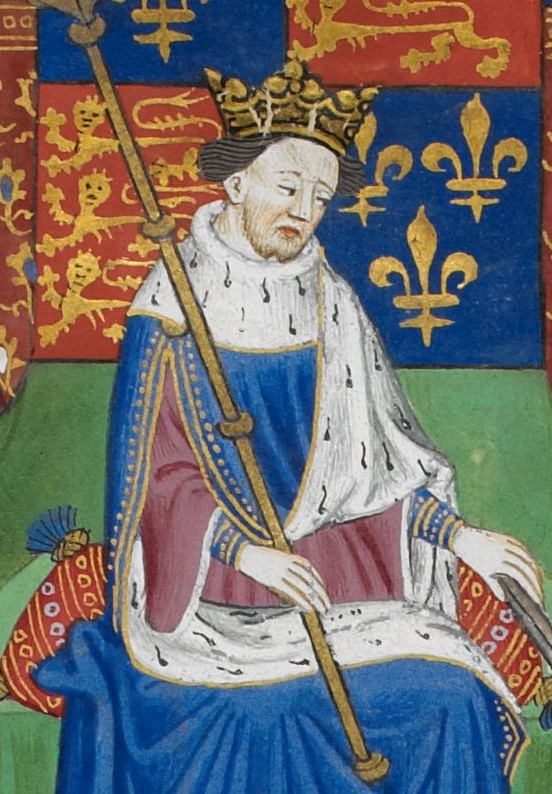
Henry VI (Shrewsbury Book)
Henry VI (Shrewsbury Book) — British Library, public domain

The battle, stage by stage

  1. 22 May 1455, about 7 a.m.

    Two armies at St Albans

    Henry VI had recovered his wits at Christmas 1454, ending Richard, Duke of York's first protectorate and restoring York's enemy Edmund Beaufort, Duke of Somerset. Excluded from the council and summoned to a great council at Leicester, York and his Neville allies, his brother-in-law the Earl of Salisbury and Salisbury's son the Earl of Warwick, raised their northern and Marcher retinues and marched south by Royston and Ware. The court left Westminster on 21 May, lay at Watford, and came into St Albans early on the 22nd with perhaps 2,000 men, by the Paston newsletter's count, against a Yorkist force usually put at about 3,000 (Oman puts each side at under 3,000; the Burgundian chronicler Jacques du Clercq claims some 12,000 Yorkists). The king's banner was set up at a place called 'Boslawe' in St Peter's Street; the Yorkists drew up in the Key Field just east of the town. St Albans had no wall, only the Tonman Ditch and bars across the lanes, and the royal lords ordered the barriers held.

  2. 22 May, 7–10 a.m.

    Three hours of talk

    By the Paston newsletter's account York stood in the field 'from seven of the clock in the morning till it was almost ten' without a blow struck. Heralds went back and forth. The king had replaced Somerset as commander with Humphrey Stafford, Duke of Buckingham, who tried to play for time; York demanded that the 'traitors' around the king, above all Somerset, be handed over. Henry reportedly refused and, by the Stow/Fastolf relation (Archaeologia 20), threatened to destroy them 'every mother's son'; the same relation says Lord Clifford 'kept strongly the barrers'. Many of the king's men, expecting a settlement, had not armed. Where each lord stood inside the town is not recorded; the blocks show one common reading. Alternatives: the Battlefields Trust puts Somerset at Sweetbriar (Shropshire) Lane and Northumberland and Clifford at Sopwell Lane; Hicks has Clifford barring St Peter's Street; Boardman has Somerset, Buckingham and the Percys barricading the market place and the roads into St Peter's Street.

  3. 22 May, about 10 a.m. (Oman: about noon)

    The barriers hold

    With talks failing and royal reinforcements possibly on the way, York attacked. In the usual reconstruction York's own men went up Shropshire Lane, also called Sweetbriar Lane (now Victoria Street), and Salisbury's up Sopwell Lane, the two lanes leading from the Key Field into Holywell Street. The lanes were narrow, few men could fight at the front, and the defenders' archers beat the first assaults back with loss. Some historians (Burley, Elliott and Watson) place this fighting at the bars on the Tonman Ditch itself rather than at the town ends of the lanes; the exact barricade positions are not recorded.

  4. 22 May, about 10:30 a.m.

    'A Warwick! A Warwick!'

    Warwick, in reserve, found the line of houses between the two lanes unguarded. According to a contemporary newsletter (Stow's relation), his men 'broke into the town by the garden sides, between the sign of the Key and the sign of the Chequer in Holywell Street', shouting 'A Warwick!' to the sound of trumpets. They crossed the Tonman Ditch, ran through the long back gardens and broke through the houses into the main street, behind both barriers. The Battlefields Trust places the break-in at the Cross Keys tavern, on the site of today's 2 Chequer Street. Sir Robert Ogle's 600 men of the Marches are credited with leading the attack (Battlefields Trust; Boardman). Hicks tells it differently: Ogle broke through to the market place while Warwick came through the gardens farther south onto Holywell Street, so there may have been two break-ins.

  5. 22 May, late morning

    Arrows in the market place

    Ogle's men came out into the market place, where much of the royal army was still arming, and their archers shot into the king's household under the banner in St Peter's Street. Henry VI was wounded in the neck by an arrow (Gregory's chronicle; Waurin says in the arm); the standard-bearer, Sir Philip Wentworth, reportedly dropped the banner and fled. Buckingham was wounded in the face, and his son Humphrey, Earl of Stafford, through the hand (a wound that, by Oman's account, later killed him). With the enemy behind them, the defenders left the barriers and the main Yorkist columns poured into the town. The whole fight was short: the Museums say about half an hour, other accounts under an hour.

  6. 22 May, about noon

    Somerset dies at the Castle

    The Yorkists sought out their enemies. By tradition and the Battlefields Trust's account, Somerset, who had sheltered in the Castle Inn at the head of Shropshire Lane, came out fighting and was killed before its door, fulfilling a prophecy that he would die by a castle; a plaque on Victoria Street marks the site, whose exact position is not known. Hicks puts Somerset's and Northumberland's deaths in Holywell Street, and the Bruges/Dijon newsletter says Somerset was 'taken and forthwith beheaded'. Henry Percy, Earl of Northumberland, was also killed, and Lord Clifford, by Hicks's reading, probably died defending the barricades in St Peter's Street; their places of death are not recorded. The king had taken refuge in a humble house, by one account a tanner's; York found him there, knelt to him as a loyal subject, and brought him to the abbey. Whethamstede, the abbot, says the dead lay at every street corner; the town was plundered. Contemporary counts of the dead run from about 60 to 120 (John Crane: at most six score); the abbey buried 48, of whom 25 were unknown common soldiers (Oman). St Albans Museums give about 160 in total. By Whethamstede's account the three lords were buried in the abbey's Lady Chapel. York escorted the king to London the next day.

Forces

The Yorkists probably outnumbered the king's army, usually put at about 3,000 against 2,000, but the only contemporary figure for the royal side is the Paston newsletter's '2,000 and more', a Burgundian chronicler's 12,000 Yorkists is generally discounted, and St Albans Museums give 7,000–10,000 for both armies together. The totals are uncertain.

Royal household army (Henry VI, Somerset)

Present (contemporary)2,000 and more

The Paston newsletter (printed in Archaeologia 20) gives the king's company as 'ijml and moo' (2,000 and more). Contemporary accounts transcribed (Paston Letters; Archaeologia 20)

Present (modern estimate)about 2,000

BritishBattles.com follows the Paston figure of about 2,000; Oman says the royalists mustered less than 3,000. Many of the king's men had not armed when the fighting began. BritishBattles.com, First Battle of St Albans; C. Oman, The History of England (1906), via Luminarium

Yorkists (York, Salisbury, Warwick)

Present (modern estimate)about 3,000

BritishBattles.com gives some 3,000 knights, men-at-arms and archers, and Oman says York and his kinsmen had 'not over 3,000 men', mostly from the North and West Ridings; no contemporary English source gives a Yorkist total. BritishBattles.com, First Battle of St Albans; C. Oman, The History of England (1906), via Luminarium

Present (chronicle claim)12,000

The Burgundian chronicler Jacques du Clercq, writing later and not an eyewitness, says York came 'bien douze mille combattants' (a good 12,000 fighting men); this is generally thought much inflated. Contemporary accounts transcribed (du Clercq)

Both armies together (modern estimate)7,000–10,000

St Albans Museums give between 7,000 and 10,000 participants in all, a higher total than the usual 5,000 implied by 2,000 plus 3,000. St Albans Museums, First Battle of St Albans

Casualties

A small battle by later standards: contemporaries counted 48 buried and at most 120 dead, nearly all on the king's side, but the dead included Somerset, Northumberland and Clifford, whose heirs would seek revenge. Rank-and-file figures are rough and the split between the sides is unknown. Certainty: fair.

Royal household army (Henry VI, Somerset)

Killed (contemporary counts, mostly royal)about 60 to 120 (48 buried by the abbey; at most 120 slain)

John Crane's letter of 25 May says 'at most' six score (120) were slain, and Oman judged 'not more than 120... possibly as few as sixty'; a contemporary newsletter (Archaeologia 20) says 48 were buried at St Albans, which Oman reads as 25 unknown common soldiers and the rest lords, knights, squires and household officers. No count splits the dead by side, but the named dead are almost all royal. Contemporary accounts transcribed (Archaeologia 20; Paston Letters; Chronicle of London); C. Oman, The History of England (1906), via Luminarium

Killed (modern estimates, both sides)about 150–160

St Albans Museums put the casualties at about 160 on both sides combined (a combined casualties figure, not dead only); BritishBattles.com gives some 150 casualties among the rank and file. Exact numbers are unknowable. St Albans Museums, First Battle of St Albans; BritishBattles.com, First Battle of St Albans

Leaders killedSomerset, Northumberland, Clifford

Edmund Beaufort, Duke of Somerset, Henry Percy, Earl of Northumberland, and Thomas, Lord Clifford were killed; the contemporary newsletter also names Sir Bertram Entwistle, William Zouche, Ralph Babthorpe and his son, William Cotton (receiver of the Duchy of Lancaster) and several other squires and household men. Contemporary accounts transcribed (Archaeologia 20); Michael Hicks, 'The Battle of St Albans, 1455', History Today

Wounded (named)the king and several lords

The newsletter lists Henry VI shot in the neck by an arrow (Gregory's chronicle agrees), the Duke of Buckingham and Lord Dudley hit by arrows in the face, Buckingham's son Lord Stafford in the hand, the Earl of Dorset so badly hurt he could not walk, and Sir John Wenlock carried off hurt in a cart; no count of wounded survives. Contemporary accounts transcribed (Archaeologia 20; Gregory's chronicle); Battlefields Trust, First St Albans: the battle

CapturedHenry VI

The king, who had sheltered in a small house, was found by York and taken to the abbey; the Earl of Wiltshire and others fled, by the newsletter's account leaving their armor behind. Victoria County History, Hertfordshire vol. 2: The city of St Albans; Contemporary accounts transcribed (Archaeologia 20)

Yorkists (York, Salisbury, Warwick)

Killedunknown, probably few

No source gives a Yorkist figure; A. W. Boardman describes few casualties on both sides, and the Battlefields Trust speaks only of dozens of royal soldiers killed or wounded. The early Yorkist assaults on the barriers were beaten back with some loss. A. W. Boardman, 'Terror in the Streets', Military History Now (2023); Battlefields Trust, First St Albans: the battle

Leaders killednone recorded

No Yorkist lord or named knight appears among the dead in the contemporary lists (BritishBattles.com lists Lord Clinton and Sir Robert Ogle as killed, which no contemporary account supports, so it is not followed here). Contemporary accounts transcribed (Archaeologia 20; Paston Letters)

Then and now: how the ground has changed

The battle was fought in the streets of a small market town that still keeps its medieval street plan, but the fields east of the town where the Yorkists stood are now Victorian and later streets, the Tonman Ditch has been filled and built over, the inns that marked the fight are gone, and Telford's London Road (1794) cuts through the line of Warwick's break-in.

The interactive map can show the period landscape (2 shapes: London Road (cut 1794), Key Field and fields east of the Tonman Ditch (now built over)) under the units. Open the map.

Weapons

Royal household army (Henry VI, Somerset)

Plate armor

Plate armor

Full harness of steel plates · about 1400–1600 (transitional mail and plate earlier)

At First St Albans: Lords and household men fought on foot in the narrow streets; Somerset, Northumberland and Clifford were killed.

By 1415 a man-at-arms could be enclosed head to foot in steel. It kept most arrows out, but at Agincourt the French men-at-arms advanced across soaked, plowed ground under arrow fire and arrived exhausted, packed so tightly that many could not lift their weapons. At Poitiers in 1356 armor was still transitional: mail, coats of plates and growing plate limb defenses.

Weight
about 20–30 kg, spread over the body
Protection
proof against most arrows except at short range or weak points
Weakness
heat, exhaustion and mud
Photo: Gothic plate armour · Rama · CC BY-SA 2.0 fr
English longbow

English longbow

Self bow of yew · about 1250–1550

At First St Albans: The defenders' archers beat back the first Yorkist assaults on the lanes.

A single stave of yew, as tall as a man, that took years of practice to draw. Massed in thousands behind stakes or hedges, English archers broke French charges at Crécy, Poitiers and Agincourt by killing and maddening the horses and pinning men-at-arms in the crush. Bows recovered from the Mary Rose (sunk 1545) show how heavy the draw weights were. In the Wars of the Roses both sides fielded massed longbowmen, as at Towton in 1461.

Draw weight
commonly about 100–150 lb (Mary Rose bows)
Range
about 250–300 yd for volleys with light arrows
Rate
up to 10–12 arrows a minute for a trained archer
Photo: Archer's kit and longbow from the Mary Rose · Tim Sheerman-Chase · CC BY 4.0

Yorkists (York, Salisbury, Warwick)

English longbow

English longbow

Self bow of yew · about 1250–1550

At First St Albans: Ogle's men, of Warwick's following, broke into the market place and shot into the king's household under the banner.

A single stave of yew, as tall as a man, that took years of practice to draw. Massed in thousands behind stakes or hedges, English archers broke French charges at Crécy, Poitiers and Agincourt by killing and maddening the horses and pinning men-at-arms in the crush. Bows recovered from the Mary Rose (sunk 1545) show how heavy the draw weights were. In the Wars of the Roses both sides fielded massed longbowmen, as at Towton in 1461.

Draw weight
commonly about 100–150 lb (Mary Rose bows)
Range
about 250–300 yd for volleys with light arrows
Rate
up to 10–12 arrows a minute for a trained archer
Photo: Archer's kit and longbow from the Mary Rose · Tim Sheerman-Chase · CC BY 4.0
Poleaxe

Poleaxe

Staff weapon · about 1400–1550

At First St Albans: York's and Salisbury's men attacked the narrow lanes, where few could fight at the front.

The armored man-at-arms' weapon for fighting on foot: an axe or hammer head with spikes on a long haft, built to crush and pierce plate. At Agincourt dismounted men-at-arms on both sides fought with poleaxes, swords and lances cut down to a manageable length.

Length
about 1.5–2 m
Head
axe or hammer, with a top spike and often a back spike
Use
two-handed, by armored men on foot
Photo: Italian poleaxe, Metropolitan Museum of Art · CC0

Paintings and photographs

Henry VI (Shrewsbury Book)
Henry VI (Shrewsbury Book) Henry VI, from the Shrewsbury Book (c. 1445). The king was wounded by an arrow (in the neck, by Gregory's chronicle) and taken into York's custody; pinned at the abbey. British Library, public domain · source

Free for everyone every year on its anniversary: May 22.

Accuracy score: 66/100 (moderate)

How the accuracy score works

Sources and method

First St Albans, 22 May 1455. No Historic England register entry or battlefield report covers the site (it is built over); the street plan is fixed from Historic England list entries via British Listed Buildings: the Clock Tower (1103127), the Abbey Church (1103163), 2 and 79 Sopwell Lane (1347166, 1174501), 1–3 St Peter's Street (1103045), the Town Hall (1296135), 19–21 Victoria Street (1174646), 14 Chequer Street (1347180) and St Peter's church (1103057); the town defenses from the Gatehouse Gazetteer and St Albans & Hertfordshire Architectural & Archaeological Society; the Castle Inn plaque from Open Plaques and St Albans Museums (Talking Buildings). Accounts of the fight: the Battlefields Trust (after Armstrong; Cross Keys site, Ogle's 600, about 10:30 a.m.); St Albans Museums; Michael Hicks, 'The Battle of St Albans, 1455', History Today; A. W. Boardman, 'Terror in the Streets' (after his St Albans 1455: The Anatomy of a Battle, 2006/2023); C. A. J. Armstrong, 'Politics and the Battle of St Albans, 1455', Bulletin of the Institute of Historical Research 33 (1960); P. Burley, M. Elliott and H. Watson, The Battles of St Albans (2007); BritishBattles.com (after Seymour). Contemporary sources, quoted via these transcriptions and Oman's summary: the Paston newsletter (Key Field, Boslawe in St Peter's Street, 7 to almost 10 o'clock, 'ijml and moo'), the Stow/Fastolf relation printed in Archaeologia 20 (Clifford's barriers; Warwick 'by the gardeyne sydes' between the Keye and the Chekkere in Holwell strete; 48 buried), John Crane's letter (at most six score slain), Gregory's chronicle (king shot in the neck), Abbot Whethamstede's register (St Peter's Street; the dead at every corner), the Dijon relation, Waurin and du Clercq. Block positions within the streets are conjectural.

Where the positions come from

Further reading