Battlefield Atlas
Wars of the Roses · 1461 Members · from $3

Towton, 29 March 1461

On Palm Sunday, 29 March 1461, the Yorkist army of the newly proclaimed Edward IV met the Lancastrian army of Henry VI, under the Duke of Somerset, on the plateau between Towton and Saxton, south of Tadcaster in Yorkshire. A day earlier the Yorkists had fought their way across the River Aire at Ferrybridge and caught Lord Clifford's rearguard at Dintingdale. At Towton, after an archery exchange in a snowstorm and hours of hand-to-hand fighting, the arrival of the Duke of Norfolk's men on the Yorkist right broke the Lancastrians, who were cut down in great numbers as they fled across the Cock Beck. It is often called the largest and bloodiest battle fought on English soil; the casualty figures in the chronicles are not reliable, but the archaeology of the mass graves confirms its savagery. The victory secured Edward's crown.

Open the interactive map8 stages on modern satellite imagery and terrain, with 3D elevation

This battle opens with Battlefield Enjoyer ($3 a month on Patreon), which unlocks every battle in the atlas and every one added later. Free battles include Hattin, Agincourt, Yorktown, Waterloo, The Alamo, Antietam, Little Bighorn, Belleau Wood, Omaha Beach, Ia Drang, 73 Easting, Wanat, Najaf.

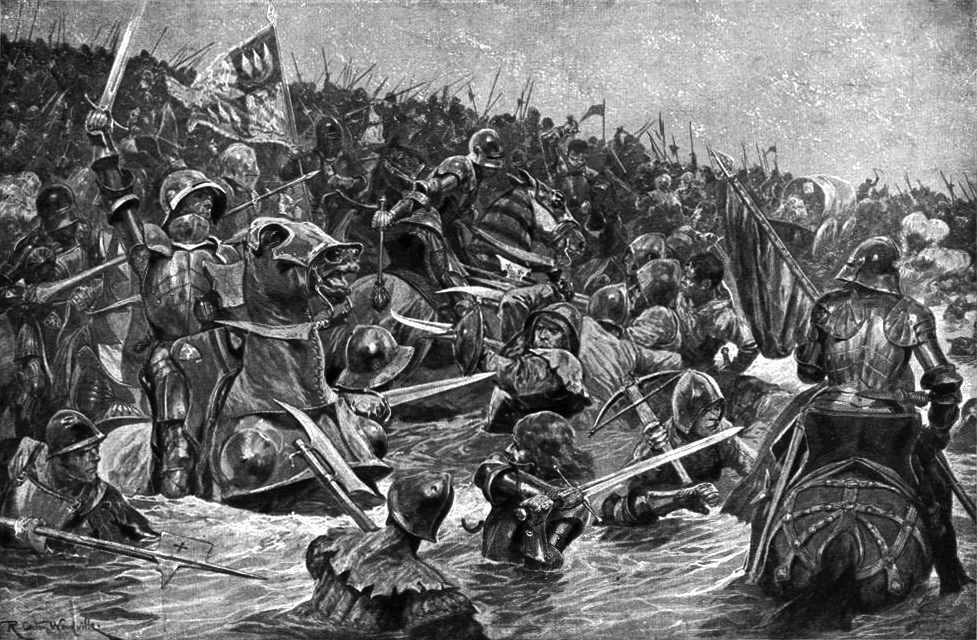
The Battle of Towton (Woodville)
The Battle of Towton (Woodville) — Richard Caton Woodville Jr. · public domain

The battle, stage by stage

  1. 27–28 March 1461, before dawn

    Ferrybridge

    Three weeks after Edward of York was proclaimed king in London, his army reaches the River Aire at Pontefract. The Lancastrians of Henry VI, led by Henry Beaufort, Duke of Somerset, have fallen back to a position south of Tadcaster. A Yorkist party under John Radcliffe, Lord FitzWalter, secures the crossing at Ferrybridge, whose bridge had been broken down. Before dawn on the 28th, by Hall's account, Lord Clifford's riders — the 'Flower of Craven' — fall on them as they rest; FitzWalter and Warwick's half-brother, the Bastard of Salisbury, are killed. The sources (Hall, Waurin, George Neville's letter) tell this differently, and the timing is itself debated.

  2. 28 March, morning

    The fight for the bridge and the Castleford ford

    Edward brings up his army and attacks across the narrow, broken bridge, but Clifford's men hold it; the Earl of Warwick is reportedly wounded in the leg. William Neville, Lord Fauconberg, with Lord Blount and Robert Horne, is sent upstream to cross the Aire at Castleford, about three miles to the west, and ride round onto Clifford's flank. Threatened from behind, Clifford abandons the bridge and withdraws north toward the main Lancastrian army.

  3. 28 March, afternoon (or early 29 March)

    Dintingdale

    Fauconberg's riders catch Clifford's men at Dintingdale, a dip in the lane from Saxton to Scarthingwell, about a mile short of the Lancastrian lines. Clifford, said to have taken off his gorget, is killed by an arrow in the throat, and most of his men with him. Edward's army crosses the Aire and camps around Sherburn in Elmet and Saxton. Historic England places Dintingdale inside the registered battlefield; Tim Sutherland has argued that these fights happened early on the Sunday morning and ran straight into the main battle.

  4. 29 March 1461 (Palm Sunday), morning

    Drawn up across the plateau

    The Lancastrians, probably the larger army, stand on the rise north of Towton Dale, a shallow valley that cuts across the narrowest part of the plateau between the steep Cock Beck valley on the west and the wet carr land toward the Wharfe on the east. The Yorkists form on the ridge to the south. Each army is drawn up in 'battles'; which lord led which Lancastrian battle is not agreed — Somerset was in overall command, with Northumberland, Exeter, Dacre and Sir Andrew Trollope. Strengths are guesses: perhaps 25,000–40,000 Lancastrians and somewhat fewer Yorkists before Norfolk arrived; the old totals of 100,000 and more are not credible.

  5. Late morning

    Arrows in the snow

    Snow begins to fall, driven by a south wind into the Lancastrians' faces. In the story told by Hall's chronicle — written some 70–80 years later, so treat it as Tudor tradition — Fauconberg's archers step forward, loose one flight with the wind behind them, and step back; the Lancastrian archers, unable to see, shoot into the empty ground in front of them until their arrows run out, and the Yorkists pick up the fallen arrows and shoot them back. The archaeological survey found a band of arrowheads running east–west across the centre of the plateau, consistent with an archery exchange there.

  6. Midday

    The Lancastrians come down

    Stung by the arrows, the Lancastrians advance down into the dale and up against the Yorkist line, and the battle turns into a long hand-to-hand struggle of bills, poleaxes and swords. Waurin says that Lancastrian horsemen routed the Yorkist cavalry on one wing; later tradition puts an ambush party in Castle Hill Wood that fell on the Yorkist left. The pursuers chase the fleeing horse off the field instead of turning on the Yorkist foot. Fragments of hand-guns found by the survey on the Lancastrian side of the field suggest some early firearms were used. For about three hours — later writers speak of the battle lasting all day — neither side breaks; Edward, 18 and very tall, is said to have fought on foot among his men to hold them together.

  7. Afternoon

    Norfolk's men arrive

    John Mowbray, Duke of Norfolk, had been slowed by illness, and his contingent arrives late from the south-east, coming up onto the Yorkist right — the eastern flank. Exactly which road they used is disputed (accounts name the Old London Road; others the Ferrybridge–Tadcaster road). By now the Lancastrian right has gained ground and the Yorkist left has bent back toward Castle Hill Wood. The fresh troops press the tired Lancastrian left, and the whole Lancastrian line begins to wheel and give way toward the north-west.

  8. Late afternoon into evening

    Bloody Meadow and the Cock Beck

    The Lancastrian army breaks. Many men run north-west down the steep slopes into the Cock Beck, swollen by snowmelt, where the ground has been called Bloody Meadow; drowned men are said to have formed a bridge for those behind. Others flee north through Towton toward Tadcaster and York, where a bridge reportedly collapsed under the crowd. Orders to give no quarter are reported. Northumberland, Dacre and Trollope are among the dead; Somerset and Exeter escape and flee to Scotland with Henry VI. George Neville and a newsletter of 4 April put the dead at 28,000, but that is likely an exaggeration (the Annales give about 9,000 Lancastrians). The mass grave found at Towton Hall in 1996 held dozens of men (at least 37 recovered intact; Historic England counts at least 60) with brutal head wounds — some killed after they had stopped fighting.

Weapons

Lancastrian army (Henry VI / Somerset)

English longbow

English longbow

Self bow of yew · about 1250–1550

At Towton: Lancastrian archers, shooting into the wind and snow by Hall's account, fell short while Yorkist arrows struck home.

A single stave of yew, as tall as a man, that took years of practice to draw. Massed in thousands behind stakes or hedges, English archers broke French charges at Crécy, Poitiers and Agincourt by killing and maddening the horses and pinning men-at-arms in the crush. Bows recovered from the Mary Rose (sunk 1545) show how heavy the draw weights were. In the Wars of the Roses both sides fielded massed longbowmen, as at Towton in 1461.

Draw weight
commonly about 100–150 lb (Mary Rose bows)
Range
about 250–300 yd for volleys with light arrows
Rate
up to 10–12 arrows a minute for a trained archer
Photo: Archer's kit and longbow from the Mary Rose · Tim Sheerman-Chase · CC BY 4.0
Poleaxe

Poleaxe

Staff weapon · about 1400–1550

At Towton: The Lancastrians advanced off their ridge to fight hand to hand, for some three hours by tradition.

The armoured man-at-arms' weapon for fighting on foot: an axe or hammer head with spikes on a long haft, built to crush and pierce plate. At Agincourt dismounted men-at-arms on both sides fought with poleaxes, swords and lances cut down to a manageable length.

Length
about 1.5–2 m
Head
axe or hammer, with a top spike and often a back spike
Use
two-handed, by armoured men on foot
Photo: Italian poleaxe, Metropolitan Museum of Art · CC0
Plate armour

Plate armour

Full harness of steel plates · about 1400–1600 (transitional mail and plate earlier)

At Towton: Lords and men-at-arms fought on foot in armour; many were killed in the rout to the Cock Beck.

By 1415 a man-at-arms could be enclosed head to foot in steel. It kept most arrows out, but at Agincourt the French men-at-arms advanced across soaked, ploughed ground under arrow fire and arrived exhausted, packed so tightly that many could not lift their weapons. At Poitiers in 1356 armour was still transitional: mail, coats of plates and growing plate limb defences.

Weight
about 20–30 kg, spread over the body
Protection
proof against most arrows except at short range or weak points
Weakness
heat, exhaustion and mud
Photo: Gothic plate armour · Rama · CC BY-SA 2.0 fr

Yorkist army (Edward IV)

English longbow

English longbow

Self bow of yew · about 1250–1550

At Towton: Fauconberg's archers loosed one volley and stepped back, then collected the Lancastrian arrows and shot them back (Hall's story). A band of arrowheads across the plateau marks the archery zone.

A single stave of yew, as tall as a man, that took years of practice to draw. Massed in thousands behind stakes or hedges, English archers broke French charges at Crécy, Poitiers and Agincourt by killing and maddening the horses and pinning men-at-arms in the crush. Bows recovered from the Mary Rose (sunk 1545) show how heavy the draw weights were. In the Wars of the Roses both sides fielded massed longbowmen, as at Towton in 1461.

Draw weight
commonly about 100–150 lb (Mary Rose bows)
Range
about 250–300 yd for volleys with light arrows
Rate
up to 10–12 arrows a minute for a trained archer
Photo: Archer's kit and longbow from the Mary Rose · Tim Sheerman-Chase · CC BY 4.0
Poleaxe

Poleaxe

Staff weapon · about 1400–1550

At Towton: The melee was fought with poleaxes, bills and swords; skulls from the Towton Hall grave show repeated blows to the head.

The armoured man-at-arms' weapon for fighting on foot: an axe or hammer head with spikes on a long haft, built to crush and pierce plate. At Agincourt dismounted men-at-arms on both sides fought with poleaxes, swords and lances cut down to a manageable length.

Length
about 1.5–2 m
Head
axe or hammer, with a top spike and often a back spike
Use
two-handed, by armoured men on foot
Photo: Italian poleaxe, Metropolitan Museum of Art · CC0
Early cannon (pot-de-fer and ribalds)

Early cannon (pot-de-fer and ribalds)

Gunpowder artillery · from the 1320s

At Towton: Fragments of early hand-guns found on the field are among the earliest firearms from an English battlefield.

The earliest European guns were small cast vessels firing bolts or balls. The Italian chronicler Giovanni Villani says the English fired guns at Crécy, frightening the horses; English royal accounts show guns were later sent to the siege of Calais, and historians still argue over whether any fired on 26 August 1346. The illustration, from Walter de Milemete's treatise of 1326, is one of the oldest pictures of a gun.

Projectile
iron or lead balls, or large bolts
Charge
black powder
Effect
more noise and shock than killing power
Photo: Walter de Milemete, 1326 · public domain

Paintings and photographs

The Battle of Towton (Woodville)
The Battle of Towton (Woodville) Richard Caton Woodville's late-Victorian imagining of the slaughter at Towton. Richard Caton Woodville Jr. · public domain · source
Lord Dacre's Cross
Lord Dacre's Cross Lord Dacre's Cross beside the B1217, with the fields where much of the battle was fought behind it. David Pickersgill · CC BY-SA 2.0 · source
The battlefield today
The battlefield today The plateau above the Cock Beck on the battlefield trail. Andy Farrington · CC BY-SA 2.0 · source
Cock Beck in Renshaw Woods
Cock Beck in Renshaw Woods The Cock Beck, where fleeing Lancastrians were cut down and drowned. DS Pugh · CC BY-SA 2.0 · source
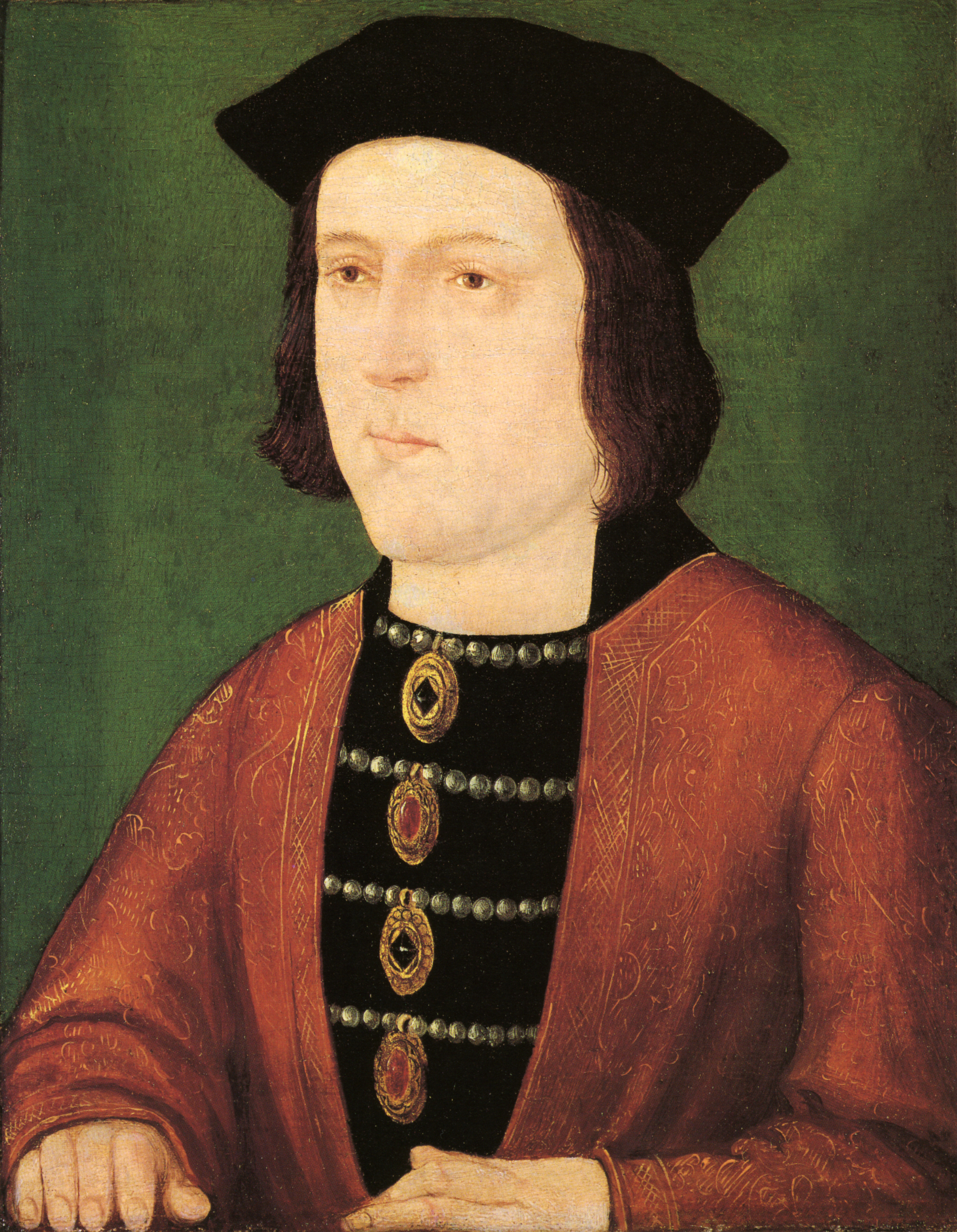
Edward IV
Edward IV Edward IV, eighteen at Towton, who led the Yorkist army in person. Unknown artist · public domain · source
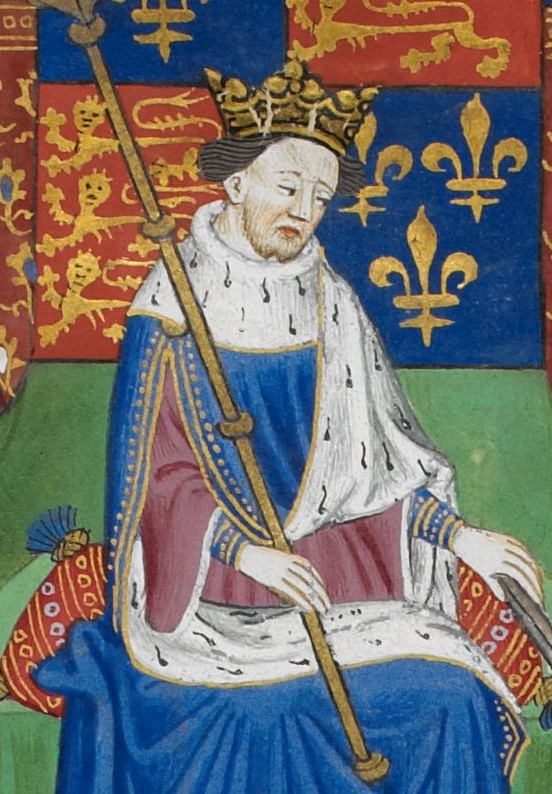
Henry VI
Henry VI Henry VI, from the Shrewsbury Book. He stayed in York during the battle. Talbot Master · public domain · source

Free for everyone every year on its anniversary: March 29.

Accuracy score: 57/100 (limited)

How the accuracy score works

Sources and method

Towton, Ferrybridge and Dintingdale, 28–29 March 1461. Locations follow the Historic England Register of Historic Battlefields entry for Towton (list entry 1000040), which describes the plateau, Towton Dale, Dintingdale, Bloody Meadow and Castle Hill Wood and summarises the metal-detecting and mass-grave evidence; Lord Dacre's Cross is placed from its listing (Historic England 1148443), Lord Dacre's tomb at Saxton from its listing. The archaeology is from the Towton Battlefield Archaeological Survey (Tim Sutherland; Sutherland, 'Artefacts and anomalies'), the hand-gun finds (Archaeology magazine, 2011), the arrowhead study of Starley and Cubitt (Historical Metallurgy 48, 2014), M. Cahill's discussion of the arrowhead band (2015), the review of Fiorato, Boylston and Knüsel, Blood Red Roses (Assemblage 6) and the Towton Battlefield Society. Narrative: Encyclopaedia Britannica, History of War on Ferrybridge, Tadcaster Historical Society; A. W. Boardman, The Battle of Towton (1994); G. Foard and R. Morris, The Archaeology of English Battlefields (2012). The written sources — George Neville's letter and the 4 April 1461 newsletter, the Paston letters, the Croyland continuation, the Annales rerum anglicarum, Jean de Waurin and, much later, Edward Hall's chronicle (1540s) — are few, partisan and inconsistent; the snowstorm archery trick and the Castle Hill Wood ambush are Hall's and later tradition. Which lord led which Lancastrian battle, all strengths, and the exact traces of the lines are interpretive; the heralds' 28,000 dead is not credible as given. Images from Wikimedia Commons.

Where the positions come from

Further reading