Battlefield Atlas
Seven Years' War · 1 August 1759

Minden, 1 August 1759

Also known as Schlacht bei Minden

Accuracy49 /100 · limited
Stages7
On the map30 photos pinned
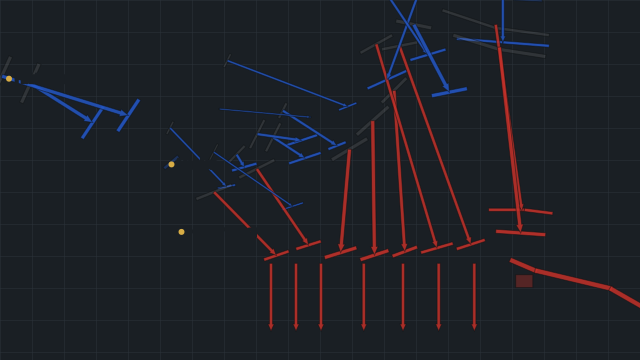
Drawing of the units and movements at MindenStages 1–3 freeOpen the interactive map

The first 3 stages are free. No account needed to start.

On 1 August 1759, on the heath north-west of Minden in Westphalia, Duke Ferdinand of Brunswick's Allied army — about 41,000 British, Hanoverian, Hessian, Brunswick and other German troops by most counts — defeated the larger French and Saxon army of Marshal Contades and the duc de Broglie, 51,000 to 57,000 strong (57,000 in the Seven Years War Project's order of battle). Contades crossed the Bastau marsh by night to attack, putting his cavalry in the center of his line. Six British infantry battalions, with Hanoverian battalions beside them, advanced against that cavalry and broke three charges (some accounts count a fourth) with musketry — one of the most famous feats of infantry in the period — and the French army fell back over the Bastau and the Weser; the victory ended the French threat to Hanover and gave up most of Hesse. Lord George Sackville's failure to bring on the Allied cavalry of the right is generally held to have cost the Allies a more complete victory, and it ended his military career. The six battalions' successor regiments still keep Minden Day.

Battlefield Explorer opens stages 4–7 and every other battle. See the free battles.

Schlacht bei Minden (Huck, before 1787)
Schlacht bei Minden (Huck, before 1787) — Johann Gerhard Huck · public domain

The battle, stage by stage

  1. Night of 31 July – 1 August 1759

    Across the Bastau in the dark

    For about two weeks Marshal Contades's French and Saxon army has sat in a strong camp south-west of Minden, behind the marshy Bastau, with the Weser and the fortified town, taken by Broglie on 9 July, on its right. Duke Ferdinand of Brunswick, with the Allied army of Britain, Hanover, Hesse, Brunswick and Prussia, is camped to the north-west behind Nordhemmern and Holzhausen, from Hille, where his cavalry lies, toward Friedewalde, with picquets out from Hartum to Hille, by the Hanoverian account of Brandis. He has left Lieutenant-General von Wangenheim's corps dug in south of Todtenhausen on the Weser, apparently as bait. Contades takes it. After a council of war on the evening of 31 July his army moves from about 10 PM to midnight, crossing the Bastau in eight columns on bridges laid for the purpose (eight by most modern accounts; nineteen in Fortescue's) under a thunderstorm, while the duc de Broglie's reserve corps crosses the Weser by the town bridge as a ninth column to strike Wangenheim at dawn. Ferdinand had ordered his army ready to march at 1 AM, but word from two French deserters, reportedly held up for about two hours by the Prince of Anhalt, reaches him at Hille only at about 3 AM. (The Allied camp lines and the French crossing places shown here are schematic.)

  2. 1 August, about 5 to 7 AM

    Two armies on the heath

    At about 5 AM Broglie's guns open on Wangenheim's earthworks south of Todtenhausen, beginning an artillery duel that lasts some three hours. Contades's army forms slowly on the open heath north-west of Minden in a convex arc: Guerchy's French infantry and the Saxons on the left, reaching the morass by Hahlen, which the Champagne brigade holds; the whole of the French cavalry — 55 squadrons by one account — in the center, with guns; the infantry divisions of Nicolai, Beaupréau and Saint-Germain on the right, as far as the hamlet of Malbergen, where Contades takes his post and the Grenadiers de France and Grenadiers Royaux stand with an eight-gun battery; and Broglie's corps from Malbergen to the Weser, opposite Todtenhausen (German General Staff history). An unusual arrangement for the age, it put horsemen where infantry would normally stand. The Allied army comes on in eight columns and between about 6 and 7 AM forms between Hartum, Hahlen and Stemmer — except Lord George Sackville's cavalry on the right, which was not saddled until about 4 AM and is still on the march. (Malbergen's position is approximate.)

  3. About 7 to 8 AM

    Hahlen burns

    On the Allied right the Prince of Anhalt's picquets attack Hahlen, which the Champagne brigade had occupied by about 5 AM; accounts differ on how hard and how long the fight was (three assaults in Fortescue's account; the German General Staff history has the French leave the village only when their left wing fell back), and smoke from the burning village drifts over the French line. Captain William Phillips's British artillery comes into action by Hahlen, and the brigades of Foy and Macbean silence French batteries in front of them — one battery, by the regimental accounts, within ten minutes. By about 8 AM Sackville's 24 squadrons of British and Hanoverian horse have arrived and stand by Hartum, on the far right, with Lord Granby leading the second line. On the left, Broglie finds Wangenheim's position stronger than expected and asks Contades for help.

  4. From about 8 AM

    Infantry against cavalry

    Then the British infantry of Spoercken's column go forward on their own: Major-General Waldegrave's brigade — the 12th, 37th and 23rd Foot — with the Hanoverian Foot Guards and Hardenberg's battalion, which came up on their left, and Kingsley's brigade — the 20th, 51st and 25th — behind. The traditional story, which goes back to Ferdinand's own official account, is that an order to advance 'with drums beating' when the time came was misdelivered or misunderstood as an order to advance at once (britishbattles.com gives it as an order to advance 'on the beat of drum'); the Seven Years War Project, from the report of Ferdinand's aide Count Taube, argues that Ferdinand ordered the attack himself and then sent officers to slow it. The battalions pause by a small fir wood, then march straight at the French cavalry, under cannon fire from both flanks — the batteries in front of Guerchy and the Saxons on their right and the French guns at Malbergen on their left. Infantry in line were not expected to attack cavalry at all.

  5. About 8:30 to 9 AM

    Three charges broken

    The French cavalry charge three times (some accounts count a fourth). The marquis de Castries's 11 squadrons come first; the redcoats hold their fire until the horsemen are very close (ten paces by one account, about 30 yards by another), and the volley empties saddles. A second attack (14 squadrons in the German General Staff history, 22 in other accounts) is broken the same way. The Gendarmerie and Carabiniers, the elite of the French horse — 18 squadrons, about 2,000 men, by the German General Staff history — break into the first Allied line but are stopped by the second and by fire from Wutginau's largely Hessian division to the left. On the right, Guerchy's infantry and the Saxons attack Spoercken's flank; Ferdinand sends General Scheele with five Hanoverian battalions and heavy guns, and the attack fails. A few thousand foot soldiers have beaten the cavalry of a whole army in the open — the feat the regiments of Minden have celebrated ever since.

  6. About 9 to 10 AM

    Sackville's cavalry stands still

    The French center is open and the cavalry beaten. This is the moment for the Allied horse of the right, and Ferdinand sends aide after aide — Winzingerode, Ligonier, Fitzroy — to order Sackville forward. Sackville questions the orders, says they contradict each other and that the woods are impassable, and halts Granby when he starts forward; when he does move it is too late. On the Allied left, Wutginau's and Imhoff's Hessian and Brunswick battalions throw back Beaupréau's attack at Malbergen; Hessian battalions storm the battery there, and Holstein's squadrons ride into the retreating French. Contades orders a general retreat at about 9 AM. (Malbergen's position is approximate.)

  7. About 10 AM to the night of 1 August

    Back over the Bastau

    The French stream back to their Bastau bridges in disorder, British guns (Foy's and Macbean's brigades) firing into the crowds at the crossings. Two French brigades (Auvergne and Anhalt) rally at Neuland and check the Allied cavalry, and Broglie's corps covers the retreat and falls back into Minden, which it holds by about 11 AM. From about 10 PM Contades crosses the Weser, the last troops over the next morning, and burns his bridges behind him; on 2 August the garrison of Minden under General Dagieu surrenders. With the Hereditary Prince's detachment across his communications at Gohfeld the same morning, Contades retreats south toward Kassel, giving up most of what the French had won that year. Losses are given very differently: the German General Staff history counts 151 officers and 2,646 men lost by the Allies and 479 officers and 7,762 men by the French and Saxons; other modern counts give about 2,600 to 2,800 Allied and about 7,000 French and Saxon, while Contades and Broglie themselves reportedly admitted 10,000 to 11,000. The British lost 1,252 of 4,434 men by the Seven Years War Project's count, 1,398 of 3,198 by Norris's. Sackville is court-martialed and on 3 April 1760 found guilty of disobeying Prince Ferdinand's orders and "adjudged unfit to serve His Majesty in any military capacity whatsoever"; the successor regiments of those that fought here still wear roses on Minden Day. (The crossing places are schematic.)

At a glance

When
1 August 1759
Where
The heath north-west of Minden on the Weser, North Rhine-Westphalia, Germany.
Forces
The Allies fielded about 41,000 men against a French and Saxon army of 51,000 to 57,000.
Casualties
The Allies lost roughly 2,600 to 3,000 men and the French and Saxons about 7,000 to 11,000 depending on the source and on whether prisoners are counted.
On the map
7 stages, 30 photos pinned where they were taken

Who fought

  • French and Saxon army (Contades, Broglie)
  • Allied army (Ferdinand of Brunswick)

Accuracy score

49/100 · limited

Limited confidence in where units stood and moved, scored on the quality of the source map, how well independent fixed points agree, the level of detail and corroboration. How scores work

Places on the map

  • Minden cathedral (town and fortress)
  • Hahlen
  • Hahler Moor (Bastau marsh)
  • Hartum mill
  • Stemmer
  • Kutenhausen
  • Todtenhausen
  • Christuskirche Todtenhausen
  • Hille
  • Nordhemmern
  • Holzhausen II
  • Friedewalde
  • Weser bank (Valentinsmuehle)
  • Battle memorial of 1859 (approximate)
  • Malbergen (approximate)

More from the Seven Years' War

Forces

The Allies fielded about 41,000 men against a French and Saxon army of 51,000 to 57,000. Totals differ by source and by whether Wangenheim's and Broglie's corps are counted; unit figures are rare.

French and Saxon army (Contades, Broglie)

Army strengthabout 51,000 (51,000–57,000)

Norris and britishbattles.com give 51,000 (Norris: 168 guns; britishbattles.com: 162); the Seven Years War Project's order of battle gives 57,000. Norris says Contades's whole army had been about 60,000. David A. Norris, 'Miracle Victory at the Battle of Minden', Warfare History Network; britishbattles.com, Battle of Minden; Seven Years War Project (Kronoskaf), 1759-08-01 Battle of Minden

Allied army (Ferdinand of Brunswick)

Army strengthabout 41,000

Norris and britishbattles.com both give about 41,000 with 170 guns; Norris says Ferdinand's army had been about 45,000 before detachments were sent away. David A. Norris, 'Miracle Victory at the Battle of Minden', Warfare History Network; britishbattles.com, Battle of Minden

British infantry engaged (six regiments)3,198

Norris's count of the six British infantry regiments; the Seven Years War Project gives 4,434. David A. Norris, 'Miracle Victory at the Battle of Minden', Warfare History Network; Seven Years War Project (Kronoskaf), 1759-08-01 Battle of Minden

Casualties

The Allies lost roughly 2,600 to 3,000 men and the French and Saxons about 7,000 to 11,000 depending on the source and on whether prisoners are counted. Every total is a secondary or modern count; the figures are uncertain and the French ones are disputed. Certainty: fair.

French and Saxon army (Contades, Broglie)

Killed and wounded (German General Staff)479 officers and 7,762 men

The German General Staff history of 1912 gives these totals for the French and Saxons; the source is a secondary reading of it. German General Staff, Der Siebenjährige Krieg, Bd. 11 (1912), as given in the German Wikipedia article, read via Austria-Forum

Casualties, modern countsabout 7,000 (7,000–11,000)

Norris says the French announced about 7,000 killed, wounded or captured, and that commanders cited higher figures privately; britishbattles.com says Contades and Broglie put their losses at 10,000 to 11,000. David A. Norris, 'Miracle Victory at the Battle of Minden', Warfare History Network; britishbattles.com, Battle of Minden

Minden garrison surrendered, 2 Augustabout 2,800

Norris counts the men of General Dagieu's garrison who surrendered the day after the battle. David A. Norris, 'Miracle Victory at the Battle of Minden', Warfare History Network

Allied army (Ferdinand of Brunswick)

Killed and wounded (German General Staff)151 officers and 2,646 men

The German General Staff history of 1912 gives these totals for the Allies, as read through the German Wikipedia article. German General Staff, Der Siebenjährige Krieg, Bd. 11 (1912), as given in the German Wikipedia article, read via Austria-Forum

Casualties, modern countsabout 2,600 to 3,000 (2,600–3,000)

britishbattles.com gives about 2,600 killed and wounded, about half of them British infantry and artillery; Norris gives about 3,000, nearly half British. britishbattles.com, Battle of Minden; David A. Norris, 'Miracle Victory at the Battle of Minden', Warfare History Network

British infantry (six regiments)1,398 of 3,198

Norris: 294 killed, 1,037 wounded and 67 missing, with 20 more lost by the British artillery. The Seven Years War Project counts 1,252 of 4,434. David A. Norris, 'Miracle Victory at the Battle of Minden', Warfare History Network; Seven Years War Project (Kronoskaf), 1759-08-01 Battle of Minden

Equipment and ships

French guns, standards and baggage lost43 guns and 17 standards

Norris and britishbattles.com both say the French left 43 guns and 17 standards or colors on the field, with much of their baggage. David A. Norris, 'Miracle Victory at the Battle of Minden', Warfare History Network; britishbattles.com, Battle of Minden

Then and now: how the ground has changed

The heath, the Bastau morass and the villages the armies used can still be found by name on a modern map, but no survey of how the ground has changed was available for this build, and the army lines drawn here are interpretive. Fortress Minden is now a modern city, and the field is marked by a memorial of 1859.

Weapons

French and Saxon army (Contades, Broglie)

French Model 1766 musket ("Charleville")

French Model 1766 musket ("Charleville")

Smoothbore flintlock musket · 1766–1777 pattern

At Minden: French infantry musket

France shipped tens of thousands of these muskets to the Continental Army from 1777, quietly, before it entered the war. Lighter and slightly smaller-bored than the Brown Bess, it became the pattern for America's first national musket, the Springfield Model 1795.

Caliber
.69
Effective range
about 100 yd
Rate of fire
2–3 rounds a minute
Photo: Charleville Arsenal · Public domain
Socket bayonet

Socket bayonet

Edged weapon (musket attachment) · c. 1690s-1860s

At Minden: Socket bayonet

The socket bayonet slipped over the outside of the musket barrel and locked in place, turning every musket into a short pike without blocking the muzzle. It made the pike obsolete and let infantry defend themselves against cavalry and finish an assault at close quarters. For a century and a half, a determined bayonet charge often decided fights that musketry could not.

Length
Triangular blade, about 17 in on the Brown Bess
Use
Fitted over the muzzle so the musket could still be fired
Photo: Rama · CC BY-SA 2.0 fr

Allied army (Ferdinand of Brunswick)

Short Land Pattern musket ("Brown Bess")

Short Land Pattern musket ("Brown Bess")

Smoothbore flintlock musket · 1768–1790s pattern

At Minden: British infantry musket; the six battalions held their fire until the French horse were very close and then volleyed.

The British infantryman's musket for most of the 18th century. Accuracy beyond about 100 yards was poor, so the tactics were volleys at close range followed by the bayonet, which the Brown Bess was built to carry.

Caliber
.75 (ball about .69)
Effective range
about 50–100 yd against a formed line
Rate of fire
3 rounds a minute, drilled
Photo: Tower (British Ordnance) · Public domain
Socket bayonet

Socket bayonet

Edged weapon (musket attachment) · c. 1690s-1860s

At Minden: Socket bayonet

The socket bayonet slipped over the outside of the musket barrel and locked in place, turning every musket into a short pike without blocking the muzzle. It made the pike obsolete and let infantry defend themselves against cavalry and finish an assault at close quarters. For a century and a half, a determined bayonet charge often decided fights that musketry could not.

Length
Triangular blade, about 17 in on the Brown Bess
Use
Fitted over the muzzle so the musket could still be fired
Photo: Rama · CC BY-SA 2.0 fr

Paintings and photographs

Schlacht bei Minden (Huck, before 1787)
Schlacht bei Minden (Huck, before 1787) Oil painting of the Battle of Minden by Johann Gerhard Huck, painted before 1787. Pinned at the infantry fight on the heath west of Minden; the painting names no exact spot. Johann Gerhard Huck · public domain · source
The battle of Minden or Thornhausen (1759 print)
The battle of Minden or Thornhausen (1759 print) Print of 1759 titled 'The battle of Minden or Thornhausen where the allied army obtained a glorious victory over the French', 1 August 1759. Pinned at the infantry fight on the heath; place not recorded beyond the battlefield, approximate. Unknown author · public domain · source
Engraving of the Battle of Minden, 1759
Engraving of the Battle of Minden, 1759 Contemporary engraving of the Battle of Minden with a printed description. Pinned at the center of the fighting on the heath; place approximate. Unknown author · public domain · source
Colored print of the Battle of Minden (c. 1785)
Colored print of the Battle of Minden (c. 1785) Colored print of the Battle of Minden of 1759, made about 1785. Pinned at the center of the fighting on the heath; place approximate. Unknown author · public domain · source
The Battle of Minden in Westphalia (Yale Center for British Art)
The Battle of Minden in Westphalia (Yale Center for British Art) Anonymous view 'The Battle of Minden in Westphalia', Yale Center for British Art B1995.13.12. Pinned at the center of the fighting on the heath; place approximate. Anonymous (Yale Center for British Art) · CC0 · source
Schlacht bei Minden (print)
Schlacht bei Minden (print) Print of the Battle of Minden, where Prince Ferdinand's Prussian-Hanoverian-British army defeated Contades's French army on 1 August 1759. Pinned at the center of the fighting; place approximate. Unknown author · public domain · source
Defeat of Contades by Ferdinand of Brunswick at Minden (estampe)
Defeat of Contades by Ferdinand of Brunswick at Minden (estampe) Print from the Bibliothèque nationale de France (Hennin 8939) showing the defeat of Contades by Ferdinand of Brunswick at Minden, 1 August 1759. Pinned at the center of the fighting; place approximate. Bibliothèque nationale de France · public domain · source
20th Foot against French cavalry (Caton Woodville, 1901)
20th Foot against French cavalry (Caton Woodville, 1901) Illustration by Richard Caton Woodville Jr. (1901) of the 20th Foot (Lancashire Fusiliers) fighting French cavalry at Minden. Pinned at Kingsley's brigade (20th, 51st, 25th Foot). Richard Caton Woodville Jr. · public domain · source
Scene from the Battle of Minden (Grotemeyer, 1943)
Scene from the Battle of Minden (Grotemeyer, 1943) Oil painting by Fritz Grotemeyer, commissioned 1941 and finished 1943 (Mindener Museum). Pinned at the infantry fight on the heath; the painting names no exact spot. Fritz Grotemeyer · public domain · source
Saint-Pern at Minden (Job, 1896)
Saint-Pern at Minden (Job, 1896) Illustration by Job (1896) of Judes Vincent de Saint-Pern at Minden answering the sound of cannon: 'Du canon? Eh bien, ça tue, ça tue, voilà tout!' Place not recorded; pinned with the French center, approximate. Job (Jacques-Marie-Gaston Onfroy de Bréville) · public domain · source
Duke Ferdinand at Minden (Tunica, 1856)
Duke Ferdinand at Minden (Tunica, 1856) Painting by Hermann Tunica (1856) of Duke Ferdinand of Brunswick as Allied commander at the Battle of Minden; Commons gives the year as 1757, but the battle was on 1 August 1759. Pinned at Ferdinand's headquarters. Hermann Tunica · public domain · source
Duke Ferdinand of Brunswick (Tischbein, about 1760)
Duke Ferdinand of Brunswick (Tischbein, about 1760) Portrait of Duke Ferdinand by Johann Heinrich Tischbein, about 1760, with the battle in the background and the Garter he received for Minden (now Stadtmuseum Minden). Portrait pinned at Ferdinand's headquarters; it was not painted there. Johann Heinrich Tischbein · public domain · source
Duke Ferdinand of Brunswick (London engraving)
Duke Ferdinand of Brunswick (London engraving) Three-quarter-length engraved portrait of Ferdinand, Field Marshal and victor of Minden, printed in London by John Ryall. Portrait pinned at Ferdinand's headquarters; it was not made there. Unidentified engraver (after De Morgens) · public domain · source
Who shewd his rear at Minden (1759 satire)
Who shewd his rear at Minden (1759 satire) Satire of about 1759 on Lord George Sackville's command of the cavalry at Minden, showing him retreating while the cavalry in the distance wishes to 'face about'. Pinned at Sackville's cavalry. British Museum 1847,1009.18.14 · public domain · source
General Pompadour or the Minden hero (1759 satire)
General Pompadour or the Minden hero (1759 satire) 1759 satire on Sackville at Minden, showing him on horseback saying 'Oh the naughty Guns how they make my Head Ach'. British Museum 1847,1009.18.20. Pinned at Sackville's cavalry. British Museum 1847,1009.18.20 · public domain · source
The Imagin'd Heroe (1759 satire)
The Imagin'd Heroe (1759 satire) 1759 satire on Sackville's conduct at Minden, linking his possible fate to that of Admiral Byng. British Museum 1871,0610.479. Pinned at Sackville's cavalry. British Museum 1871,0610.479 · public domain · source
The Cowardly Soldier and the Runaway Ghost (1759 satire)
The Cowardly Soldier and the Runaway Ghost (1759 satire) 1759 satire on Sackville's command of the cavalry at Minden, showing him in his tent with the ghost of Admiral Byng. British Museum 1871,0610.478. Pinned at Sackville's cavalry. British Museum 1871,0610.478 · public domain · source
Roy plan of the Battle of Thonhausen, flap 1: the beginning
Roy plan of the Battle of Thonhausen, flap 1: the beginning William Roy's plan of the Battle of Minden or Thonhausen, 1 August 1759, base sheet showing the beginning of the battle (David Rumsey collection, image 13022.001). Pinned at the center of the area it covers. William Roy (David Rumsey Map Collection) · public domain · source
Roy plan of the Battle of Thonhausen, flap 2: the middle
Roy plan of the Battle of Thonhausen, flap 2: the middle The second flap of Roy's plan, showing the middle of the battle (David Rumsey collection, image 13022.002). Pinned at the center of the area it covers. William Roy (David Rumsey Map Collection) · public domain · source
Roy plan of the Battle of Thonhausen, flap 3: the end
Roy plan of the Battle of Thonhausen, flap 3: the end The third flap of Roy's plan, showing the end of the battle (David Rumsey collection, image 13022.003). Pinned at the center of the area it covers. William Roy (David Rumsey Map Collection) · public domain · source
Plan of the battle of Minden (British Museum 1873,0809.1571)
Plan of the battle of Minden (British Museum 1873,0809.1571) Engraved plan of about 1760 showing the disposition of the French and Allied armies before the battle, with pasted sections showing the Allied victory. British Museum 1873,0809.1571. Pinned at the center of the area it covers. British Museum · public domain · source
A plan of the battle near Minden (British Museum J,7.50)
A plan of the battle near Minden (British Museum J,7.50) Engraved plan of about 1760 showing the disposition of the armies before the battle and the progress of the Allied victory. British Museum J,7.50. Pinned at the center of the area it covers. British Museum · public domain · source
Plan der Bataille bey Minden, 1759 (Hauptstaatsarchiv Stuttgart)
Plan der Bataille bey Minden, 1759 (Hauptstaatsarchiv Stuttgart) Plan of the battle of 1 August 1759 between the Allied army under Prince Ferdinand and the French army under Contades, Hauptstaatsarchiv Stuttgart N 100 Nr. 2. Pinned at the center of the area it covers. Landesarchiv Baden-Württemberg, Hauptstaatsarchiv Stuttgart · CC BY 4.0 · source
Battle of Minden plan (Beaurain)
Battle of Minden plan (Beaurain) Plan of the Battle of Minden by Jean de Beaurain, made after 1759. Pinned at the center of the area it covers. Jean de Beaurain · public domain · source
Schlacht bei Minden am 1 August 1759 (Lehrmann, 1844)
Schlacht bei Minden am 1 August 1759 (Lehrmann, 1844) Partly colored 1:50,000 map of 1844 with troop positions and movements, probably from the Prussian General Staff history of the Seven Years' War. Pinned at the center of the area it covers. Lehrmann · CC0 · source
Map of the Battle of Minden (Colbeck, 1905)
Map of the Battle of Minden (Colbeck, 1905) Plan of the Battle of Minden by Charles Colbeck, 1905. Pinned at the center of the area it covers. Charles Colbeck · public domain · source
Battle of Minden map (Sytin Military Encyclopedia)
Battle of Minden map (Sytin Military Encyclopedia) Sketch map of the Battle of Minden (1759) from the Sytin Military Encyclopedia (St. Petersburg, 1911-1915). Pinned at the center of the area it covers. Sytin Military Encyclopedia · public domain · source
Battle memorial at Todtenhausen
Battle memorial at Todtenhausen The memorial to the Battle of Minden at Todtenhausen, North Rhine-Westphalia, photographed in 2006. Pinned at the memorial landmark (approximate position). Ingo2802 · CC BY-SA 3.0 · source
Plaque on the Battle of Minden memorial
Plaque on the Battle of Minden memorial Plaque on the Battle of Minden memorial at Todtenhausen, with an inscription recalling the Allied victory of 1 August 1759. Pinned at the memorial landmark (approximate position). Ingo2802 · CC BY-SA 3.0 · source
Memorial beside the Lohrmann inn, Todtenhausen
Memorial beside the Lohrmann inn, Todtenhausen The historic Lohrmann inn at Todtenhausen, with parts of the Battle of Minden memorial in the right foreground. Pinned at the memorial landmark (approximate position). Ingo2802 · CC BY-SA 3.0 · source

Free for everyone every year on its anniversary: August 1.

Accuracy score: 49/100 (limited)

  • Sources21/40

    Kronoskaf's account of the Seven Years War Project, drawing on Fortescue, Hotham and Jomini, with the German General Staff history, Norris and britishbattles.com, give the course of the battle; Szabo and Savory were not available.

  • Fixed points12/30

    Minden cathedral, Hahlen, Hartum mill, Hille and the Weser bank are fixed from gazetteer data; Malbergen, the 1859 memorial and the Allied camp of the night are approximate.

  • Movement detail10/20

    The eight Allied columns and the hours follow the Seven Years War Project; the army lines are interpretive and the French crossing places are schematic.

  • Corroboration6/10

    Accounts agree on the three cavalry charges and Sackville's inaction but differ on the number of charges, the order that sent the British forward and the losses.

How the accuracy score works

Sources and method

Minden, 1 August 1759. The course of the battle, the order of the eight Allied columns and the hours follow the Seven Years War Project's detailed account, 1759-08-01 – Battle of Minden (Kronoskaf; drawing on Fortescue, A History of the British Army II; Hotham, The Operations of the Allied Army (1764); Jomini; and Westphalen) and its analysis of the order that sent the British infantry forward; with the Minden local-history site amtage.de, britishbattles.com, David A. Norris, 'Miracle Victory at the Battle of Minden' (Warfare History Network), the National Army Museum, the William L. Clements Library exhibit on 1759, and the Royal Hampshire Regiment Museum. The Allied camp of the night, Wangenheim's entrenchments and the picquet line follow the Hanoverian account of Brandis; the fighting at Todtenhausen and the 1859 memorial follow the village's chronology. Malbergen, the French cavalry attacks, the rally at Neuland and the surrender of the garrison follow the German General Staff, Der Siebenjährige Krieg, Bd. 11 (1912), as cited by the German Wikipedia article (read through its mirrors at Austria-Forum and de-academic), which is also the source for strengths and losses with Piers Mackesy, The Coward of Minden (1979), as cited by the English Wikipedia article; Kronoskaf; britishbattles.com. Sackville's sentence: History Today. The contemporary plan by William Roy (Royal Collection RCIN 732111, 1760, used at Sackville's court-martial) and other plans in the Royal Collection were consulted only through their catalogue descriptions. Villages are placed from gazetteer data (Who's On First, ADAC, komoot and place-name coordinate sites), the Hartum and Todtenhausen mills from the Westphalian Mill Route, the cathedral from KuLaDig, and the 1859 memorial approximately from the City of Minden's commemorations and todtenhausen.de. The lines are drawn from the written accounts and are interpretive; Malbergen, the French crossing places and the Allied camp of the night are placed approximately. Franz Szabo's and Reginald Savory's histories were not available for this build.

Where the positions come from

  • Scholarship Seven Years War Project (Kronoskaf), 1759-08-01 Battle of Minden and its analysis
  • Modern map Minden cathedral, Hahlen, Hartum mill, Todtenhausen and the Christuskirche; the 1859 battle memorial (approximate)
  • Note The lines of both armies are drawn from written accounts and are interpretive; Malbergen, the French crossing places and the Allied camp are approximate

Further reading