Battlefield Atlas
War of 1812 · 24 August 1814

Bladensburg, 24 August 1814

Also known as Bladensburg Races

Accuracy71 /100 · good
Stages7
On the map10 photos pinned

Every unit on the real ground, in 3D. No account needed.

On 24 August 1814, about 4,000 to 4,500 British troops under Major General Robert Ross and Rear Admiral George Cockburn, most of them veterans of Wellington's Peninsular army, crossed the Eastern Branch of the Potomac (the Anacostia) at Bladensburg, Maryland, and routed roughly 6,000 to 7,000 Americans — mostly hastily gathered Maryland and District of Columbia militia under Brigadier General William Winder. Rockets and a determined rush broke the first two lines early in the afternoon, in a flight soon mocked as the 'Bladensburg Races', with President Madison and members of his cabinet on the field. Only Commodore Joshua Barney's flotillamen and the U.S. Marines on the third line made a real stand, until they were outflanked and Barney was wounded and captured. That night the British marched into Washington and burned the Capitol, the President's House and other public buildings — in the Park Service's words, the only time in American history that a foreign nation has captured and burned the capital.

The Final Stand at Bladensburg (Waterhouse)
The Final Stand at Bladensburg (Waterhouse) — Col. Charles Waterhouse, USMC (Marine Corps Art Collection) · public domain

The battle, stage by stage

  1. 24 August 1814, about noon

    Three lines west of the Eastern Branch

    After four days' march from Benedict in fierce heat, Major General Robert Ross's British column — Peninsular War veterans, with Rear Admiral George Cockburn riding alongside — follows the Eastern Branch of the Potomac (today's Anacostia) north and comes over Lowndes Hill into Bladensburg about noon. Across the river, Brigadier General William Winder's Americans stand in three lines strung out over about a mile. Near the bridge, Brigadier General Tobias Stansbury's Baltimore guns wait behind a barbette about 350 yards from the bridge, with William Pinkney's riflemen in the brush along the bank; Stansbury's infantry, pulled back without his knowledge by Secretary of State James Monroe, now stands about a quarter of a mile to the rear, along today's 40th Avenue. Beyond Dueling Creek, on the high ground at the District line, Commodore Joshua Barney's flotillamen and Captain Samuel Miller's Marines have just come up with five naval guns, Walter Smith's District brigade and George Peter's guns on their left and William Beall's Maryland militia on the hill to their right. President James Madison and members of his cabinet are on the field.

  2. About 12:30–1 PM

    Storming the bridge

    Ross studies the American lines from Lowndes Hill behind the Bostwick house and, without waiting for his other two brigades, still on the road, sends Colonel William Thornton's light brigade — the 85th Light Infantry and the light companies of the 4th, 21st and 44th — straight at the 120-foot wooden bridge. Royal Marine artillerymen set up Congreve rocket frames and light guns on the east bank just south of the house now called the George Washington House. The first rush is pinned down by the Baltimore guns and the riflemen; Thornton rides forward, sword drawn, and leads it again (the Park Service's wayside gives 1 PM), and the light infantry pour across while others ford the shallow river.

  3. About 1 PM

    Rockets and the 'Bladensburg Races'

    Over the bridge, the light infantry spread out through the brush and the orchard and work around the battery, while Congreve rockets — wildly inaccurate but terrifying, with a horrific screech — fly over the first line. Madison, by his own account, judged 'that it would be proper to withdraw to a position in the rear', leaving 'military movements now to the military functionaries who were responsible for them'; by about 2 PM, the Army's campaign history says, he was on his way back to Washington. Pinkney's riflemen and the Baltimore gunners, their infantry support now far behind them, give way. The scramble that follows was soon mocked in the newspapers and in a popular poem as the 'Bladensburg Races'.

  4. About 1:30 PM

    The second line gives way

    Winder sends Lieutenant Colonel Joseph Sterett's 5th Maryland forward, and for a moment it drives the light infantry back. But Thornton extends to overlap its flanks, and Colonel Arthur Brooke's 4th and 44th Foot come into the fight; the 44th, the Army's campaign history says, fords the river upstream of the bridge and attacks the 5th's left. Unnerved by the rocket fire, Lieutenant Colonel John Ragan's 24th and Lieutenant Colonel John Henry Schutz's 2nd Maryland regiments break and stream away down the Georgetown road; Ragan, thrown from his horse, is captured. Pressed on three sides, the 5th is ordered back by Winder, and Jacint Laval's squadron of dragoons, posted in a ravine beside the Georgetown road and barely engaged, joins the retreat toward Georgetown.

  5. About 2–2:30 PM

    Barney's guns

    The redcoats follow the turnpike over Tournecliff's bridge on Dueling Creek, where Kramer's detachment of about 240 militiamen, posted 400 to 500 yards in front of Barney, forces them into the creek ravine before falling back. On the slope beyond, astride the road at the District line, Barney holds his fire until the column is a few hundred yards off; by his report one 18-pounder clears the road, and two more attempts are broken. When the British move into an open field to turn his right, Miller's three 12-pounders, the Marines and the flotillamen drive them back again, and the flotillamen counterattack — with cries, as the historian Steven Eden tells it, of 'Board 'em! Board 'em!' Thornton, leading a charge up the American right after skirting a ravine, is shot in the thigh by a musket ball (American Battlefield Trust). The fight to turn Barney's right, the National Register nomination says, lasts about half an hour.

  6. About 2:30–4 PM

    Outflanked

    Beall's militia on the hill to Barney's right — 500 to 600 men by Barney's count — fire two ineffective volleys and withdraw, and British light troops take the high ground and work around the guns. On the left, Smith's brigade has been ordered to withdraw and goes in good order; the regulars are pulled out over their commander's objection before firing a shot, and Peter's guns fire a last volley and limber up. Barney's ammunition is spent and, by his report, the drivers of his ammunition wagons have 'gone off in the General Panic'; with his horse shot dead between two of his guns and a musket ball deep in his thigh, Barney orders the guns spiked and his men away. He and the wounded Miller are captured; Ross and Cockburn have Barney's wound dressed and parole him. Cockburn, in the words the Park Service's wayside gives him, said the flotillamen 'gave us the only fighting we have had.'

  7. Evening 24 August – 25 August 1814

    The road to Washington

    Ross rests his exhausted troops, then at dusk marches on down the Bladensburg road; two brigades halt on the city's outskirts while he and Cockburn ride into Washington with a smaller force. Fired on from a house near the Capitol, the British burn the Capitol that night and the President's House at about 11 PM, and other public buildings on the 25th; the Americans burn their own Navy Yard. The invaders begin their withdrawal on the night of the 25th. Losses at Bladensburg are uncertain: Ross's return in the London Gazette lists 64 British killed, and the National Register nomination gives 26 Americans killed. Estimates of all casualties vary: about 100 American and close to 300 British (the Army's campaign history), or about 200 American and 250 British (American Battlefield Trust). The wounded of both armies crowd Bladensburg's houses.
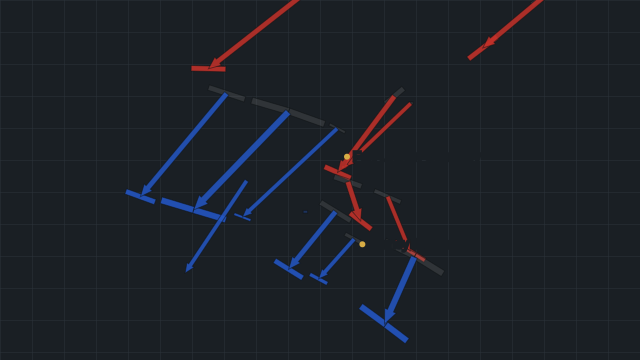

At a glance

When
24 August 1814
Where
Bladensburg and Colmar Manor, Prince George's County, Maryland, beside northeast Washington, D.C.
Forces
About 4,000 to 4,500 British veterans attacked roughly 6,000 to 7,000 Americans, most of them militia called out in the days before; only a few hundred regulars, flotillamen and Marines were professionals.
Casualties
The British official return lists 64 killed and 185 wounded; American losses are less certain, with 26 killed in official accounts and total casualty estimates of about 100 to 200, most of them among Barney's flotillamen and…
On the map
7 stages, 10 photos pinned where they were taken

Who fought

  • British (Ross and Cockburn)
  • Americans (Winder; Barney's flotillamen and Marines)

Accuracy score

71/100 · good

Good confidence in where units stood and moved, scored on the quality of the source map, how well independent fixed points agree, the level of detail and corroboration. How scores work

Places on the map

  • 1814 Bladensburg bridge site (approximate)
  • 'Storming the Bridge' NPS wayside
  • Bladensburg Waterfront Park
  • Bostwick (1746) and Lowndes Hill
  • George Washington House (Indian Queen Tavern)
  • 'Second Line Falls' NPS wayside (40th Avenue)
  • Georgetown Road wayside (Bunker Hill Road)
  • Bladensburg Dueling Grounds and Tournecliff's bridge (Dueling Creek)
  • 'A Valiant Stand' NPS wayside, Colmar Manor Park
  • Fort Lincoln Cemetery
  • Barney Monument (traditional site of his capture)
  • Fort Lincoln (1861) earthworks on Veitch's Hill

Forces

About 4,000 to 4,500 British veterans attacked roughly 6,000 to 7,000 Americans, most of them militia called out in the days before; only a few hundred regulars, flotillamen and Marines were professionals. Army totals vary by source; several unit figures come from the official campaign history.

British (Ross and Cockburn)

Engagedabout 4,000–4,500 (4,000–4,500)

The Army's campaign history says about four thousand veterans; the National Register nomination gives 4,020; the American Battlefield Trust 4,500. C. P. Neimeyer, The Chesapeake Campaign, 1813–1814 (U.S. Army CMH, 2014); M-NCPPC, National Register nomination, Bladensburg Battlefield (2024); American Battlefield Trust, 'Bladensburg' battle page

Americans (Winder; Barney's flotillamen and Marines)

On the field (including militia)about 6,000–7,000 (5,920–7,000)

The Army's campaign history says about seven thousand, mostly inadequately trained militia; the National Register nomination gives 5,920; the American Battlefield Trust 6,500; the heritage area's scoping document about 6,000. C. P. Neimeyer, The Chesapeake Campaign, 1813–1814 (U.S. Army CMH, 2014); M-NCPPC, National Register nomination, Bladensburg Battlefield (2024); American Battlefield Trust, 'Bladensburg' battle page; Anacostia Trails Heritage Area, Bladensburg Battlefield interpretive scoping document (2025)

Naval contingent on the third lineabout 400 flotillamen and 114 Marines

Park Service and National Register figures; the Army's campaign history counts 400 flotillamen and 103 Marines when they joined the army at Long Old Fields two days earlier. National Park Service, 'Battle of Bladensburg'; M-NCPPC, National Register nomination, Bladensburg Battlefield (2024); C. P. Neimeyer, The Chesapeake Campaign, 1813–1814 (U.S. Army CMH, 2014)

Casualties

The British official return lists 64 killed and 185 wounded; American losses are less certain, with 26 killed in official accounts and total casualty estimates of about 100 to 200, most of them among Barney's flotillamen and Marines. The winners lost more men than the routed defenders. Certainty: fair.

British (Ross and Cockburn)

Killed64

Ross's official return in the London Gazette: 1 captain, 2 lieutenants, 5 sergeants and 56 rank and file killed; the National Register nomination repeats the figure of 64. Return of killed and wounded, London Gazette, issue 16939; M-NCPPC, National Register nomination, Bladensburg Battlefield (2024)

Wounded185

Same return: 2 lieutenant colonels, 1 major, 1 captain, 14 lieutenants, 2 ensigns, 10 sergeants and 155 rank and file, among them Col. William Thornton; several officers were too badly hurt to move and were left at Bladensburg. Return of killed and wounded, London Gazette, issue 16939; Ross's dispatch, London Gazette, issue 16939

Casualties (killed and wounded, modern estimates)about 250–300 (249–300)

The Army's campaign history says the British incurred close to 300 casualties; the American Battlefield Trust gives about 250; the official return adds up to 249. C. P. Neimeyer, The Chesapeake Campaign, 1813–1814 (U.S. Army CMH, 2014); Z. Whitlow, 'Bladensburg', American Battlefield Trust (2017)

Americans (Winder; Barney's flotillamen and Marines)

Killed26

The National Register nomination gives 26 Americans killed from official accounts and says most American casualties were among Barney's flotillamen and Marines; Barney's own report names two of his sailing masters killed. M-NCPPC, National Register nomination, Bladensburg Battlefield (2024); NHHC, The Defense and Burning of Washington in 1814: Naval Documents of the War of 1812 (Barney to Jones, 29 August 1814)

Casualties (all categories, estimates)about 100–200 (100–200)

The Army's campaign history says about 100 American casualties; the American Battlefield Trust gives about 200. No complete American return of wounded or captured exists. C. P. Neimeyer, The Chesapeake Campaign, 1813–1814 (U.S. Army CMH, 2014); Z. Whitlow, 'Bladensburg', American Battlefield Trust (2017)

Senior officers wounded or capturedBarney and Miller wounded and captured; Ragan captured

Commodore Barney (musket ball in the thigh) and Capt. Samuel Miller of the Marines were taken on the third line; Lt. Col. John Ragan was captured after being thrown from his horse. No total of prisoners is given. C. P. Neimeyer, The Chesapeake Campaign, 1813–1814 (U.S. Army CMH, 2014); NHHC, The Defense and Burning of Washington in 1814: Naval Documents of the War of 1812 (Barney to Jones, 29 August 1814)

Equipment and ships

American guns taken10 (two 18-pounders, five 12-pounders, three 6-pounders)

British ordnance return of guns and stores taken at Bladensburg, with field carriages, a quantity of ammunition and 220 stand of arms; Barney's men spiked their guns before leaving them. Return of ordnance taken, London Gazette, issue 16939; C. P. Neimeyer, The Chesapeake Campaign, 1813–1814 (U.S. Army CMH, 2014)

Then and now: how the ground has changed

The fields and woodlots of 1814 are now suburbs, roads, a cemetery and parkland, and the river the British crossed has been dredged, straightened and walled in by flood-control levees. Parts of the floodplain and the third-line heights survive, and the National Register nomination calls the ground surprisingly intact given the development around it.

Weapons

British (Ross and Cockburn)

India Pattern "Brown Bess" musket

India Pattern "Brown Bess" musket

Flintlock smoothbore musket · 1797-1850s

At Bladensburg: Standard musket of Ross's Peninsular regiments, the 4th, 21st, 44th and 85th, and of the Royal Marine battalion.

First made for the British East India Company, the India Pattern was a simpler, shorter Brown Bess that Britain adopted as its standard infantry musket during the French wars. It was produced in huge numbers, and surplus guns were supplied to allies and later sold abroad, including to Mexico. Rugged but inaccurate, it was meant for massed volleys at close range.

Caliber
.75 in
Barrel
39 in (990 mm)
Effective range
About 100 yards
Rate of fire
2-3 rounds per minute
Photo: Smithsonian Institution (NMAH) · Public domain
Congreve rocket

Congreve rocket

Rocket artillery · c. 1806-1867

At Bladensburg: Royal Marine Artillery rocket frames on the east bank, just south of today's George Washington House, fired over the American first line; wildly inaccurate, but their screech helped break Ragan's and Schutz's militia.

William Congreve developed his iron-cased rockets from the war rockets Britain had faced in Mysore, India. They were light and could be fired in salvos from simple frames or even the ground, but their flight was famously unpredictable. Britain used them at Copenhagen, Leipzig and Fort McHenry (the 'rockets' red glare') before newer designs replaced them.

Sizes
Light 6- to 18-pounders up to heavy 300-pounders
Range
Up to about 2,000-3,000 yards by size
Guidance
Long wooden stick; notoriously erratic
Photo: Rama · CC BY-SA 3.0 fr

Americans (Winder; Barney's flotillamen and Marines)

French Model 1766 musket ("Charleville")

French Model 1766 musket ("Charleville")

Smoothbore flintlock musket · 1766–1777 pattern

At Bladensburg: The pattern behind the American Springfield muskets carried by the Maryland and District militia and the regulars.

France shipped tens of thousands of these muskets to the Continental Army from 1777, quietly, before it entered the war. Lighter and slightly smaller-bored than the Brown Bess, it became the pattern for America's first national musket, the Springfield Model 1795.

Caliber
.69
Effective range
about 100 yd
Rate of fire
2–3 rounds a minute
Photo: Charleville Arsenal · Public domain
American long rifle

American long rifle

Rifled flintlock (Pennsylvania / "Kentucky" rifle) · about 1730–1840

At Bladensburg: Pinkney's Maryland rifle battalion fought from the brush along the riverbank at the bridge.

Made by German-American gunsmiths in Pennsylvania for hunting on the frontier. The spiral rifling and a greased patch around the ball made it far more accurate than a musket, but slow to load and too delicate for a bayonet, so riflemen fought as skirmishers and sharpshooters rather than in the line.

Caliber
typically .45–.54
Effective range
200–300 yd in skilled hands
Rate of fire
about 1 round a minute
Photo: Long rifle of William Clark · Missouri Historical Society · Public domain
Light 6-pounder field gun

Light 6-pounder field gun

Smoothbore muzzle-loading cannon · 18th century

At Bladensburg: The Baltimore companies behind the barbette, Burch's and Peter's batteries and Wadsworth's pair were all 6-pounders.

The workhorse of 18th-century field artillery: light enough to move with infantry, heavy enough to break up an attack. At close range the gunners switched to canister, a tin can of musket balls that turned the gun into a giant shotgun.

Shot
6 lb iron round shot, or canister
Range
round shot to about 1,200 yd; canister about 300 yd
Crew
about 6–8 men
Photo: Photojunkie · Public domain
Heavy siege guns (18- and 24-pounders)

Heavy siege guns (18- and 24-pounders)

Siege artillery · 1600s-1860s

At Bladensburg: Barney's two 18-pounders were heavy naval long guns on field carriages, astride the road at the District line; by his report one of them cleared the road of the British column.

Siege guns were long, heavy cannon built to smash fortifications from close-range batteries dug behind trenches. They were too heavy for ordinary field maneuver, so they were brought up by road or water and fired for days on end. Paired with mortars and howitzers, they turned a siege into a slow but methodical demolition.

Shot
18 lb or 24 lb iron ball
Use
Battering earthworks from dug-in batteries
Mobility
Very heavy; hauled by large teams
Photo: DrStew82 · CC BY-SA 4.0

Paintings and photographs

The Final Stand at Bladensburg (Waterhouse)
The Final Stand at Bladensburg (Waterhouse) Col. Charles Waterhouse's painting of U.S. Marines manning their guns at Bladensburg on 24 August 1814, in defense of Washington against the British. Pinned at Capt. Samuel Miller's Marines and their three 12-pounders beside Barney's line. Col. Charles Waterhouse, USMC (Marine Corps Art Collection) · public domain · source
Sketch of the action near Bladensburg (Ormsby, 1816)
Sketch of the action near Bladensburg (Ormsby, 1816) Thomas Ormsby's 1816 manuscript sketch of the action fought near Bladensburg, pen-and-ink and watercolor, oriented with north to the right (Library of Congress, Geography and Map Division, 2010589240). A map of the whole field; pinned at its center. Thomas Ormsby (Library of Congress) · public domain · source
Battle Ground at Bladensburg (1908 map)
Battle Ground at Bladensburg (1908 map) A 1908 map titled "Battle Ground at Bladensburg" (National Archives, 137929254); the archive notes a foreign map on the back of the sheet. Pinned at the center of the battlefield. U.S. National Archives · public domain · source
British march from Benedict to Bladensburg (Lossing, 1869)
British march from Benedict to Bladensburg (Lossing, 1869) Benson J. Lossing's drawing of the British march from Benedict, Maryland, to Bladensburg, with an inset map of the battleground, from his Pictorial Field Book of the War of 1812 (1869); this copy is colorized. Pinned at the battlefield the inset covers; the march route runs far to the southeast. Benson J. Lossing · public domain · source
Battle sign, Bladensburg Waterfront Park
Battle sign, Bladensburg Waterfront Park A sign for the Battle of Bladensburg at Bladensburg Waterfront Park, on the east bank where the British came into the town, photographed in 2009. Ben Jacobson · CC BY-SA 3.0 · source
Bladensburg Waterfront Park
Bladensburg Waterfront Park The entrance sign of Bladensburg Waterfront Park in Bladensburg, Maryland, photographed in 2009. Ben Jacobson · CC BY-SA 3.0 · source
"Undaunted in Battle" memorial
"Undaunted in Battle" memorial The "Undaunted in Battle" memorial by Joanna Blake, dedicated at Bladensburg on 23 August 2014: a bronze of the end of the battle showing the wounded Commodore Joshua Barney, Charles Ball, a freed slave and flotillaman, and an unnamed Marine. The description gives only Bladensburg; pinned at Bladensburg Waterfront Park, approximate. Sgt. Justin M. Boling, U.S. Air Force · public domain · source
Battle sign, Fort Lincoln Cemetery
Battle sign, Fort Lincoln Cemetery A sign for the Battle of Bladensburg at Fort Lincoln Cemetery, Brentwood, Maryland, on the ground of the American third line, photographed in 2009. Exact spot in the cemetery not recorded; pinned at the cemetery, approximate. Ben Jacobson · CC BY-SA 3.0 · source
Bladensburg memorial, Fort Lincoln Cemetery
Bladensburg memorial, Fort Lincoln Cemetery A memorial to the Battle of Bladensburg at Fort Lincoln Cemetery, Brentwood, Maryland, photographed in 2009. Exact spot in the cemetery not recorded; pinned at the cemetery, approximate. Ben Jacobson · CC BY-SA 3.0 · source
Bladensburg memorial, Fort Lincoln Cemetery (2)
Bladensburg memorial, Fort Lincoln Cemetery (2) Another view of the Battle of Bladensburg memorial at Fort Lincoln Cemetery, Brentwood, Maryland, photographed in 2009. Exact spot in the cemetery not recorded; pinned at the cemetery, approximate. Ben Jacobson · CC BY-SA 3.0 · source

Free for everyone every year on its anniversary: August 24.

Accuracy score: 71/100 (good)

  • Sources28/40

    The Army's official campaign history (Neimeyer, The Chesapeake Campaign 1813–1814), the National Register nomination for the battlefield, Barney's own report and the Park Service waysides; no staff ride handbook or survey of the lines.

  • Fixed points22/30

    Eleven historical markers and waysides fix the bridge approach, the second line on 40th Avenue, Dueling Creek and Barney's position to within about 10 m; the bridge, ford and unit traces are approximate.

  • Movement detail13/20

    The sequence is well documented; the ford and the routes are drawn from descriptions.

  • Corroboration8/10

    The campaign history, the National Register nomination, the waysides, Barney's report and the American Battlefield Trust agree on the lines and the sequence.

How the accuracy score works

Sources and method

Bladensburg, 24 August 1814. No U.S. Army staff ride handbook covers Bladensburg. The key official account is Charles P. Neimeyer, The Chesapeake Campaign, 1813–1814 (U.S. Army Center of Military History, CMH Pub 74-5, 2014): order of battle, the barbette about 350 yards from the bridge, Monroe's pull-back of Ragan's and Schutz's regiments, the third line beyond Tournecliff's bridge, the sequence of the fight and casualty estimates. Positions of the three lines follow the Maryland-National Capital Park and Planning Commission's National Register nomination for the Bladensburg Battlefield (2024; Barney's 18-pounders about 150 feet beyond the District line, Kramer's men 400–500 yards in front, Beall on Veitch's Hill, the rocket batteries south of the George Washington House, the British approach by Lowndes Hill) and the Anacostia Trails Heritage Area's ABPP Battle of Bladensburg Action Plan (2021) and interpretive scoping document (2025). Fixed points are National Park Service Star-Spangled Banner National Historic Trail waysides and other markers, with positions from the Historical Marker Database: Storming the Bridge, Second Line Falls (40th Avenue), The Georgetown Road, Bladensburg Dueling Grounds, A Valiant Stand, Marines and Flotillamen, Historic Fort Lincoln Cemetery, the Barney Monument, Fort Lincoln, British Stopover (Bostwick and Lowndes Hill), British Advance (rockets) and Clearing the Way to Washington (Bladensburg Waterfront Park). Barney's own report of 29 August 1814 and the British dispatches are from the Naval History and Heritage Command's The Defense and Burning of Washington in 1814: Naval Documents of the War of 1812; Ross's dispatch from the London Gazette and its return of killed and wounded; Madison's memorandum of 24 August 1814 (Founders Online). Also: National Park Service, Battle of Bladensburg, 'Bladensburg Races' and Invasion of Washington, D.C. and 'Complete the destruction of the public buildings'; Steven Eden, 'Commodore Barney at the Bladensburg Races' (Naval History, October 2010); Zachary Whitlow, 'Bladensburg' (American Battlefield Trust, Hallowed Ground, 2017); William John Shepherd, 'Bladensburg Battlefield' (Military History, 2021). Strength and casualty figures vary widely between sources and are given as attributed ranges. The battlefield is now built over and the river channelized; the 1814 bridge site, the British ford above it, the approach road and the exact traces of each line are approximate. Period map: Thomas Ormsby, Sketch of the action fought near Bladensberg (about 1816, Library of Congress). Images from Wikimedia Commons.

Where the positions come from

  • Official history C. P. Neimeyer, The Chesapeake Campaign, 1813–1814 (U.S. Army Center of Military History, CMH Pub 74-5, 2014)
  • Heritage survey M-NCPPC National Register nomination for the Bladensburg Battlefield (2024); Anacostia Trails Heritage Area ABPP action plan (2021) and interpretive scoping document (2025)
  • Markers Historical Marker Database positions for the NPS Star-Spangled Banner Trail waysides (Storming the Bridge, Second Line Falls, The Georgetown Road, Dueling Grounds, A Valiant Stand, Marines and Flotillamen), the Barney Monument, Fort Lincoln and Bostwick
  • Primary sources Barney's report of 29 August 1814 (NHHC); Ross's dispatch and return (London Gazette); Madison's memorandum of 24 August 1814
  • Note The river has been channelized and the field built over since 1814; the bridge site, the British ford, the approach road and the exact traces of each line are approximate

Further reading