Shiloh, 6–7 April 1862
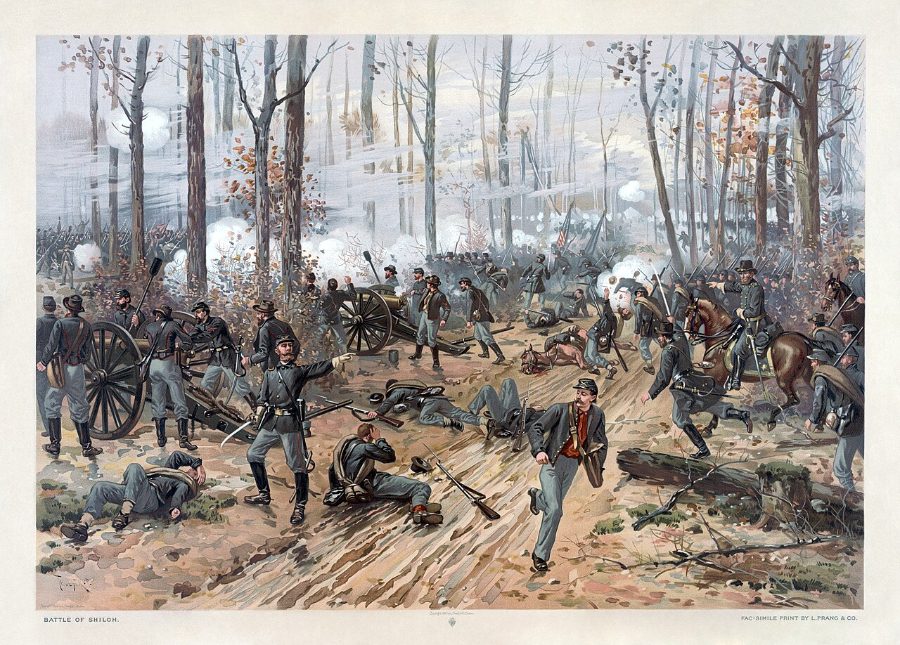
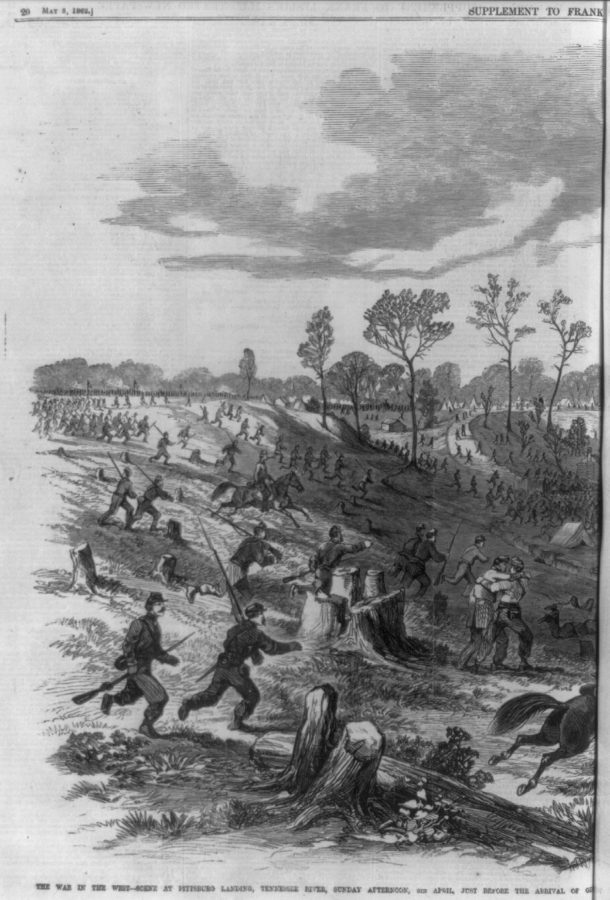
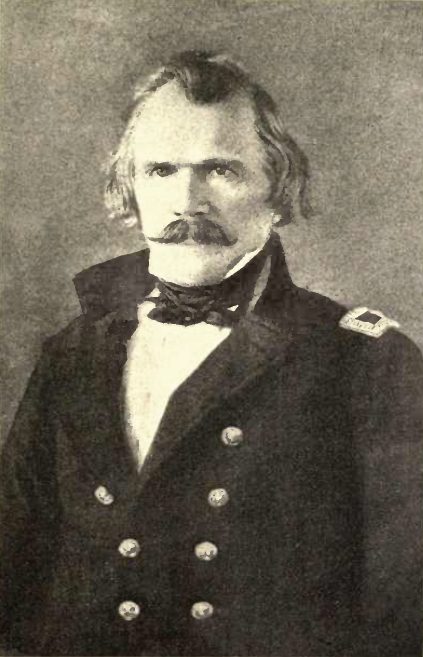
On 6 April 1862, Albert Sidney Johnston's Confederate army surprised Grant's Army of the Tennessee in its camps near Shiloh Church and Pittsburg Landing on the Tennessee River. The Union army was driven back almost to the river while the defenders of the Hornet's Nest held up the attack for hours, and Johnston himself was killed. Reinforced overnight by Buell's army, Grant counterattacked on 7 April and drove the Confederates back toward Corinth. Its 23,700 casualties shocked both North and South, ended any hope of a short war, and opened the way for the Union advance down the Mississippi Valley.
Open the interactive map8 stages on modern satellite imagery and terrain, with 3D elevation
This battle is part of the full atlas, open to Patreon members. Free battles include Yorktown, Waterloo, The Alamo, Antietam, Little Bighorn, Belleau Wood, Omaha Beach, Ia Drang.
The battle, stage by stage
- Dawn, 6 April
Johnston's army in attack columns
After two days' delayed march from Corinth, Albert Sidney Johnston's Army of the Mississippi has deployed in three successive lines astride the Corinth road — Hardee in front, Bragg behind, then Polk and Breckinridge. Grant's Army of the Tennessee lies in its camps between Shiloh Church and Pittsburg Landing, with no entrenchments; Grant himself is at Savannah, nine miles downriver, and Lew Wallace's division is five miles north at Crump's Landing.
- Morning, 6 April
The surprise attack
Hardee's and Bragg's lines, intermingled by mid-morning, roll into Sherman's and Prentiss's camps. Sherman holds around Shiloh Church until about 10 AM; McClernand comes up on his left, and Hurlbut and W.H.L. Wallace march out from near the landing. Breckinridge swings right against Stuart's isolated brigade near Lick Creek.
- Afternoon to 6 PM, 6 April
The Hornet's Nest and Grant's last line
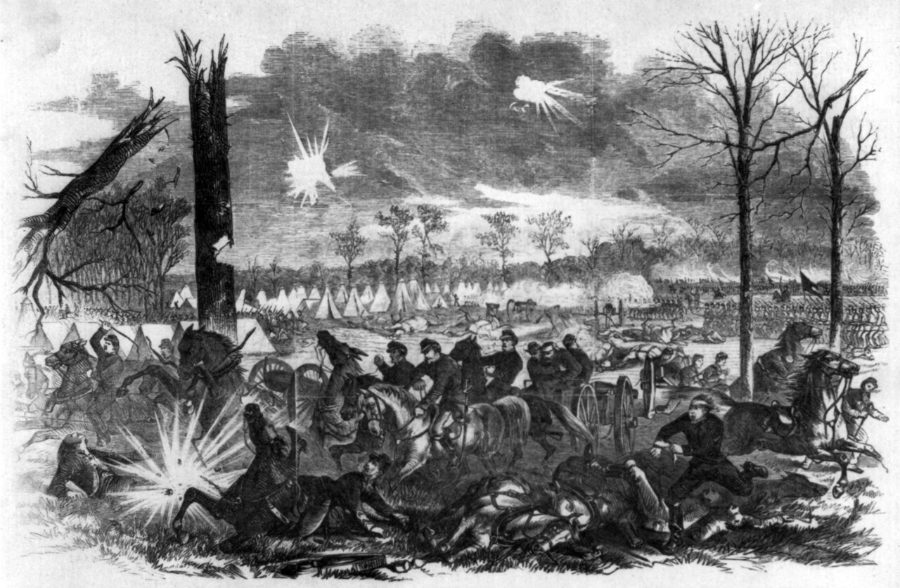
Prentiss and W.H.L. Wallace hold the Sunken Road — the "Hornet's Nest" — against a dozen assaults while the flanks give way. Johnston is killed near the Peach Orchard about 2:30 PM. Ruggles masses over 50 guns against the Nest; Wallace is mortally wounded and Prentiss surrenders about 5:30 PM with some 2,200 men. The delay lets Grant form a final line on the ridge above Pittsburg Landing, anchored by Webster's artillery and the gunboats Tyler and Lexington; Beauregard calls off the attack at dusk as Nelson's division of Buell's army crosses the river and Lew Wallace finally arrives.
- Dawn, 7 April
Grant and Buell counterattack
Reinforced overnight by Lew Wallace and three of Buell's divisions (Nelson, Crittenden, McCook), the Union armies attack at first light. Beauregard, who expected Buell to be far away, has his corps scattered across the captured camps; Bragg, Polk, Breckinridge and Hardee form a line from Jones Field to the river.
- 11 AM, 7 April
The Confederates are pushed back
Buell's divisions on the left and Grant's on the right drive the Confederates south past the Hornet's Nest and Duncan Field. Union positions on this and the following stages are approximate: the source map shows their advance only as arrows.
- 12–2 PM, 7 April
The last Confederate line
Beauregard forms a final line along the Hamburg–Purdy road, from Shiloh Church to the Peach Orchard, and launches local counterattacks around Water Oaks Pond. Outnumbered and exhausted, it gives way in the early afternoon.
- 2 PM to dark, 7 April
Beauregard withdraws
Beauregard orders a retreat to Corinth. Breckinridge's corps forms a rear guard near Shiloh Branch while the rest of the army files down the Corinth road; the Union armies reoccupy the camps they lost the previous morning and do not pursue.
- Night of 7–8 April
Rear guard
Breckinridge holds a covering position on the Corinth road overnight. On 8 April Sherman's reconnaissance is checked by Forrest's cavalry at Fallen Timbers. Shiloh cost some 23,700 casualties — more than all of America's previous wars combined.
Paintings and photographs




Sources and method
How to use: pick one entry under "The battle". Tall blocks moved since the previous map, flat yellow outlines show where they came from, arrows join them, low grey blocks are everyone else. Red = Confederate, blue = Union.