Gettysburg, 1–3 July 1863
From 1 to 3 July 1863, Lee's second invasion of the North met Meade's Army of the Potomac at the crossroads town of Gettysburg, Pennsylvania. On the first day the Confederates drove two Union corps through the town onto Cemetery Hill; on the second, Longstreet's assault on the Union left raged through the Wheatfield, Devil's Den and Little Round Top. On the third, Pickett's Charge broke against the Union centre on Cemetery Ridge. With some 51,000 casualties it was the largest battle of the war, and together with the fall of Vicksburg the next day it marked the turning point of the war in the East. Lincoln's Gettysburg Address, given at the dedication of the national cemetery that November, became one of the defining statements of American democracy.
Open the interactive map17 stages on modern satellite imagery and terrain, with 3D elevation
This battle is part of the full atlas, open to Patreon members. Free battles include Yorktown, Waterloo, The Alamo, Antietam, Little Bighorn, Belleau Wood, Omaha Beach, Ia Drang.
The battle, stage by stage
- July 1, 7:00 AM
Buford screens the roads
Buford's cavalry division pickets the ridges west and north of Gettysburg as Heth's division approaches along the Chambersburg Pike. Red = Confederate, blue = Union.
- 10:00 AM
Heth deploys, the I Corps arrives
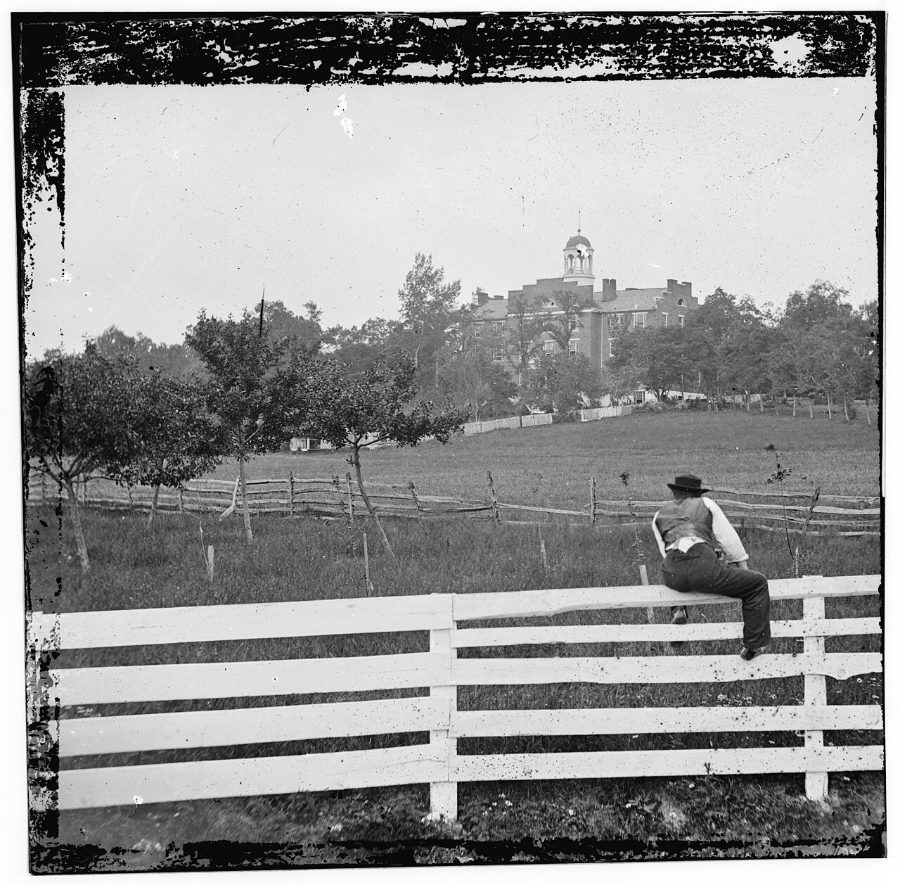
Heth deploys Archer south and Davis north of the pike. Buford's troopers hold McPherson Ridge until Reynolds' I Corps arrives: Cutler's brigade goes in north of the pike, the Iron Brigade toward Herbst Woods.
- 10:45 AM
Archer and Davis attack
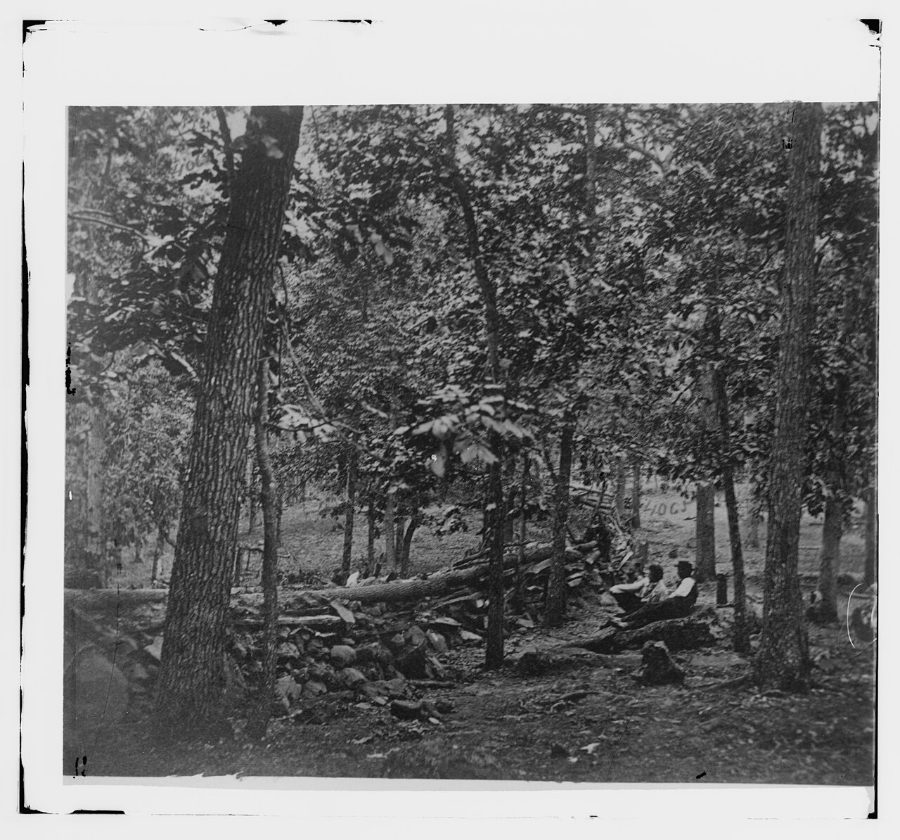
Davis drives Cutler's right back toward Seminary Ridge. South of the pike the Iron Brigade sweeps into Herbst Woods against Archer. General Reynolds is killed at the edge of the woods.
- 11:00 AM
The Railroad Cut
The Iron Brigade routs Archer's brigade and captures Archer himself. Dawes' 6th Wisconsin, with the 95th New York and 14th Brooklyn, charges Davis's men in the unfinished railroad cut and captures hundreds.
- 12:30 PM
The lull: Ewell and the XI Corps arrive
Rodes' division deploys on Oak Hill, Pender comes up behind Heth, and Early approaches from the north-east. Howard's XI Corps hurries through town to the plain north of Gettysburg; Steinwehr's division is left on Cemetery Hill.
- 2:00–3:00 PM
Rodes, Heth and Early attack
Iverson's brigade is shot down almost to a man in front of Oak Ridge. Heth renews the assault on McPherson Ridge (the 26th North Carolina against the Iron Brigade). Early's division smashes Barlow's division on Barlow's Knoll.
- 4:00 PM
The Union line collapses
Pender carries Seminary Ridge and the XI Corps breaks north of town. Both Union corps stream through the streets to Cemetery Hill, where Howard and Hancock rally them on Steinwehr's reserve.
- July 2, 4:00 PM
Longstreet attacks
Hood's division steps off from Warfield Ridge against Sickles' III Corps, which has pushed forward to the Peach Orchard and Devil's Den. McLaws' division waits on Hood's left. This stage starts the second day afresh.
- 4:30–5:00 PM
Devil's Den and Little Round Top
Law's and Robertson's brigades climb Big Round Top and Little Round Top, where Vincent's brigade arrives minutes ahead of them; the 20th Maine holds the far left. Benning and G.T. Anderson drive Ward from Devil's Den and Rose Woods. Weed's brigade reinforces the summit.
- 5:30 PM
The Wheatfield
Kershaw and Semmes attack across the Rose farm. Caldwell's division of the II Corps (Cross, the Irish Brigade under Kelly, Zook, Brooke) sweeps through the Wheatfield. Barksdale's Mississippians wait opposite the Peach Orchard salient.
- 6:00 PM
The Wheatfield changes hands
Caldwell pushes the Confederates back into Rose Woods, but Kershaw, Semmes and G.T. Anderson regroup and strike again; the Wheatfield changes hands six times during the evening.
- 6:00–7:00 PM
Barksdale breaks the Peach Orchard
Barksdale's Mississippians and Wofford's Georgians smash Graham's salient at the Peach Orchard. Anderson's division (Wilcox, Lang, Wright) joins the assault against Humphreys' line on the Emmitsburg Road, which collapses back toward Cemetery Ridge.
- 7:00–7:30 PM
Crisis on Cemetery Ridge
Wright's Georgians reach the crest near the Copse of Trees before being thrown back. The 1st Minnesota's sacrificial charge (82 percent casualties) stops Wilcox; Willard's brigade drives back Barksdale, who is mortally wounded. Meade's reserves seal the line.
- 7:30 PM–dark
Culp's Hill
Johnson's division crosses Rock Creek and assaults Culp's Hill. Most of the XII Corps has been sent south; Greene's single New York brigade holds the summit behind breastworks, while Steuart occupies the empty works on the lower hill. At dusk Hays's Louisiana Tigers and Avery's North Carolinians also storm East Cemetery Hill and reach the Union guns before Carroll's brigade, rushed over from Cemetery Ridge, drives them off.
- July 3, morning
Culp's Hill retaken
After a dawn bombardment the returned XII Corps opens seven hours of fighting. Johnson's reinforced division makes repeated assaults, including the Stonewall Brigade and Steuart's men across Pardee Field; by 11 AM the Union works are retaken.
- 3:00 PM
Pickett's Charge steps off
After the largest cannonade of the war, about 12,500 men in nine brigades under Pickett, Pettigrew and Trimble advance from Seminary Ridge across some 1,200 m of open ground toward the Union centre on Cemetery Ridge.
- 3:20 PM
The High-Water Mark
Armistead leads a few hundred men over the stone wall at the Angle. Webb's Philadelphia Brigade, Hall and Harrow close in and Stannard's Vermonters strike the southern flank. The charge collapses with more than half its men lost.
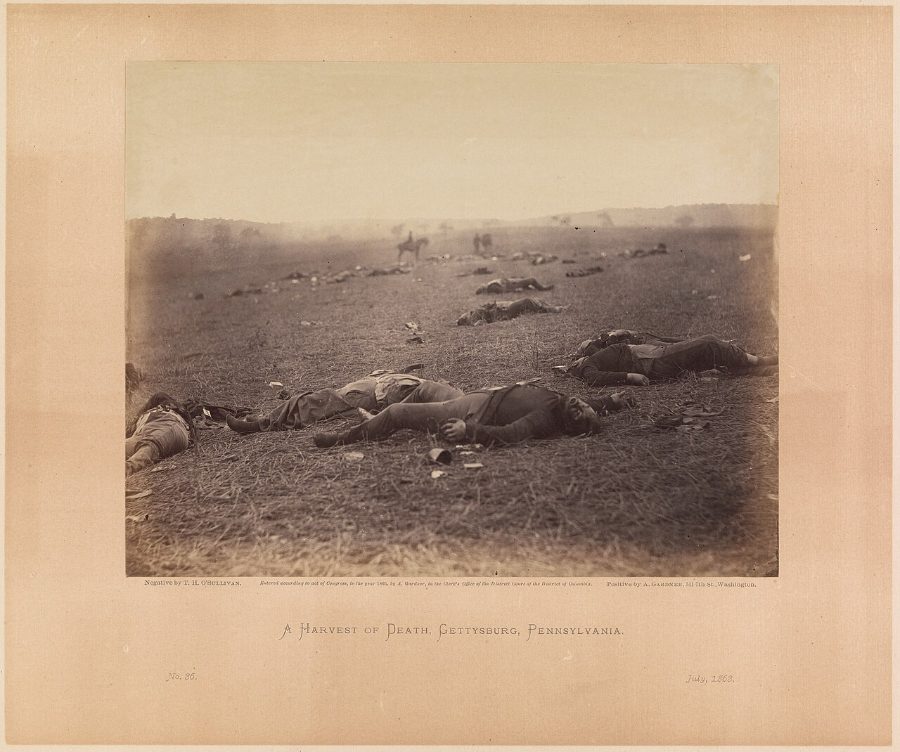
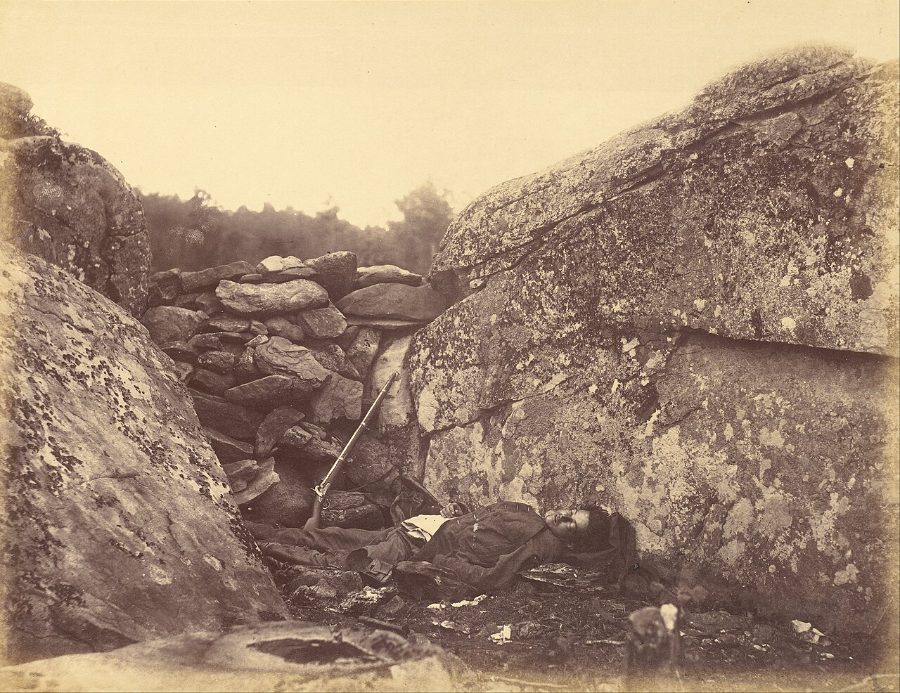
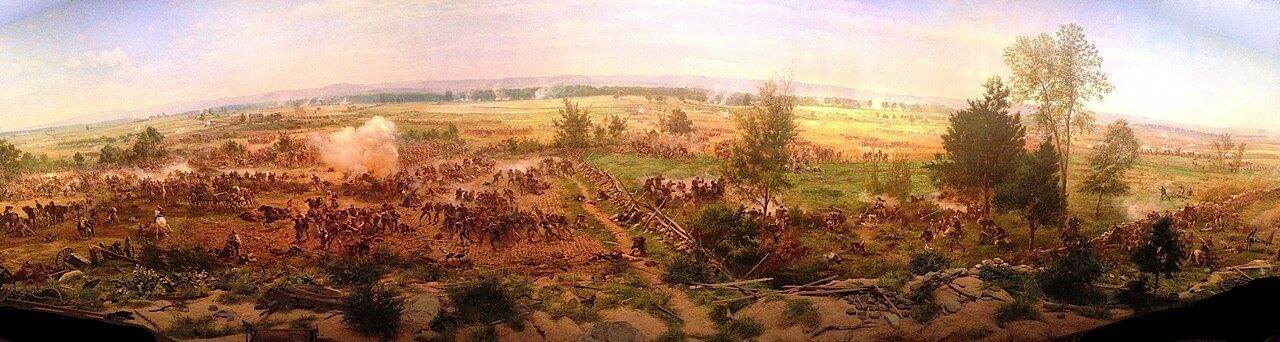
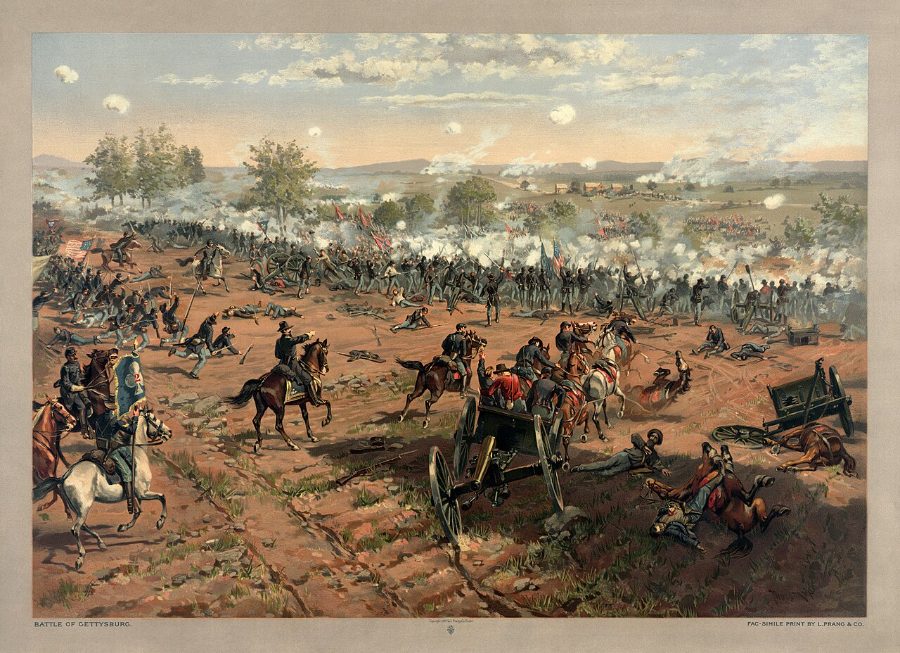
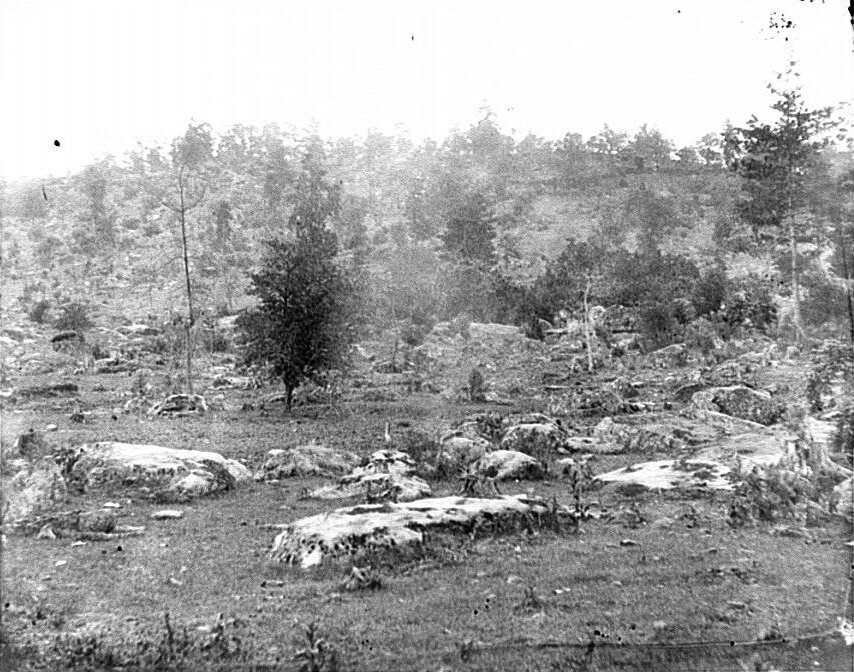
Paintings and photographs









Sources and method
How to use: pick one entry under "The battle". Entry 0 is 7 AM on July 1; each later entry is the next map. Tall blocks moved since the previous map, flat yellow outlines show where they came from, arrows join them, and low grey blocks are everyone else. Red = Confederate, blue = Union. The second day starts afresh at 4 PM on July 2. Later maps cover only part of the field; outside each map, units stay where the last map that covered them put them.
Block names come from the map labels (brigade level, sometimes regiment). The "Original maps" folder has every source map as an overlay.