Siege of Yorktown, 28 Sept – 19 Oct 1781
In September and October 1781, Washington's Continental Army and Rochambeau's French expeditionary force trapped Lord Cornwallis's British army at Yorktown, Virginia, after the French fleet under de Grasse defeated the Royal Navy at the Battle of the Capes. The allies dug siege lines, bombarded the town, and on 14 October stormed the two redoubts that blocked their second parallel. With no hope of relief or escape, Cornwallis surrendered his army of about 8,000 men on 19 October. The defeat brought down Lord North's government and led to the Treaty of Paris of 1783, in which Britain recognized American independence.
Open the interactive map7 stages on modern satellite imagery and terrain, with 3D elevation
This battle is free to explore — no account needed.
The battle, stage by stage
- 28–30 Sept 1781
The allies close in
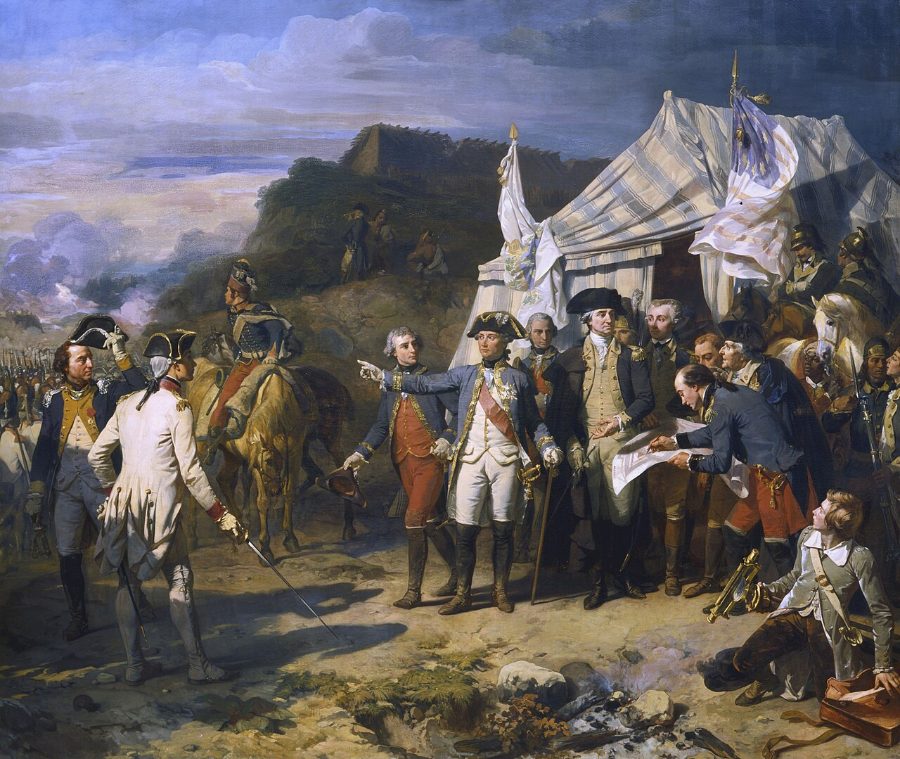
Washington's 8,800 Americans and Rochambeau's 7,800 French march down from Williamsburg and encamp in a great arc around Yorktown, the French on the left (west), the Americans on the right. Cornwallis, with about 9,000 men, holds the town and Gloucester Point across the river, waiting for a British fleet that de Grasse's victory at the Capes (5 September) has turned away. On the night of 29–30 September he abandons his outer works.
- 3 Oct
Skirmish at the Hook, Gloucester
Across the York, Choisy's French and Virginians, led by Lauzun's Legion, clash with Tarleton's dragoons at the Hook and pen the Gloucester garrison inside its works for the rest of the siege.
- 6–9 Oct
The first parallel
On the night of 6–7 October, under cover of rain, allied troops dig a trench some 2,000 yards long, 600–800 yards from the British lines. Washington fires the first American gun on 9 October; the Grand French Battery and the American batteries begin a bombardment that silences most British guns and burns ships in the river.
- 14 Oct, evening
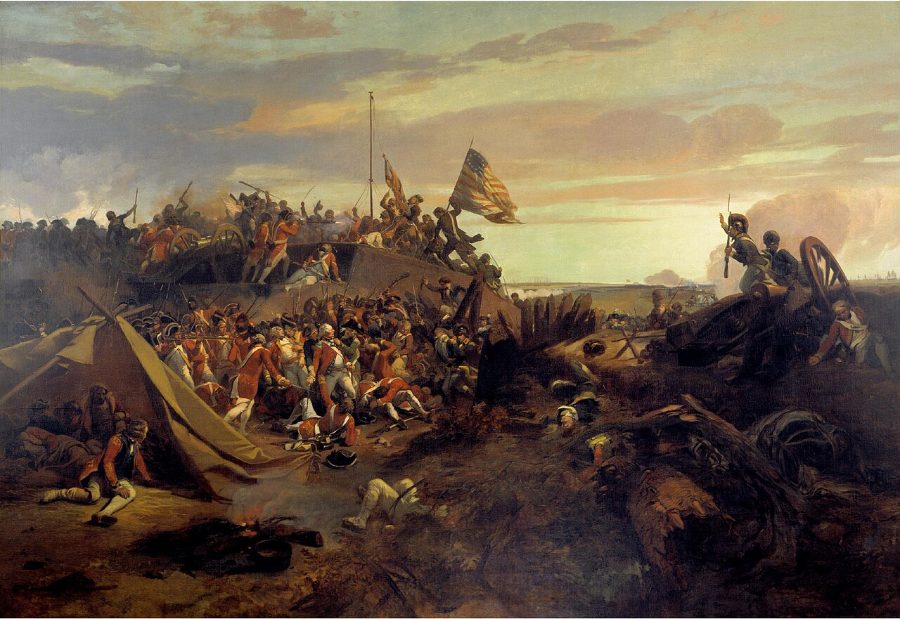
Assault on Redoubts 9 and 10
The second parallel, opened on 11 October about 300 yards from the British works, is blocked at its eastern end by two redoubts. At 8 PM two columns of 400 men attack with unloaded muskets: Alexander Hamilton's light infantry against Redoubt 10, the Comte de Deux-Ponts's French grenadiers against Redoubt 9.
- 14 Oct, night
Both redoubts taken
Hamilton's men carry Redoubt 10 in about ten minutes; the French take Redoubt 9 after a harder fight. By morning both are linked into the second parallel and allied guns can now fire into the town at point-blank range.
- 16 Oct
Sortie and failed escape
Before dawn Lt. Col. Abercromby leads 350 men in a sortie that spikes several guns in the second parallel before being driven back. That night Cornwallis tries to ferry his army across to Gloucester and break out; the first wave crosses, but a squall scatters the boats and the attempt is abandoned.
- 19 Oct
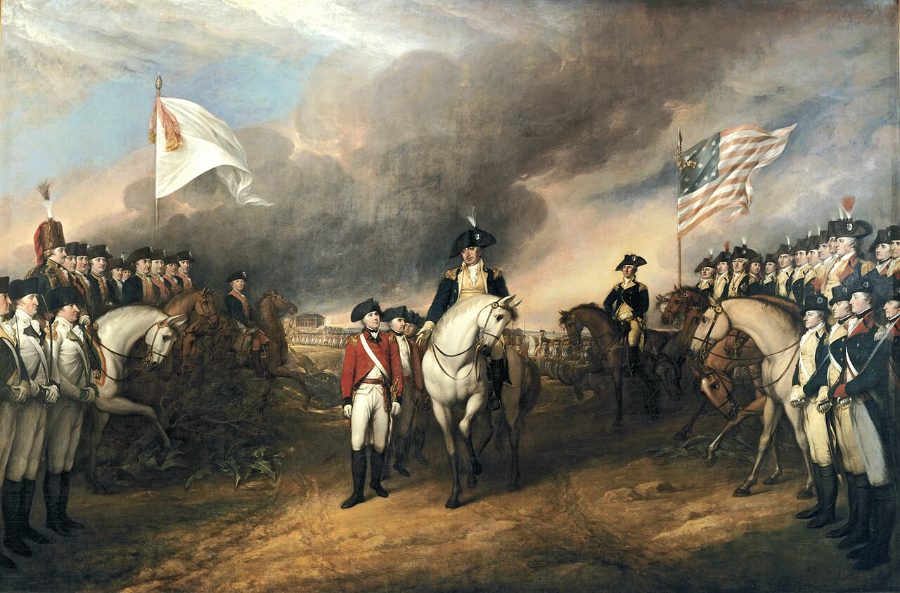
The surrender
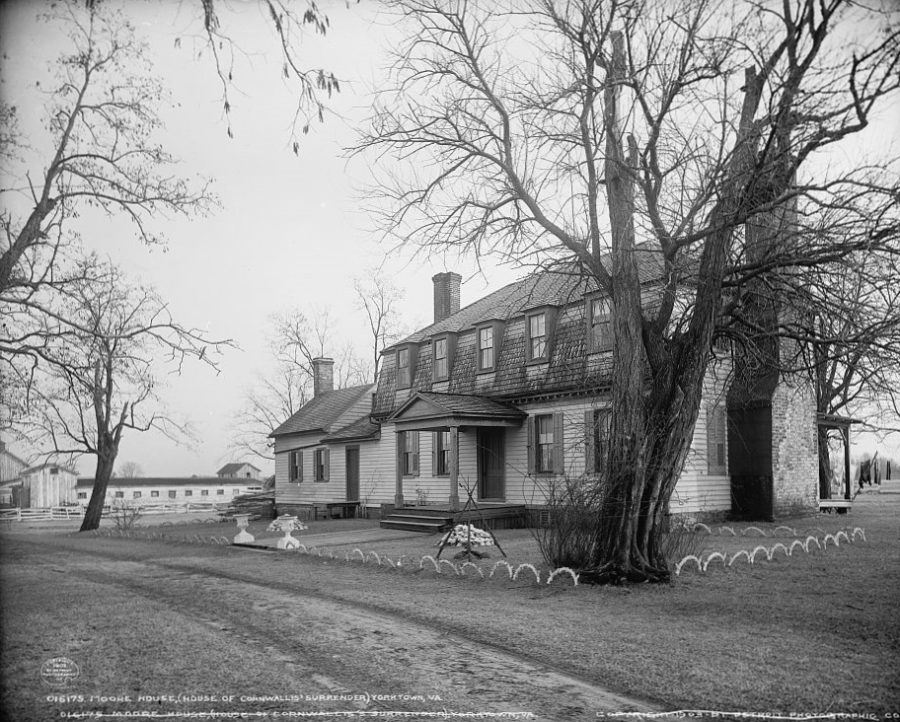
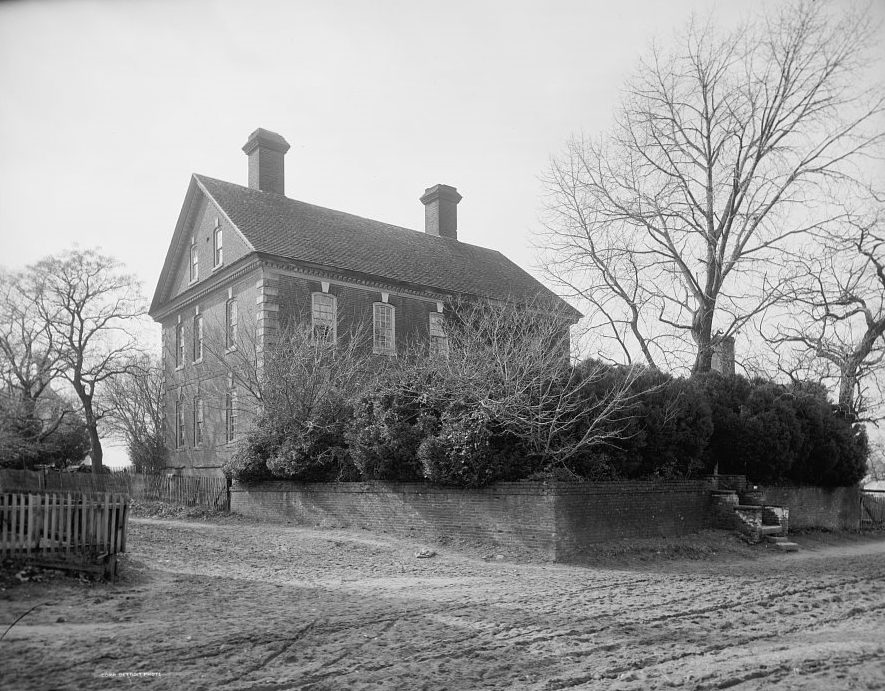
After a parley on the 17th and terms signed at the Moore House on the 19th, the British garrison marches out between the lines of French and Americans and grounds its arms at Surrender Field; the Gloucester garrison surrenders to Choisy. Some 8,000 men become prisoners. Lord North, hearing the news, exclaims "O God! It is all over."
Paintings and photographs





Sources and method
How to use: pick one entry under "The battle". Tall blocks moved since the previous stage, flat yellow outlines show where they came from, arrows join them, low grey blocks are everyone else. Red = British, blue = American, green = French.