Battlefield Atlas
War against ISIS (Syria) · 2017 Locked

Tabqa, 2017

Between 22 March and 10 May 2017 the Syrian Democratic Forces (SDF), the Kurdish-led alliance whose Arab units, the coalition said, made up most of the attacking force, took the town of Tabqa (al-Thawra), its military airbase and the Tabqa Dam from the Islamic State. The offensive opened with the first U.S. airlift of partner forces into combat in Syria and a crossing of Lake Assad by boat, backed by U.S. Marine artillery, Apache helicopters, special operations advisers and coalition aircraft. The SDF took the airbase on 26-27 March, encircled the town in early April and fought into it from mid-April. The battle was shadowed by fears that the dam, out of service after its power station was damaged, might fail and flood the Euphrates valley. It ended with a deal under which about 70 ISIS fighters agreed to clear their explosives from the dam and withdraw. Taking Tabqa cut Raqqa off from the west and opened the way to the battle for the city in June.

Open the interactive map8 stages on modern satellite imagery and terrain, with 3D elevation

This battle opens with Battlefield Explorer ($4.99 a month or $39 a year), which unlocks every battle in the atlas and every one added later. Lifetime access and war packs are one-time options. Free battles include Thermopylae, Actium, Viking raid on Lindisfarne, Hastings, Hattin, Agincourt, Vítkov Hill, Bosworth, Fort William Henry, Yorktown, Waterloo, The Alamo, Antietam, Little Bighorn, Belleau Wood, Omaha Beach, Inchon, Ia Drang, Goose Green, 73 Easting, Wanat, Baghdad Thunder Runs, Battle of Raqqa, Donetsk Airport, Battle of Kyiv, Battle of Hostomel Airport, Siege of Mariupol, Kharkiv counteroffensive, Kherson counteroffensive, Bakhmut, Mala Tokmachka and Robotyne, Avdiivka.

SDF fighters near Tabqa Dam
SDF fighters near Tabqa Dam — Qasioun News Agency — CC BY 3.0

The battle, stage by stage

  1. 22 March 2017

    Airlift and crossing behind ISIS lines

    Tabqa, also called al-Thawra, sits on the south bank of the Euphrates beside the Tabqa Dam, Syria's largest, about 40 km upstream of Raqqa. ISIS had held the town and the dam since early 2014 and the airbase since August 2014; the coalition said it used the dam as a headquarters, a prison for high-profile hostages and a training site for its leaders. The SDF already held the north bank, including the castle of Qal'at Ja'bar. On 22 March U.S. aircraft flew Syrian Democratic Forces fighters behind ISIS lines south of the lake, which the Pentagon called the first U.S. airlift of local forces into combat in Syria; others crossed by boat. The coalition gave no exact number, but said 75 to 80 percent were Syrian Arabs; an activist group put the U.S. and SDF force together at about 500. Marine artillery, Apache helicopters and special operations advisers supported them, and U.S. officials said no Americans were fighting on the front line. The landing sites were not published; they are drawn here on the south shore south-west and west of Tabqa.

  2. 23-25 March

    The beachhead widens

    From the landing area the SDF said it took four villages on the first day and cut the main road linking Raqqa with Aleppo and north-western Syria. Over the next days it reported more villages southwest of Tabqa, and on 24 March its spokeswoman said its fighters had reached the dam; ISIS's Amaq agency claimed they had been driven back. The sources consulted do not name the villages, and the front lines here are interpretive. The SDF then turned south-east toward the airbase.

  3. 26-27 March

    Tabqa airbase falls

    On 26 March the SDF stormed the military airport south of the town and by its own account held more than half of it that day; the next day it announced full control. The base had symbolic weight: ISIS took it from the Syrian army in August 2014 and then killed about 200 captured soldiers, a massacre it filmed. SDF spokesman Talal Silo told AFP the main runway was badly damaged and would be cleared of the explosives ISIS had left. Coalition spokesman Col. Joseph Scrocca called the area a launching point for operations against Raqqa.

  4. 26 March - early April

    Fears for the dam

    On 26 March ISIS warned that the dam could collapse 'at any moment', blamed coalition strikes and reportedly told Raqqa's residents to leave. The United Nations had warned that damage could cause massive flooding across Raqqa and as far as Deir ez-Zor, with catastrophic humanitarian consequences. Sources told AFP the dam went out of service when its power station was damaged. The coalition said it had not targeted the dam and that, to its knowledge, the structure was not damaged; the SDF denied any strike. On 27 March the SDF paused for four hours to let engineers in, and on 29 March engineers and the Red Crescent opened the spillway on the SDF-held north side. A 2022 New York Times investigation reported that a U.S. special operations unit, Task Force 9, had struck towers attached to the dam, which was on the coalition's no-strike list, on 26 March with three 2,000-pound bombs, including a bunker-buster that failed to explode; Central Command said the strikes hit only the towers and had not been expected to damage the structure, an assessment it said had proved accurate.

  5. 31 March - 11 April

    Tabqa encircled

    The SDF pushed east of the town against al-Safsafa, about six kilometers away, which carried the last ISIS road into Tabqa. After more than 36 hours of fighting it took the village, and on 6 April Mehiar Muhammad of the Manbij Military Council, an SDF spokesman, said ISIS was encircled in the city and at the dam 'from all four directions'. Residents told Syria Direct they could not get out and that food and fuel were short. On 11 April a coalition strike requested by partner forces hit a forward SDF position south of Tabqa that had been misidentified as ISIS, killing 18 SDF fighters, Central Command said. The positions of the ring around the town are interpretive.

  6. 15 April - 2 May

    Into the city

    SDF units broke into Tabqa's outskirts in mid-April, and on 24 April, the Syrian Observatory for Human Rights said, they entered the town's southern districts while others advanced on its western edges. Coalition strikes hit the town daily, and Airwars and the Observatory recorded civilian deaths, including families killed trying to flee. By 30 April-1 May the SDF said it had taken nine more districts; the Observatory put its control at about 80 percent, including the old city, and the SDF said 90 percent. ISIS was left in a few districts on the north side of the town, next to the dam, and on the dam's southern section with the power station.

  7. 10 May 2017

    The deal: the city and dam change hands

    Talks on an ISIS withdrawal began in early May, broke down and resumed, U.S. defense officials told BuzzFeed News. On 10 May about 70 ISIS fighters accepted the SDF's terms: they would dismantle the explosives around the dam, leave their heavy weapons and withdraw all remaining fighters from the city. The coalition said the SDF accepted the surrender to protect civilians and the dam, which supplies water, irrigation and power to hundreds of thousands of Syrians, and that it struck fleeing fighters where it could do so without endangering civilians. The SDF announced that Tabqa and the dam were fully in its hands, and U.S. envoy Brett McGurk confirmed it.

  8. May - 4 June 2017

    The gateway to Raqqa

    With Tabqa, its airbase and the dam taken, Raqqa was cut off from the west, and the coalition said bridges over the Euphrates had been disabled. On 4 June the SDF said it had taken al-Mansura and the Baath Dam after three days of fighting, giving it all three major Euphrates dams. Two days later it launched the assault on Raqqa itself. The dam survived, but the 2022 New York Times reporting on the 26 March strike reopened the question of how close it came to failing.

Forces

The opening airlift carried hundreds of fighters, Stars and Stripes reported (an activist group put the U.S. and SDF force at about 500), most of them Syrian Arabs, backed by U.S. Marine artillery, Apache helicopters, special operations advisers and coalition aircraft. ISIS strength in Tabqa was not published; about 70 fighters were left at the end. Figures are poor.

Islamic State (ISIS)

Fighters remaining at the end (10 May 2017)U.S. Central Command's figure for the fighters who accepted the SDF's terms; the strength of the garrison at the start was not published in the sources used here. U.S. Central Command, 'Syria's Tabqa city liberated, key development for Raqqa' (12 May 2017)about 70

Syrian Democratic Forces with U.S.-led coalition support

Airlifted on 22 MarchStars and Stripes reported hundreds airlifted; coalition spokesman Col. Joseph Scrocca said 75 to 80 percent were Syrian Arabs. The activist group Raqqa is Being Slaughtered Silently put the U.S. and Kurdish force at 500. Stars and Stripes, 'US airlifts Syrian rebels into key Islamic State-held city near Raqqa' (22 March 2017); AP via The Washington Times, 'The Latest: Syrian Kurds say US Marines deployed in Syria' (22 March 2017)hundreds (hundreds (Stars and Stripes) to about 500 (activist group, U.S. and SDF together))
U.S. forcesAdvisers flew in with the SDF; Marines of the 11th Marine Expeditionary Unit fired M777 howitzers and Army Apaches flew close air support. The Pentagon would not give numbers. AP via KSL, 'US forces ferry Syrian-Kurdish fighters behind IS lines' (22 March 2017); USNI News, 'Marines with 11th MEU join the ground fight in Syria' (9 March 2017)not disclosed
Coalition air effort before the offensiveU.S. Central Command said more than 300 strikes around Tabqa and west of Raqqa in the preceding four months destroyed more than 200 fortifications and over 50 ISIS vehicles. U.S. Central Command, 'Local forces launch daring assault behind enemy lines in Syria' (22 March 2017)more than 300 strikes

Casualties

Losses at Tabqa are poorly documented: neither the SDF's nor ISIS's total dead was published in the sources used here. Eighteen SDF fighters died in a misdirected coalition strike, about 70 ISIS fighters withdrew under the final deal, and civilian deaths from strikes are recorded incident by incident, not as a total. Certainty: poor.

Islamic State (ISIS)

KilledNo overall count was published in the sources used here. Partial claims: SDF spokespeople said at least 75 ISIS fighters were killed and five captured in the last days of April, and the Syrian Observatory for Human Rights counted 35 killed in Tabqa on 30 April-1 May. Syria Direct, 'US-backed forces capture 90 percent of key town from Islamic State' (1 May 2017); AP via Military Times, 'US-backed fighters retake more areas from ISIS in Syrian town' (1 May 2017)unknown
Withdrew under the 10 May dealU.S. Central Command (Capt. Jeff Davis) said about 70 fighters accepted the SDF's terms to clear explosives from the dam, leave heavy weapons and withdraw; the coalition said it struck fleeing fighters where it could without endangering civilians. U.S. Central Command, 'Syria's Tabqa city liberated, key development for Raqqa' (12 May 2017); BuzzFeed News, 'US-backed forces asked ISIS to hand over a Syrian city' (May 2017)about 70

Syrian Democratic Forces with U.S.-led coalition support

SDF killedThe SDF's total losses for the battle were not published in the sources used here. On 11 April a misdirected coalition strike, requested by partner forces, killed 18 SDF fighters at a forward position south of Tabqa, U.S. Central Command said. Air Force Times, 'CENTCOM: misdirected coalition airstrike killed 18 allied fighters in Syria' (13 April 2017)unknown (at least 18)
U.S. killedNone of the U.S. or press sources used here report American deaths in the operation; U.S. officials said Americans were not fighting on the front line. AP via KSL, 'US forces ferry Syrian-Kurdish fighters behind IS lines' (22 March 2017)none reported

Civilians

Killed in a coalition strike in Tabqa, 21 MarchThe coalition conceded that 10 civilians were unintentionally killed in a strike on an ISIS headquarters, staging facility and internet cafe in Tabqa; local sources reported 10 to 20 dead. Airwars, incident CS603 (21 March 2017)10 (coalition) to 10-20 (local sources)
Dam and relief workers killed, 27 MarchA dam manager (or engineer), a technician and a Syrian Red Crescent volunteer were killed near the dam; the Syrian Observatory blamed a suspected coalition airstrike, and the 2022 New York Times investigation reported they were killed when their van was struck; the coalition said at the time it was looking into the claim. AP via Military Times, 'Syrian experts visit critical dam spillway near main ISIS base' (29 March 2017); Common Dreams, summarizing The New York Times (21 January 2022)3
Other reported civilian deathsThe Syrian Observatory reported civilians killed in strikes as families tried to flee Tabqa in April, including eight members of one family; no total for the battle was published in the sources used here. AFP via Arab News, 'US-backed forces enter major Daesh-held Syria town' (24 April 2017)dozens, not totaled

Then and now: how the ground has changed

The ground is much as it was in 2017: the dam, Lake Assad, the town and the airbase are in the same places. The biggest landscape changes came earlier, when the dam's reservoir drowned the old Euphrates valley in the 1970s, and briefly during the battle, when the lake rose and an emergency spillway release flooded farmland downstream.

Weapons

Islamic State (ISIS)

AK-47 / Type 56

AK-47 / Type 56

Assault rifle · 1949–present

At Tabqa offensive and Tabqa Dam: Kalashnikov-pattern rifles were ISIS's standard arm in the town fighting.

Mikhail Kalashnikov's AK-47 became the world's most widespread military rifle thanks to its simplicity and reliability in mud, heat and rain. North Vietnamese and Viet Cong troops carried both Soviet AKs and the Chinese-made copy, the Type 56.

Caliber
7.62×39mm
Rate of fire
about 600 rounds/min
Magazine
30-round box
Effective range
about 350 m
Photo: U.S. Department of Defense · Public domain
RPG-7

RPG-7

Shoulder-fired rocket-propelled grenade launcher · 1961–present

At Tabqa offensive and Tabqa Dam: RPG-7s were used against SDF vehicles and positions.

The most widespread anti-armor weapon in the world: cheap, simple and effective against light vehicles and buildings. Iraqi soldiers, Fedayeen and later insurgents and militias fired it in volleys from rooftops and alleys in every battle here.

Caliber
40 mm tube, 85 mm warhead (PG-7V)
Effective range
about 200–300 m
Crew
1–2
Photo: U.S. military photo · public domain

Syrian Democratic Forces with U.S.-led coalition support

AH-64A Apache

AH-64A Apache

Attack helicopter · 1986–present

At Tabqa offensive and Tabqa Dam: Army AH-64 Apaches flew close air support for the 22 March landing and the push on Tabqa (CENTCOM).

The Army's attack helicopter, built to kill tanks at night. In 1991 Apache battalions struck Iraqi armor ahead of the ground divisions, including the Medina Division's positions on 27 February.

Armament
30 mm chain gun, Hellfire missiles, rockets
Crew
2
Sensors
night-vision and thermal targeting
Photo: NARA · public domain

Paintings and photographs

SDF fighters near Tabqa Dam
SDF fighters near Tabqa Dam Syrian Democratic Forces fighters near the Tabqa Dam on the shore of Lake Assad, 27 March 2017. Qasioun News Agency — CC BY 3.0 · source
SDF fighters in Tabqa
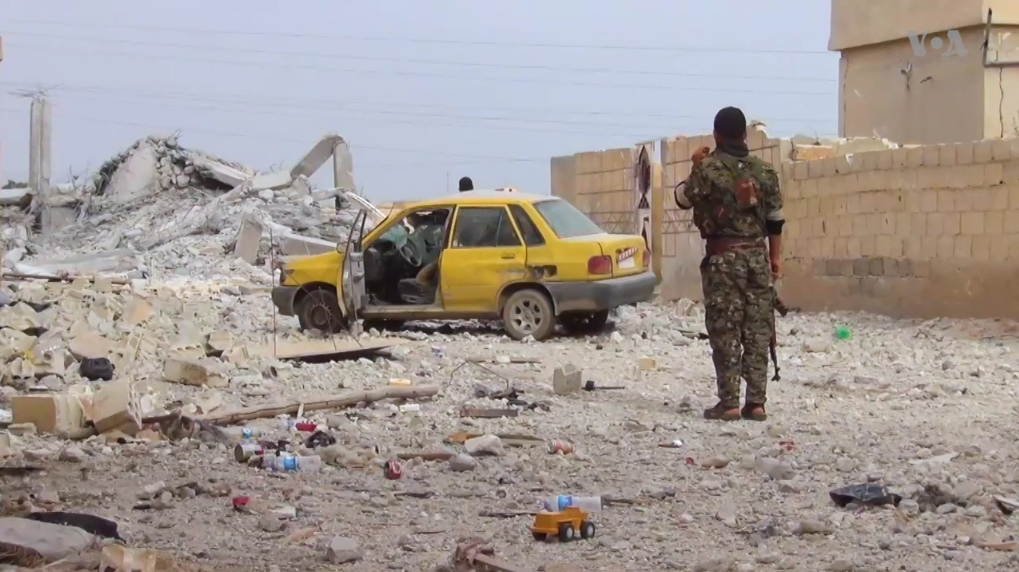
SDF fighters in Tabqa SDF fighters in Tabqa town, 2 May 2017. Mahmoud Bali (VOA) — public domain · source
Tabqa Dam from orbit
Tabqa Dam from orbit The Tabqa Dam and Lake Assad seen from orbit in a 1996 NASA photograph. NASA — public domain · source

Free for everyone every year on its anniversary: March 22 – May 10.

Accuracy score: 56/100 (limited)

How the accuracy score works

Sources and method

Tabqa, 22 March – 10 May 2017. No U.S. Army staff ride handbook covers this battle. Official U.S. accounts: U.S. Central Command, 'Local forces launch daring assault behind enemy lines in Syria' (22 Mar 2017, Col. Joseph Scrocca) and 'Syria's Tabqa city liberated' (12 May 2017, Capt. Jeff Davis: about 70 fighters, the surrender terms); the 11 April friendly-fire strike via Air Force Times. Reporting: AP via KSL (22 Mar: the airlift, 75–80 percent Arab, four villages, the highway cut) and The Washington Times (22 Mar: the SDF statement, and Raqqa is Being Slaughtered Silently's estimate of 500 U.S. and SDF troops); Stars and Stripes; Rudaw (villages on the south bank west of Tabqa); Stratfor/RANE (boat and helicopter landing on the south shore of Lake Assad); AP via Military Times (26 Mar: the airbase, the dam claims) and Military Times (29 Mar: the spillway); The Washington Times (27 Mar); Rudaw (27 Mar: Talal Silo on the runway); Al Jazeera (UN warning, the four-hour pause); VOA; Syria Direct (6 Apr: al-Safsafa, the encirclement, control of the dam) and Syria Direct (1 May: 90 percent); AFP via Arab News (24 Apr: entry into the town); Al Jazeera (30 Apr); Rudaw (nine districts); AP via Military Times (1 May); VOA and VOA via GlobalSecurity (10–11 May); BuzzFeed News and Task & Purpose (the negotiated withdrawal); Long War Journal; Kurdistan24 (4 Jun: al-Mansura and the Baath Dam); AFP via Gulf News (the Lake Assad ferry by Qal'at Ja'bar). The 26 March strike on the dam: The New York Times (January 2022), as summarized by Common Dreams. Marines: USNI News (11th MEU, M777s). Places: Airwars incident geolocations (CS603, coalition-supplied, for the town center; CS645 for al-Safsafa; al-Thani district; al-Haal market); the airbase runway from Great Circle Mapper; the dam, Qal'at Ja'bar, Tell Abu Hureyra and al-Mansura from Wikipedia coordinates, with the dam's center also from Global Energy Monitor. The dam's crest line, the landing zone, the boat crossing and all front lines are interpretive; casualty and strength claims are each side's own.

Where the positions come from

Further reading