Battlefield Atlas
Gulf War · 1991

Highway of Death (Mutla Ridge), 1991

Also known as Mutla Ridge, Highway 80

Accuracy66 /100 · moderate
Stages7
On the map22 photos pinned
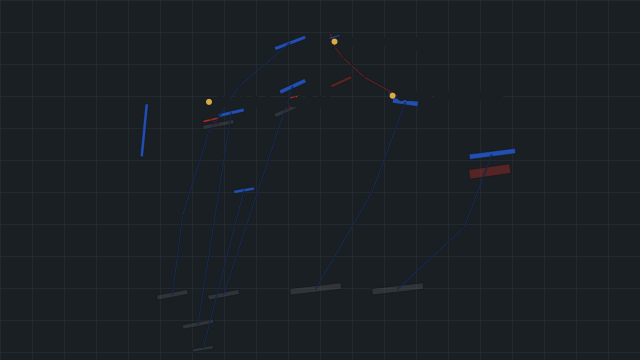
Drawing of the units and movements at Highway of Death (Mutla Ridge)Stages 1–3 freeOpen the interactive map

The first 3 stages are free. No account needed to start.

On the night of 25-26 February 1991, after Baghdad Radio announced that Iraqi forces had been ordered out of Kuwait, columns of Iraqi soldiers -- many in civilian cars, buses and trucks commandeered in Kuwait City and loaded with looted goods -- drove west along the Jahra Road and north up Highway 80 over the Mutla Ridge toward Basra. Detected by sensors and JSTARS, the columns were struck through the night and the next day by U.S. Air Force, Navy and Marine aircraft, which blocked the road at the Mutla pass and trapped well over a thousand vehicles in a jam about two miles long; many occupants fled on foot. That afternoon and evening the Army's 'Tiger' Brigade, attached to the 2d Marine Division, seized Mutla Ridge and, after dark, the police post and closed the road, while the 6th and 8th Marines cut it near Al Jahra. A second column on the coastal road toward Subiya and Umm Qasr was destroyed in clusters. Iraqi deaths are disputed, from the Washington Post's 200-300 at the main site to a 2003 study's minimum of 800-1,000 on both roads. The images of the 'Highway of Death' weighed on the decision to end the ground war, and a ceasefire took effect at 0800 on 28 February.

Battlefield Explorer opens stages 4–7 and every other battle. See the free battles.

The Basra-Kuwait Highway clogged with abandoned vehicles
The Basra-Kuwait Highway clogged with abandoned vehicles — PHC Holmes, U.S. Navy (DoD) · public domain

The battle, stage by stage

  1. 25 February 1991, evening and night

    The order to withdraw

    On the second day of the coalition ground offensive, Baghdad Radio announces that Iraqi forces have been ordered to withdraw from Kuwait to the positions they held before 1 August 1990; Washington dismisses it, saying the war goes on. In Kuwait City, Iraqi soldiers form columns for the road north to Basra. Many of the vehicles that will crowd the main highway are commandeered civilian ones -- passenger cars, tractor-trailers, water and fuel tankers, ambulances -- many of them, the Washington Post reported, loaded with loot from the city. To the south, the 2d Marine Division and its attached Army 1st ('Tiger') Brigade, 2d Armored Division, have halted for the night after breaking through the Iraqi defenses; the Tiger Brigade (Col. John B. Sylvester) holds the division's exposed left flank. Start positions on this map are approximate.

  2. 26 February, about 0130-0400

    Sealing the Mutla pass

    At about 0136, sensors pick up very large vehicle movements around Kuwait City; reports from the prototype E-8 JSTARS radar aircraft, then the Kuwaiti resistance, confirm a major retreat. Lieutenant General Walter Boomer orders as many night-attack aircraft as possible launched to 'slam the door shut' on the escape route. Rain and poor visibility limit the first attacks to all-weather A-6E Intruders and FLIR-equipped F/A-18 Hornets of Marine Aircraft Group 11 from Bahrain; the Marine Corps history credits the first Intruder attacks, with CBU-78 Gator mines, with bottling up the main route. Newsweek (1992) credits a dozen Air Force F-15Es with bombing the front of the convoy near the Mutla Pass in the early hours, then its rear, trapping more than 1,000 vehicles, and reported that whether the aircraft or the Army's tanks sealed the road remained a matter of dispute. Hundreds of Iraqis jump from their vehicles and run off into the night (Washington Post).

  3. 26 February, dawn to noon

    The trap

    Strikes continue into the day. Navy A-6Es of VA-155 from USS Ranger, Marine A-6Es and Hornets (more Hornets joining after sunrise), AV-8B Harriers of Marine Aircraft Group 13 (Forward) staging from Jubail and Tanajib, and Air Force F-16s attack the stalled traffic with bombs and cluster munitions; Marine Aircraft Group 11 alone flies 298 combat sorties that day. The Gator mines force many vehicles off the highway into the desert, and the jam below the Mutla police post grows to nearly two miles. Many of the occupants have already fled on foot; the Washington Post later reported that some hid in a nearby cemetery and empty houses, and that more Iraqis fled their vehicles and were taken prisoner than were killed by the bombing.

  4. 26 February, noon to night

    The Tiger Brigade takes the ridge

    At 1200 the 2d Marine Division attacks toward Al Jahra; the Tiger Brigade must cross about 20 km of desert and block the main road from Kuwait City at the Mutla Ridge bottleneck -- the 'cork in the bottle'. In a V, 3-67 Armor and 1-67 Armor lead, 3-41 Infantry follows and 1-3 Field Artillery moves in trace. 3-67 breaches a minefield guarding a strongpoint near Ali Al Salem airfield, 1-67 destroys some 20 dug-in tanks and armored carriers in a bunker complex, and 3-41 secures Objective Nebraska, reported at 1900. After dark, 3-67 moves along the ridge road: its Company B attacks north across Highway 80 at the choke point, destroying three tanks while the crews of 15 more surrender, and Company C, after an artillery preparation, clears the police post room by room, killing or capturing about 40 Iraqis. The battalion master gunner, Sergeant First Class Harold Witzke, is killed by a sniper while helping set up the command post at the police post. Another company drives south-east to a major cloverleaf; the 6th Marines secure the cloverleaf and close their section of the road, and the 8th Marines reach the road farther east, passing an agricultural area held by a brigade of the Iraqi 3d Armored Division. The brigade takes about 1,600 prisoners that day.

  5. Night of 26-27 February

    The coastal road

    A second stream of mostly military vehicles takes the two-lane coastal road from Jahra north-east past Kazma and Subiya toward Umm Qasr (the 'Bubiyan highway' in Newsweek). Newsweek reports that Navy jets were scrambled against this column too; Michael Kelly writes that the warplanes came in low, fast and hard on the night of 26 February. Driving the road about ten days after the ceasefire, Kelly found several hundred wrecks over a 50- or 60-mile stretch, most of the destruction in clusters of ten to fifteen vehicles; not one had crashed in panic, and the 37 dead he saw were all soldiers. The Washington Post counted more than 400 charred vehicles along a 50-mile stretch of this road. Road traces on this map are schematic.

  6. 27 February

    Holding the ridge

    The Tiger Brigade holds Mutla Ridge. Its troops make contact with Egyptian units before dawn, and from 0720 Arab coalition forces pass through the 2d Marine Division's lines toward Kuwait City, which is liberated the same day. The brigade clears wreckage and the dead, and at 1600 its medics set up an aid station near a mosque at Mutla; about 60 Iraqi civilians, among them doctors and nurses, found living in the mosque, help treat wounded prisoners and are given a holding area. In Washington, according to Newsweek (1992), General Colin Powell argued in the Oval Office that pressing on would be 'un-American and unchivalrous', and a White House official said the United States would be accused of 'engaging in a turkey shoot of people who were no longer fighting'. That evening in Washington (early on 28 February in Kuwait), President Bush announces that offensive operations will be suspended at 0800 on 28 February, Kuwait time, after 100 hours of ground war.

  7. March 1991

    The 'Highway of Death'

    The ceasefire holds from 0800 on 28 February. The jam became known as 'Death Valley' or 'Carnage Road'; the press named it the 'Highway of Death'. Counts differ. The Washington Post reported more than 1,500 tanks, armored vehicles, jeeps, tankers, ambulances, trucks and cars on the main road; most newspaper coverage gave about 1,400 there and up to 400 on the coastal road. A 2003 Project on Defense Alternatives study (Carl Conetta) says the great majority on the main road were civilian types and, citing a 1993 CIA review, that only 28 were armored vehicles. The Washington Post estimated 200 to 300 dead at the main scene; Conetta argues for a minimum of 500 to 600 there and 800 to 1,000 on both roads. Gordon Airs of Britain's Press Association (2 March) saw 40 bodies outside the Mutla police post and quoted a U.S. officer saying about 80 had already been taken out. Robert Fisk and Elizabeth Neuffer reported that officers of the Staffordshire Regiment found and buried women and children at the site. The images shaped how the war's end was remembered.

At a glance

When
1991
Where
Highway 80 at the Mutla Ridge pass, north-west of Al Jahra, Al Jahra Governorate, Kuwait.
Forces
No count of the Iraqis on the two roads exists: Carl Conetta's 2003 study works from an assumption of about 10,000 people, some 7,500 of them in the main column, in about 1,400 to 1,800 vehicles.
Casualties
How many Iraqis died on the two roads is disputed: the Washington Post estimated 200 to 300 at the main site, while Carl Conetta's 2003 study argues for at least 500 to 600 there and 800 to 1,000 on both roads; many occupants…
On the map
7 stages, 22 photos pinned where they were taken

Who fought

  • Iraqi forces leaving Kuwait City
  • U.S. and Coalition aircraft, the Tiger Brigade and the 2d Marine Division

Accuracy score

66/100 · moderate

Moderate confidence in where units stood and moved, scored on the quality of the source map, how well independent fixed points agree, the level of detail and corroboration. How scores work

Places on the map

  • Mutla police post (approximate, within grid square QT 5655)
  • Mutla pass, Highway 80 (grid square QT 5655, center)
  • 'Highway of Death' site (Wikipedia point)
  • Jahra interchange / the cloverleaf (approximate)
  • Al Jahra
  • Ali Al Salem airfield
  • Kuwait City
  • Kazma (Kadhma)
  • Coastal road at Kathmah
  • Subiya
  • Kuwait Bay

Forces

No count of the Iraqis on the two roads exists: Carl Conetta's 2003 study works from an assumption of about 10,000 people, some 7,500 of them in the main column, in about 1,400 to 1,800 vehicles. On the coalition side the Tiger Brigade brought 116 M1A1 tanks and 24 self-propelled guns, while Marine, Navy and Air Force aircraft struck the columns; Marine Aircraft Group 11 alone flew 298 combat sorties on 26 February.

Iraqi forces leaving Kuwait City

People in the columns (estimate)about 10,000

A working assumption in Conetta's 2003 study, not a count: about 7,500 in the main caravan on Highway 80 and about 2,000 on the coastal road. Carl Conetta, The Wages of War, Appendix 2 (Project on Defense Alternatives, 2003)

Vehicles, main roadabout 1,400 to more than 1,500

Most newspaper coverage gave about 1,400 and the Washington Post more than 1,500; Newsweek (1992) said more than 1,000 were trapped. Most were commandeered civilian types; a 1993 CIA review identified only 28 armored vehicles (cited by Conetta). Steve Coll and William Branigin, Washington Post (reprinted in the Roanoke Times, 17 March 1991); John Barry, 'The Day We Stopped the War', Newsweek, 1992; Carl Conetta, The Wages of War, Appendix 2 (Project on Defense Alternatives, 2003)

Vehicles, coastal roadup to about 400

Mostly military vehicles; the Washington Post counted more than 400 charred vehicles along 50 miles, Michael Kelly 'several hundred wrecks'. Steve Coll and William Branigin, Washington Post (reprinted in the Roanoke Times, 17 March 1991); Michael Kelly, 'Highway to Hell', The New Republic, 1 April 1991 (reprinted in MHQ)

U.S. and Coalition aircraft, the Tiger Brigade and the 2d Marine Division

Tiger Brigade tanks and guns116 M1A1 Abrams; 24 M109 155 mm howitzers

Quilter: the brigade's 116 M1A1s replaced about 170 British Challenger tanks in the Marines' plans and raised the 2d Marine Division's tank total to about 257. C. J. Quilter II, With the I Marine Expeditionary Force in Desert Shield and Desert Storm (USMC, 1993), GulfLink p. 39

Marine sorties (MAG-11), 26 February298 combat sorties

Marine Aircraft Group 11's A-6Es and F/A-18s on 26 February; Navy A-6Es of VA-155, Marine AV-8Bs of MAG-13 (Forward) and Air Force F-15Es and F-16s also attacked the columns. C. J. Quilter II, With the I Marine Expeditionary Force in Desert Shield and Desert Storm (USMC, 1993), GulfLink p. 101

Casualties

How many Iraqis died on the two roads is disputed: the Washington Post estimated 200 to 300 at the main site, while Carl Conetta's 2003 study argues for at least 500 to 600 there and 800 to 1,000 on both roads; many occupants fled on foot or were captured. One American soldier, SFC Harold Witzke, was killed at the police post. Vehicle counts (about 1,400 to 1,500 on the main road, more than 400 on the coastal road) are better established than the death toll. Certainty: poor.

Iraqi forces leaving Kuwait City

Killed, main road (Highway 80 at the Mutla pass)200–300 to at least 500–600 (200–600+)

The Washington Post estimated 200 to 300 dead at the main scene from its reporters' visits (a figure the Gulf War Air Power Survey later cited); Carl Conetta's 2003 study argues for a minimum of 500 to 600 there. Steve Coll and William Branigin, Washington Post (reprinted in the Roanoke Times, 17 March 1991); Carl Conetta, The Wages of War, Appendix 2 (Project on Defense Alternatives, 2003)

Killed, both roads (main road and coastal road)at least 800–1,000 (Conetta's minimum)

Conetta's minimum estimate for both incidents, including 300 to 400 or more on the coastal road; he rejects claims of 'tens of thousands' as inconsistent with what reporters saw. Carl Conetta, The Wages of War, Appendix 2 (Project on Defense Alternatives, 2003)

Dead seen by reporters37 on the coastal road (Kelly); 40 outside the Mutla police post (Airs)

Michael Kelly counted 37 dead on the coastal road about ten days after the ceasefire, all soldiers; Gordon Airs of the Press Association saw 40 bodies outside the police post on 2 March and quoted a U.S. officer saying about 80 had already been removed. Michael Kelly, 'Highway to Hell', The New Republic, 1 April 1991 (reprinted in MHQ); Carl Conetta, The Wages of War, Appendix 2 (Project on Defense Alternatives, 2003)

Capturedabout 1,600 taken by the Tiger Brigade on 26 February

The brigade's count for the whole day's fighting toward the ridge, including the crews of 15 tanks that surrendered at the choke point and about 40 Iraqis killed or captured at the police post; Conetta cites 450 to 500 reported prisoners from the convoys, and the Washington Post reported that more Iraqis fled their vehicles and were taken prisoner than were killed by the bombing. D. P. Mroczkowski, With the 2d Marine Division in Desert Shield and Desert Storm (USMC History and Museums Division, 1993), GulfLink p. 77; Tiger Brigade Chronology, Annex D (declassified), GulfLink p. 14; Carl Conetta, The Wages of War, Appendix 2 (Project on Defense Alternatives, 2003); Steve Coll and William Branigin, Washington Post (reprinted in the Roanoke Times, 17 March 1991)

U.S. and Coalition aircraft, the Tiger Brigade and the 2d Marine Division

Killed1 named in the sources

Sergeant First Class Harold Witzke, master gunner of 3-67 Armor, was killed by a sniper while helping set up the command post at the Mutla police post on the night of 26 February. The sources used here give no other coalition losses for this action. D. P. Mroczkowski, With the 2d Marine Division in Desert Shield and Desert Storm (USMC History and Museums Division, 1993), GulfLink p. 77; Tiger Brigade Chronology, Annex D (declassified), GulfLink p. 14

Civilians

Civilians among the deadunknown

Robert Fisk (The Independent) and Elizabeth Neuffer (Boston Globe) both quoted officers of the 1st Battalion, Staffordshire Regiment, saying they found and buried women and children at the site; no numbers are given. Most vehicles on the main road were civilian cars, buses and trucks commandeered by the retreating Iraqi troops, so vehicle types say little about who was inside.On 27 February the Tiger Brigade found about 60 Iraqi civilians, among them doctors and nurses, living in the mosque at Mutla; they helped treat wounded prisoners. Carl Conetta, The Wages of War, Appendix 2 (Project on Defense Alternatives, 2003); Tiger Brigade Chronology, Annex D (declassified), GulfLink p. 45

Equipment and ships

Vehicles destroyed or abandoned, main roadabout 1,400 to more than 1,500 (1,400–1,500+)

The Washington Post reported more than 1,500 tanks, armored vehicles, jeeps, tankers, ambulances, trucks and cars; most newspaper coverage gave about 1,400. Conetta puts the total on both roads at about 1,800. Steve Coll and William Branigin, Washington Post (reprinted in the Roanoke Times, 17 March 1991); Carl Conetta, The Wages of War, Appendix 2 (Project on Defense Alternatives, 2003)

Armored vehicles among them, main road28

A 1993 CIA review of photographs, cited by Conetta, identified only 28 armored vehicles; the great majority were civilian types. Carl Conetta, The Wages of War, Appendix 2 (Project on Defense Alternatives, 2003)

Vehicles destroyed, coastal roadmore than 400

The Washington Post counted more than 400 charred vehicles along a 50-mile stretch, mostly military; Michael Kelly saw 'several hundred wrecks' over 50 or 60 miles. Steve Coll and William Branigin, Washington Post (reprinted in the Roanoke Times, 17 March 1991); Michael Kelly, 'Highway to Hell', The New Republic, 1 April 1991 (reprinted in MHQ)

Iraqi armor destroyed by the Tiger Brigade, 26 Februarysome 20 tanks and carriers, plus 3 tanks

1-67 Armor destroyed some 20 dug-in tanks and armored carriers in a bunker complex; Company B, 3-67 Armor, destroyed three tanks at the choke point while the crews of 15 more surrendered. D. P. Mroczkowski, With the 2d Marine Division in Desert Shield and Desert Storm (USMC History and Museums Division, 1993), GulfLink p. 76; D. P. Mroczkowski, With the 2d Marine Division in Desert Shield and Desert Storm (USMC History and Museums Division, 1993), GulfLink p. 77

Then and now: how the ground has changed

The Mutla escarpment and the line of Highway 80 over the pass are still there, but the road, still lined with wrecks in April 1991, was a six-lane lit highway by 2003, and the desert around the ridge is being built over by the Al-Mutlaa City housing project. Across Kuwait Bay, a causeway opened in 2019 now reaches Subiya, at the far end of the coastal road.

Weapons

Iraqi forces leaving Kuwait City

T-55 tank

T-55 tank

Main battle tank (Soviet design) · 1958–present

At Highway of Death (Mutla Ridge): Older Iraqi tanks were among the wrecks; a destroyed T-55 was photographed on the Basra highway in April 1991, though the 1993 CIA review cited by Conetta found only 28 armored vehicles on the main road.

A Soviet tank of the 1950s that formed much of the Iraqi armored force in both 1991 and 2003, including locally upgraded 'Enigma' versions with extra armor. Outranged and outclassed, T-55s were knocked out by Coalition tanks, missiles and aircraft, usually before they could close.

Gun
100 mm D-10T
Crew
4
Weight
about 36 t
Photo: Tech. Sgt. Joe Coleman, USAF · public domain

U.S. and Coalition aircraft, the Tiger Brigade and the 2d Marine Division

M1A1 Abrams

M1A1 Abrams

Main battle tank · 1985–present

At Highway of Death (Mutla Ridge): The Tiger Brigade brought 116 M1A1 Abrams to the 2d Marine Division (Quilter); its tank battalions, 1-67 and 3-67 Armor, took the bunker complex, the choke point on Highway 80 and the police post.

The U.S. Army and Marine Corps main battle tank. In 1991 its thermal sights and 120 mm gun let crews kill Iraqi tanks at ranges the enemy could not answer, often through rain, smoke and sandstorms; in 2003 its armor proved almost impervious to the RPGs and older Iraqi guns it met, which made armored raids like the Thunder Runs possible.

Gun
120 mm smoothbore
Crew
4
Weight
about 57–63 t
Photo: U.S. Air Force photo · public domain
M2/M3 Bradley

M2/M3 Bradley

Infantry / cavalry fighting vehicle · 1981–present

At Highway of Death (Mutla Ridge): Bradleys carried the brigade's mechanized infantry, 3-41 Infantry, which secured Objective Nebraska.

The Army's tracked fighting vehicle, carrying infantry (M2) or cavalry scouts (M3). In 1991 its 25 mm gun shredded Iraqi personnel carriers and its TOW missiles killed tanks; in Iraq after 2003 it fought alongside the Abrams in Baghdad, Baqubah and Sadr City.

Armament
25 mm Bushmaster chain gun, TOW missile launcher
Crew
3 + 6 infantry (M3: 2 scouts)
Weight
about 25–30 t
Photo: Matt Zalewski · CC BY-SA 4.0
F-15E Strike Eagle

F-15E Strike Eagle

Strike fighter · 1988–present

At Highway of Death (Mutla Ridge): Newsweek (1992) credited a dozen Air Force F-15Es with bombing the front and then the rear of the convoy near the Mutla Pass in the early hours of 26 February; the Marine history credits Marine A-6Es with Gator mines.

The Air Force's two-seat strike fighter, a mainstay of the air campaign against ISIS in Iraq and Syria, carrying laser- and GPS-guided bombs for close air support.

Crew
2 (pilot and weapons systems officer)
Weapons
precision-guided bombs, 20 mm cannon
Speed
Mach 2.5
Photo: U.S. Air Force photo · public domain

Paintings and photographs

The Basra-Kuwait Highway clogged with abandoned vehicles
The Basra-Kuwait Highway clogged with abandoned vehicles A view of the Basra-Kuwait Highway (Highway 80) clogged with abandoned vehicles after the Iraqi retreat from Kuwait City; an MT-LB armored carrier is at left foreground. Dated 26 February 1991 in the DoD record. Exact spot not recorded; pinned on Highway 80 below the Mutla pass, approximate. PHC Holmes, U.S. Navy (DoD) · public domain · source
Abandoned Iraqi T-55 tanks
Abandoned Iraqi T-55 tanks A Polish-built T-55 and a Soviet-built T-55 of the 26th Armored Brigade, 5th Mechanized Division, lie abandoned on the Basra-Kuwait Highway (Highway 80) after the Iraqi retreat from Kuwait City. Dated 26 February 1991 in the DoD record. Exact spot not recorded; pinned on Highway 80 below the Mutla pass, approximate. PHC Holmes, U.S. Navy (DoD) · public domain · source
Abandoned tank, cars and trucks
Abandoned tank, cars and trucks Abandoned cars and trucks clog the Basra-Kuwait Highway (Highway 80) out of Kuwait City after the Iraqi retreat; in the foreground is a heavy antiaircraft machine gun on a tank turret. Dated 26 February 1991 in the DoD record. Exact spot not recorded; pinned on Highway 80 below the Mutla pass, approximate. PHC Holmes, U.S. Navy (DoD) · public domain · source
Abandoned MT-LB
Abandoned MT-LB An abandoned Iraqi MT-LB tracked armored carrier near the Basra-Kuwait Highway (Highway 80) after the Iraqi retreat from Kuwait City. Dated 26 February 1991 in the DoD record. Exact spot not recorded; pinned on Highway 80 below the Mutla pass, approximate. PHC Holmes, U.S. Navy (DoD) · public domain · source
Abandoned vehicles on the road out of Kuwait City
Abandoned vehicles on the road out of Kuwait City Abandoned cars and trucks clog the road leading out of Kuwait City after the Iraqi retreat, 28 February 1991. In the foreground is a Type 54 heavy machine gun on a Type 69 tank damaged in one of the final coalition attacks. Exact spot not recorded; pinned on Highway 80 below the Mutla police post, approximate. PHC Holmes, U.S. Navy (DoD) · public domain · source
Iraqi military vehicles and looted containers
Iraqi military vehicles and looted containers Military vehicles clog the road leading out of Kuwait City after the Iraqi retreat, 28 February 1991; in the foreground are looted containers and abandoned arms, and at right a burned Iraqi Type 69 tank. Exact spot not recorded; pinned on Highway 80 below the Mutla pass, approximate. PHC Holmes, U.S. Navy (DoD) · public domain · source
Cars and trucks clog the road
Cars and trucks clog the road Abandoned cars and trucks clog the road leading out of Kuwait City after the Iraqi retreat, 28 February 1991. Exact spot not recorded; pinned on Highway 80 below the Mutla pass, approximate. PHC Holmes, U.S. Navy (DoD) · public domain · source
Burned-out 2S1 self-propelled howitzer
Burned-out 2S1 self-propelled howitzer The charred remains of an Iraqi 2S1 Gvozdika 122 mm self-propelled howitzer beside the road leading out of Kuwait City, 28 February 1991. Exact spot not recorded; pinned on Highway 80 below the Mutla pass, approximate. PHC Holmes, U.S. Navy (DoD) · public domain · source
Damaged transporter with a missile launcher
Damaged transporter with a missile launcher An Iraqi Faun heavy tractor and semi-trailer carrying a 2P25 missile launcher vehicle shows battle damage after the Iraqi retreat along the Basra-Kuwait Highway (Highway 80) out of Kuwait City, 28 February 1991. Exact spot not recorded; pinned on Highway 80 below the Mutla pass, approximate. PHC Holmes, U.S. Navy (DoD) · public domain · source
Wrecks on the Kuwait City highway
Wrecks on the Kuwait City highway Civilian and Iraqi military vehicles litter a section of the Kuwait City highway attacked by allied aircraft, 28 February 1991. Exact spot not recorded; pinned on Highway 80 below the Mutla pass, approximate. Capt. R. J. Worsley, U.S. Marine Corps (DoD) · public domain · source
M1A1 tanks clearing an Iraqi tank from the road
M1A1 tanks clearing an Iraqi tank from the road Two M1A1 Abrams tanks move an Iraqi tank (a T-54/55, Type 59 or Type 69) off the road, 28 February 1991. The DoD caption names no place; the Commons file is filed under the Highway of Death. Pinned on Highway 80 at the Mutla pass, approximate. Capt. R. J. Worsley, U.S. Marine Corps (DoD) · public domain · source
Abandoned MT-LB and T-62
Abandoned MT-LB and T-62 An MT-LB tracked armored carrier (foreground) and a T-62 tank sit among other vehicles abandoned by Iraqi troops on a road. The DoD caption names no place or exact date; the Commons file title places it on the Highway of Death. Pinned on Highway 80, approximate. U.S. Marine Corps (DoD) · public domain · source
T-62 between a pickup and a tanker truck
T-62 between a pickup and a tanker truck An Iraqi T-62 tank sits between a Mitsubishi truck and a Mercedes-Benz tank truck, abandoned on a road; the same group of vehicles as the MT-LB and T-62 photo filed under the Highway of Death. The DoD caption names no place or exact date. Pinned on Highway 80, approximate. U.S. Marine Corps (DoD) · public domain · source
British armored carrier on the Basra-Kuwait Highway
British armored carrier on the Basra-Kuwait Highway A British armored personnel carrier, given in the DoD caption as of the "7th Brigade Royal Scots", flies the Union flag as it advances along the Basra-Kuwait Highway (Highway 80) near Kuwait City after the Iraqi retreat, 28 February 1991. Exact spot not recorded; pinned on Highway 80 below the Mutla pass, approximate. PHC Holmes, U.S. Navy (DoD) · public domain · source
British Challenger tank by the highway
British Challenger tank by the highway A British Challenger tank waits beside the Basra-Kuwait Highway (Highway 80) near Kuwait City after the Iraqi retreat, 28 February 1991; behind it are British armored carriers and a wrecked garbage truck. Exact spot not recorded; pinned on Highway 80 below the Mutla pass, approximate. PHC Holmes, U.S. Navy (DoD) · public domain · source
British soldiers search an Iraqi truck
British soldiers search an Iraqi truck British soldiers examine the contents of an Iraqi transport truck on the Basra-Kuwait Highway (Highway 80) near Kuwait City, 28 February 1991; behind the truck is an Iraqi ZPU-4 antiaircraft gun. Exact spot not recorded; pinned on Highway 80 below the Mutla pass, approximate. PHC Holmes, U.S. Navy (DoD) · public domain · source
Abandoned ZPU-4 and British armor
Abandoned ZPU-4 and British armor An abandoned, loaded Iraqi ZPU-4 antiaircraft gun on the Basra-Kuwait Highway (Highway 80) near Kuwait City, 28 February 1991, with British armored vehicles, including a Warrior, behind. Exact spot not recorded; pinned on Highway 80 below the Mutla pass, approximate. PHC Holmes, U.S. Navy (DoD) · public domain · source
T-55 and a burned-out civilian car
T-55 and a burned-out civilian car A disabled Iraqi T-55 tank beside a burned-out civilian car on the Basra-Kuwait Highway (Highway 80), the scene of one of the final coalition attacks on the retreat, 4 March 1991. Exact spot not recorded; pinned on Highway 80 below the Mutla pass, approximate. Spc. Bill Mohl, U.S. Army (DoD) · public domain · source
Demolished vehicles line Highway 80
Demolished vehicles line Highway 80 Demolished vehicles line Highway 80, the "Highway of Death", 18 April 1991; the tank in the center is a Type 59 or Type 69. Exact spot not recorded; pinned at the Highway of Death site on Highway 80, approximate. Tech. Sgt. Joe Coleman, U.S. Air Force (DoD) · public domain · source
Destroyed T-55 with graffiti
Destroyed T-55 with graffiti A destroyed Iraqi T-55, painted with graffiti by coalition troops, among other wrecks along the highway between Kuwait City and Basra (Highway 80), 18 April 1991; an IFA truck is behind (VIRIN DF-ST-92-08469). Exact spot not recorded; pinned on Highway 80 at the Mutla pass, approximate. Tech. Sgt. Joe Coleman, U.S. Air Force (DoD) · public domain · source
Destroyed T-55 and IFA supply truck
Destroyed T-55 and IFA supply truck A destroyed Iraqi T-55 and IFA supply truck, painted with graffiti by coalition troops, along the highway between Kuwait City and Basra (Highway 80), 18 April 1991 (VIRIN DF-ST-92-08468). Exact spot not recorded; pinned on Highway 80 at the Mutla pass, approximate. Tech. Sgt. Joe Coleman, U.S. Air Force (DoD) · public domain · source
View from Mutla Ridge today
View from Mutla Ridge today View from Mutla Ridge, Kuwait, 30 December 2007. Place on the ridge not recorded; pinned at the Mutla pass, approximate. Mishari Alarfaj · CC BY-SA 1.0 · source

Free for everyone every year on its anniversary: February 26.

Accuracy score: 66/100 (moderate)

  • Sources30/40

    The USMC history of the 2d Marine Division (Mroczkowski), the I MEF history (Quilter), the Army's Whirlwind War and the declassified Tiger Brigade chronology, with contemporary reporting (Washington Post, Michael Kelly, Newsweek) and Conetta's 2003 study for the counts.

  • Fixed points17/30

    The Mutla pass and police post fall in grid square QT 5655 from the brigade chronology (about ±600 m with datum uncertainty); Al Jahra, Kazma and Ali Al Salem are fixed; the cloverleaf, start lines and Marine positions are estimated.

  • Movement detail12/20

    Units and sequence are documented; routes and start lines are approximate.

  • Corroboration7/10

    The Marine history, the chronology and the Whirlwind War agree on the ground action; who sealed the road from the air remains disputed.

How the accuracy score works

Sources and method

Highway of Death (Mutla Ridge), 25-27 February 1991. No U.S. Army staff ride handbook covers this action (searched). Ground action, objectives and units: Dennis P. Mroczkowski, U.S. Marines in the Persian Gulf, 1990-1991: With the 2d Marine Division in Desert Shield and Desert Storm (USMC History and Museums Division, 1993), pp. 63-70 (also on GulfLink, p. 76, p. 77); U.S. Army Center of Military History, The Whirlwind War, ch. 8, 'One Hundred Hours' (archived copy); Tiger Brigade Chronology, Annex D (1st Cavalry Division records, declassified, GulfLink p. 14, p. 45) -- the police post grid QT 5655, Objective Nebraska, the aid station and the mosque. Air attacks: Charles J. Quilter II, With the I Marine Expeditionary Force in Desert Shield and Desert Storm (USMC, 1993; GulfLink p. 101); Naval History and Heritage Command, The U.S. Navy in Desert Shield/Desert Storm, chronology, February 1991. Reporting: Steve Coll and William Branigin, Washington Post (reprinted 17 March 1991); Michael Kelly, 'Highway to Hell', The New Republic, 1 April 1991 (reprinted in MHQ); Knut Royce and Timothy Phelps, Newsday (reprinted 1 April 1991); John Barry, 'The Day We Stopped the War', Newsweek, 1992; Baghdad Radio's withdrawal announcement (UPI, 25 February 1991). Casualty estimates and the reports of Fisk, Drogin, Neuffer and Airs: Carl Conetta, The Wages of War, Appendix 2 (Project on Defense Alternatives, 2003). Site coordinates: Wikipedia ('Highway of Death', Jahra, Subiya, Kazma) and TracesOfWar; the police post from the declassified grid (1-km precision). Unit start lines on 25 February, the Marine positions near Al Jahra and both road traces are approximate. Not consulted directly: Scales, Certain Victory (only front matter online), the Gulf War Air Power Survey (download failed), and Atkinson, Crusade. Images from Wikimedia Commons (U.S. Department of Defense, public domain).
Where the positions come from

  • Primary source Tiger Brigade Chronology, Annex D (1st Cavalry Division records, declassified, GulfLink): Iraqi troops fleeing 'on the expressway north of the Al Mutla Police Post' at grid QT 5655; the police post lies within that 1-km square (map datum unknown, about ±600 m)
  • Official history D. P. Mroczkowski, With the 2d Marine Division in Desert Shield and Desert Storm (USMC, 1993): the Tiger Brigade's 20-km advance to the Mutla Ridge bottleneck, Objective Nebraska, the police post and the cloverleaf
  • Modern map Highway 80 over the Mutla pass, Al Jahra, Kazma, Subiya and Ali Al Salem air base; the 'Highway of Death' site point and the Jahra interchange (approximate)
  • Note Unit start lines on 25 February, the Marine positions near Al Jahra, the cloverleaf and both road traces are approximate

Further reading