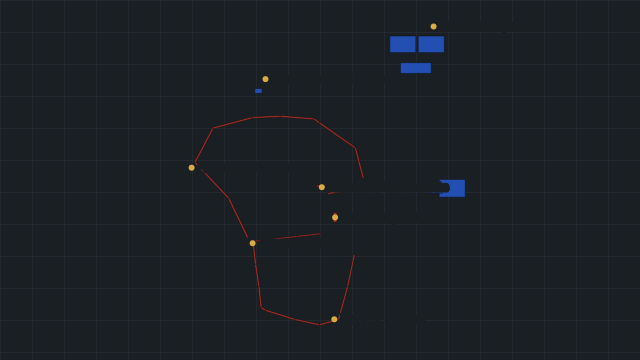
Siege of Jerusalem, AD 70. The main source is the eyewitness account of Flavius Josephus, who watched from the Roman camp:
The Jewish War, Book 5,
Book 6 and
Book 7 (Whiston translation) for the camps on Scopus and the Mount of Olives (
5.67-70), the three walls and their towers, the factions' sectors (Book 5, ch. 6 §1), the attack at the monument of John the High Priest (ch. 6 §2; ch. 11 §4), the dates (7 Artemisius for the Third Wall, 12-29 Artemisius for the four banks, 3-5 Panemus for the Antonia, 10 Lous for the Temple, 8 Gorpiaeus for the Upper City), the banks of each legion (the Struthion and Amygdalon pools, the High Priest's monument), the 39-stade circumvallation (ch. 12 §2), the factions' strengths, the towers and stretch of the west wall left for the Tenth Legion's garrison, and the casualty claims. Tacitus,
Histories 5.1 and 5.13, gives Titus's army and a reported 600,000 besieged. On Titus's intent toward the Temple, Sulpicius Severus,
Chronicle 2.30, and its link to Tacitus's lost account:
Society for Classical Studies. Julian dates follow Jona Lendering's chronology after Barbara Levick,
Vespasian (
Livius), which reads Josephus's Macedonian months as Julian months (7 May, 3-5 July, 17 July, 10 August and 8 September); others convert on the lunar calendar and get dates about three weeks later, and Nahman Avigad gives 28 August for the burning of the Temple. Strengths, Titus's responsibility and the judgment on Josephus's numbers: Guy MacLean Rogers,
'Jerusalem Burning, AD 70',
History Today. The line of the Third Wall, the Camp of the Assyrians and the legions' positions in the second camp: Edward Dąbrowa,
'The "Camp of the Assyrians" and the Third Wall of Jerusalem',
Scripta Judaica Cracoviensia 13 (2015); David Gurevich,
'New Archaeological Data from the Great Revolt in Jerusalem' (Bible and Interpretation, 2018), who notes that the identification has been challenged and calls the link of the 2016 foundation to the wall uncertain; Hershel Shanks,
'The Jerusalem Wall That Shouldn't Be There',
BAR 13:3 (1987); the Israel Antiquities Authority's 2016 Russian Compound excavation (Rina Avner and Kfir Arbib),
Bible History Daily and
Jewish Press. The course of the circumvallation's east leg:
'Under Siege: How Rome Conquered Jerusalem',
BAR (Spring 2026), map after Vörös. The Temple Mount platform: Leen Ritmeyer,
'The Temple Mount in the Herodian Period'. The Herodian street and fallen stones: Reich and Billig's excavations,
Jewish Virtual Library. The Burned House: Nahman Avigad,
'Jerusalem in Flames',
BAR 9:6 (1983). The Pool of Siloam:
HMdb marker. Background:
Encyclopaedia Britannica. Coordinates of the Tower of David, Robinson's Arch, the Struthion and Hezekiah's pools, the Umariya school (Antonia), the Tombs of the Kings, Herod's family tomb, the Damascus Gate and Mount Scopus are from Wikipedia; the Mount of Olives from GeoNames.
Uncertain: the Second Wall's line, the Third Wall's line (drawn on the Sukenik–Mayer line, which Dąbrowa says the vast majority of scholars have taken for it since the early 1990s; others put it under the present north wall), whether the Russian Compound foundation belonged to the wall, the monument of John the High Priest, the site of Titus's camp on Scopus, the Camp of the Assyrians and the legions in it, the course of the circumvallation between its named points, and the exact position of each legion are reconstructions. No U.S. Army staff ride handbook covers this siege.