Battlefield Atlas
Vietnam War · 2 April 1972

Battle of Dong Ha, 2 April 1972

Also known as Dong Ha bridge, Dong Ha 1972, Easter Offensive Dong Ha, Ripley at the bridge

Accuracy64 /100 · moderate
Stages7
On the map12 photos pinned
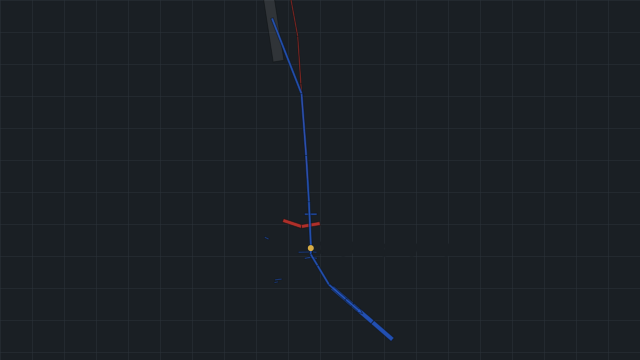
Drawing of the units and movements at Dong Ha BridgeStages 1–3 freeOpen the interactive map

The first 3 stages are free. No account needed to start.

On Easter Sunday, 2 April 1972, three days into North Vietnam's Easter Offensive, a single battalion of South Vietnamese Marines and a battalion of M48 tanks held the town of Dong Ha, where Route 1 crosses the Mieu Giang river below the Demilitarized Zone, against PAVN tanks and infantry coming down the highway from the north. With naval gunfire from destroyers offshore, the defenders stopped the column at the river, and Capt. John W. Ripley, USMC, adviser to the 3rd Vietnamese Marine Battalion, with Army Maj. James E. Smock, rigged some 500 pounds of explosive under the highway bridge under fire and dropped its span in the late afternoon, on Lt. Col. Gerald Turley's order; the railroad bridge upstream was also destroyed. The PAVN column turned west to cross at Cam Lo, and the South Vietnamese line on the river held until 28 April. Quang Tri Province fell in early May; the Vietnamese Marines later retook Quang Tri City at heavy cost. Ripley received the Navy Cross, upgraded to a posthumous Medal of Honor in June 2026.

Battlefield Explorer opens stages 4–7 and every other battle. See the free battles.

ARVN M48 tanks near the Dong Ha River
ARVN M48 tanks near the Dong Ha River — SP5 Michael Laley, U.S. Army (NARA) · public domain

The battle, stage by stage

  1. 30 March – 1 April 1972

    Across the DMZ

    At noon on 30 March, behind a heavy artillery preparation, North Vietnam opens the Easter Offensive in Quang Tri Province. The People's Army of Vietnam (PAVN) 304th and 308th Divisions, with separate infantry regiments and two armored regiments, strike the new and thinly spread 3rd ARVN Division along the Demilitarized Zone; by one account the 308th, with the 202nd Armored Regiment, comes straight down Route 1 while the 304th and the 203rd Armored Regiment push in from the west. In two days the northern outposts fall: Nui Ba Ho and Sarge on the night of 31 March, then on 1 April Alpha 2 (Gio Linh) and the Alpha 4, Fuller, Khe Gio and Holcomb positions, and Charlie 1 and Charlie 2 are abandoned by 5 PM. The 57th ARVN Regiment falls back from the DMZ toward Dong Ha, with the destroyers Buchanan and Joseph P. Strauss covering its withdrawal from Gio Linh. The division commander, Gen. Vu Van Giai, pulls his units back to the south bank of the Cua Viet and Mieu Giang rivers and moves his command post into the Quang Tri Citadel, while U.S. advisers under Lt. Col. Gerald Turley, USMC, stay at Ai Tu to run air, naval and B-52 support. Vietnamese Marine Brigade 258 leaves its 3rd Battalion, Maj. Le Ba Binh's 'Soi Bien' (Sea Wolves), at Dong Ha, where it spends the night of 1 April under artillery fire. Refugees and stragglers stream south over the Dong Ha bridge.

  2. 2 April 1972 (Easter Sunday), about 10:15 AM – 12:15 PM

    Tanks on Route 1

    At about 10:15 the 57th Regiment reports some 20 PT-76 and T-54 tanks on Route 1 near Alpha 2, coming south, and an aerial observer later reports them nose to tail back toward the DMZ. Around 11, M48A3 tanks of the 20th ARVN Tank Battalion under Lt. Col. Ton Ta Ly, advised by Army Maj. James E. Smock, join the Marines; General Giai makes Ly, senior to Major Binh, the area commander. In the official Marine history's account, two rifle companies come in from the west to hold either side of the main bridge, a third covers the railroad bridge along Route 9, two companies and the 3rd Troop hold the town south of the bridge, and the battalion headquarters and the 1st Troop take high ground southwest of the village with a view up Route 1 north of the river (company frontages here are drawn from that description, not from a map). Before noon, as the column comes within 1,000 meters of the bridge, the overcast lifts and South Vietnamese A-1 Skyraiders are credited with 11 tanks; naval gunfire destroys four PT-76s moving along the bank just east of Dong Ha. Around noon the 1st Troop knocks out six vehicles of a column coming down from Charlie 1 at more than 2,500 meters. A long barrage hits the town; rumors that tanks have crossed send civilians and ARVN soldiers fleeing south, and the 57th Regiment breaks ranks around noon until General Giai flies in and restores order.

  3. About 12:15 – 4:00 PM

    Under the bridge

    At about 12:15 Sgt. Huynh Van Luom of the 3rd Battalion walks forward alone with two LAW rockets against a tank at the north end of the bridge; the first misses, the second jams its turret and it backs off. Ripley and Smock ask to blow the bridge; the ARVN command wants it kept for a counterattack and the U.S. corps headquarters refuses without Saigon's approval, but at 12:45 Turley orders it destroyed. From 'the Triangle', the Route 9 / Route 1 junction about 100 meters short of the bridge, the two advisers go forward, shielded by an old Dye Marker bunker, and find some 500 pounds of TNT and plastic explosive that ARVN engineers have left at the bridge, placed so that it might only drop a span. Smock pushes the crates over a wire-topped fence; Ripley, swinging hand over hand along the steel girders, sets them diagonally across the beams to twist the span off its abutment. His Navy Cross citation describes five trips under constant fire; accounts of how long the work took range from about two hours to five. A T-54 on the far bank fires at the girders. PAVN infantry of the 36th Regiment already hold the north end of the railroad bridge upstream, with a foothold on its south side under continuous naval gunfire.

  4. About 4:30 PM (some accounts say 3:30)

    The bridge goes down

    Back at the Triangle, Ripley tries to fire the charges electrically from the battery of a jeep wrecked by shellfire; the attempt fails, but the time fuses he has crimped on as a backup burn through, and the near span drops, leaving a gap of about 100 feet by one account. The heavy timbers of the deck burn for days. Smock and ARVN engineers have gone to complete the demolition of the partially destroyed railroad bridge upstream, and Ripley reports both Dong Ha bridges destroyed at 4:30 PM in the Marine official history (other accounts put the fall at about 3:30); the South Vietnamese monograph credits ARVN engineers with the demolition, and Col. Donald Metcalf, the senior adviser, later called the credit for it confused. The 1st Armored Brigade's commander, arriving at the Triangle, wanted the bridge kept a while longer, but it had already gone. Ripley's Navy Cross was upgraded to the Medal of Honor, presented posthumously to his son Tom at the White House on 18 June 2026.

  5. Afternoon and night of 2 April

    Held at the river

    With the bridge gone, the PAVN medium tanks pull aside to let amphibious PT-76s come down to the water. Ripley spots four more PT-76s ready to cross and calls in naval gunfire, which destroys them on the bank; a B-52 strike later quiets armor east of Dong Ha. Accounts differ on the ships: the Marine history names Buchanan, Strauss, Waddell, Hamner and Anderson, while one researcher, citing Buchanan's crew, says Buchanan was the only destroyer firing that day. Blocked at Dong Ha, the PAVN shifts its pressure west toward the Cam Lo bridge — by one account the 308th Division's column turned west for it — which was left standing and became the PAVN's main crossing; naval guns and aircraft fire through the night, some missions 'danger close' within 300 meters of friendly troops. Elsewhere that afternoon the 56th ARVN Regiment surrenders Camp Carroll (white flags reported at 3:20 PM) and Mai Loc is abandoned.

  6. 3 – 27 April 1972

    The river line

    For days the PAVN shells Dong Ha and slips platoons across the river by small boat at night on either side of the broken bridges, but no major bridgehead is made. On 6 April a mortar barrage hits the 3rd Battalion's command post as reporters visit; Ripley's radio operator is killed, Smock and all seven correspondents are wounded. On 7 April the battered Marine battalion is withdrawn to Ai Tu — by the Marine history's count, of 700 Marines sent to Dong Ha only about 200 came back — and the town is left to the 1st ARVN Armored Brigade, the 4th and 5th Ranger Groups and the understrength 57th Regiment, which holds from Route 9 to the boat ramp on the Cua Viet. On 9 April a second major PAVN effort from the north and west, heaviest at Firebase Pedro and Ai Tu, is beaten off, and the line along the Cua Viet through Dong Ha stays intact. Meanwhile PAVN forces that crossed at Cam Lo work round toward Dong Ha from the west. Most civilians have fled; by early April nearly 20,000 refugees have gone south.

  7. 28 April 1972

    Dong Ha falls

    As the PAVN 304th Division strikes Ai Tu from the southwest on 27–28 April, the 1st Armored Brigade recalls the 20th Tank Battalion from Dong Ha and the Cua Viet; seeing the tanks leave, the 57th Regiment breaks from its positions and retreats in disorder toward Quang Tri City. By 28 April the Dong Ha line has collapsed and PAVN forces occupy the town. Ai Tu is given up on 30 April, and on 1 May General Giai orders a withdrawal to the My Chanh; by 2 May the whole province, Quang Tri City included, is lost. The stand on Easter Sunday did not stop the offensive, but it held Route 1 at the river for almost four weeks.

At a glance

When
2 April 1972
Where
The Route 1 bridge over the Mieu Giang (Hieu) River at Dong Ha, Quang Tri Province, Vietnam.
Forces
PAVN tanks and infantry (elements of the 308th Division) faced one Vietnamese Marine battalion and two M48 tank troops at the bridge on 2 April, reinforced later by an armored brigade and Ranger groups; only the 700 Marines and a…
Casualties
Personnel losses at Dong Ha are poorly documented: the best figure is the Marine history's count that only about 200 of 700 Marines returned from the town, and no PAVN casualty total was found.
On the map
7 stages, 12 photos pinned where they were taken

Who fought

  • People's Army of Vietnam: 308th Division elements (36th Regiment at the railroad bridge) with T-54 and PT-76 tanks (202nd Armored Regiment by one account)
  • South Vietnamese forces (3rd VNMC Battalion, 20th ARVN Tank Battalion, 57th ARVN Regiment) with U.S. advisers and naval gunfire

Accuracy score

64/100 · moderate

Moderate confidence in where units stood and moved, scored on the quality of the source map, how well independent fixed points agree, the level of detail and corroboration. How scores work

Places on the map

  • Dong Ha highway bridge (Route 1 over the Mieu Giang), blown 2 April 1972
  • Railroad bridge (railway crossing, upstream)
  • 'The Triangle' — Route 9 / Route 1 junction (approx.)
  • High ground southwest of the village (approx.)
  • Dong Ha Combat Base
  • Ai Tu (Quang Tri) Combat Base — 3rd ARVN Division forward CP
  • Cam Lo bridge (approx.)
  • Cam Lo Combat Base
  • Camp Carroll (surrendered 2 April)
  • Gio Linh / Alpha 2
  • Charlie 2
  • Quang Tri City and Citadel (approx.)
  • Cua Viet river mouth (approx.)

Forces

PAVN tanks and infantry (elements of the 308th Division) faced one Vietnamese Marine battalion and two M48 tank troops at the bridge on 2 April, reinforced later by an armored brigade and Ranger groups; only the 700 Marines and a rough tank count are documented.

People's Army of Vietnam: 308th Division elements (36th Regiment at the railroad bridge) with T-54 and PT-76 tanks (202nd Armored Regiment by one account)

Tanks on Route 1, 2 Aprilabout 20 seen at first (20 to about 200)

Twenty PT-76 and T-54 tanks were reported at about 10:15 AM; later accounts say 'about 200'. Neither is a verified order of battle. Melson and Arnold (USMC, 1991); Baker, Small Wars Journal (2019)

Divisions engaged in the offensive304th and 308th Divisions, with separate infantry regiments and two armored regiments

Named in the Marine history and Truong for the opening of the offensive in Quang Tri Province; headcounts not found. Truong (CMH, 1980)

South Vietnamese forces (3rd VNMC Battalion, 20th ARVN Tank Battalion, 57th ARVN Regiment) with U.S. advisers and naval gunfire

3rd VNMC Battalion sent to Dong Ha700

Marine history count of Marines sent to Dong Ha over the battle. Melson and Arnold, The War That Would Not End (USMC, 1991)

Tank troops at the bridge1st and 3rd Troops, 20th Tank Battalion (M48A3)

Troop strengths not found. Melson and Arnold, The War That Would Not End (USMC, 1991)

Casualties

Personnel losses at Dong Ha are poorly documented: the best figure is the Marine history's count that only about 200 of 700 Marines returned from the town, and no PAVN casualty total was found. Tank claims overlap and are uncertain. Certainty: poor.

People's Army of Vietnam: 308th Division elements (36th Regiment at the railroad bridge) with T-54 and PT-76 tanks (202nd Armored Regiment by one account)

Killed, wounded, capturedunknown

No reliable PAVN personnel loss figure for the Dong Ha fighting of 2-28 April was found; the sources used give tank and vehicle losses, not men. Melson and Arnold, The War That Would Not End (USMC, 1991); Truong, The Easter Offensive of 1972 (CMH, 1980)

South Vietnamese forces (3rd VNMC Battalion, 20th ARVN Tank Battalion, 57th ARVN Regiment) with U.S. advisers and naval gunfire

3rd VNMC Battalion, 2-7 Aprilabout 500 of 700 lost (by implication) (about 200 returned of 700 sent)

The Marine official history says only about 200 of the 700 Marines sent to Dong Ha came back to Ai Tu on 7 April; it does not split this into killed, wounded and missing, and the 700 may include attachments. Melson and Arnold, The War That Would Not End (USMC, 1991)

Mortar hit on the battalion command post, 6 April1 killed; 8 wounded

Ripley's radio operator was killed; Maj. Smock and all seven visiting correspondents were wounded (Marine history, as summarized in the battle caption). Melson and Arnold, The War That Would Not End (USMC, 1991)

57th ARVN Regiment and other unitsunknown

No loss figures for the regiment, the tank troops or the Ranger groups at the river were found; the regiment broke on 2 and 28 April. Truong (CMH, 1980)

Civilians

Refugees from Dong Ha and the DMZ areanearly 20,000 fled south by early April

The Marine history reports the flight; civilian deaths at Dong Ha are not given in the sources used. Melson and Arnold, The War That Would Not End (USMC, 1991)

Equipment and ships

PAVN tanks and vehicles, 2 April6 vehicles (1st Troop); 11 tanks (A-1s); 4 PT-76s (naval gunfire, before noon); 4 more PT-76s (naval gunfire, afternoon)

Different claims, not a sum: VNAF A-1s are credited with 11 tanks within 1,000 m of the bridge and naval gunfire with four PT-76s east of Dong Ha, both before noon; around noon 1st Troop, 20th Tanks, knocked out six vehicles at over 2,500 m; after the bridge fell Ripley spotted four more PT-76s ready to cross and naval gunfire destroyed them (the Navy credits Buchanan with setting four PT-76s on fire). Some may overlap. Melson and Arnold, The War That Would Not End (USMC, 1991); NHHC, DANFS: Buchanan III (DDG-14)

Size of the PAVN tank column20 seen at first; 'about 200' in later accounts

Sources differ widely on how many tanks came down Route 1. Baker, Small Wars Journal (2019)

Dong Ha highway and railroad bridgesboth destroyed, 2 April

The highway span dropped leaving a gap of about 100 ft; the Marine history gives 4:30 PM, other accounts about 3:30 PM. The railroad bridge, about 1.5 km upstream, was destroyed the same afternoon. Melson and Arnold, The War That Would Not End (USMC, 1991)

Then and now: how the ground has changed

The river, highway junction and bridge crossing remain in place today, but the 1972 town was largely emptied and wrecked and has since been rebuilt; no survey of the period landscape was found, so no map layer is offered.

  • The 1972 highway bridge was about 505 feet (154 m) long; the modern Route 1 crossing of the river in Dong Ha is at the same site, as marked by the bridge pin used for this map. Source: Melson and Arnold (USMC, 1991); budowle.pl, Ripley at the Bridge
  • The Route 9 and Route 1 junction at the south end of the bridge, called 'the Triangle' in 1972, lay about 100 meters from the span; the junction of the two highways is still the center of Dong Ha. Source: Melson and Arnold (USMC, 1991)
  • By early April 1972 nearly 20,000 refugees had fled south and most civilians left Dong Ha, so the wartime town was largely empty; its present streets and buildings are postwar. Source: Melson and Arnold (USMC, 1991)
  • The railroad bridge upstream was also dropped on 2 April; it is drawn where the railway crosses the river today, about 1.5 km upstream of the highway bridge. Source: Melson and Arnold (USMC, 1991)

Weapons

People's Army of Vietnam: 308th Division elements (36th Regiment at the railroad bridge) with T-54 and PT-76 tanks (202nd Armored Regiment by one account)

PT-76 amphibious light tank

PT-76 amphibious light tank

Light tank · 1951–present

At Dong Ha Bridge: PT-76 amphibious tanks led the column and came down to the water's edge after the bridge fell.

A Soviet amphibious reconnaissance tank, propelled in water by hydrojets. Its thin armor made it vulnerable to recoilless rifles and LAWs, but at Lang Vei in February 1968 it gave the North Vietnamese their first armored assault in South Vietnam.

Main gun
76.2 mm D-56T
Weight
about 14.6 t
Crew
3
Armor
up to about 14 mm (thin)
Photo: Mztourist · CC BY-SA 3.0
82 mm mortar (M1937 / Type 53)

82 mm mortar (M1937 / Type 53)

Infantry mortar · 1937–present

At Dong Ha Bridge: A mortar barrage hit the 3rd Battalion command post on 6 April.

The Soviet 82-BM-37 and its Chinese copy, the Type 53, were standard battalion mortars of communist forces in Vietnam. An 82 mm tube could also fire captured US 81 mm rounds, though not the other way around.

Caliber
82 mm
Max range
about 3,000 m
Weight
about 56 kg in action
Photo: George Chernilevsky · CC BY-SA 4.0

South Vietnamese forces (3rd VNMC Battalion, 20th ARVN Tank Battalion, 57th ARVN Regiment) with U.S. advisers and naval gunfire

M48 Patton

M48 Patton

Medium tank · 1953–present

At Dong Ha Bridge: M48A3 tanks of the 20th ARVN Tank Battalion held the town south of the bridge.

The M48 was the main US battle tank of the Vietnam War for both the Army and the Marine Corps. In Vietnam it was used far more often to support infantry against bunkers and buildings than to fight other tanks.

Crew
4
Armament
90 mm gun
Weight
about 45–47 metric tons
Photo: Chitrapa · Public domain
M72 LAW (Light Anti-Armor Weapon)

M72 LAW (Light Anti-Armor Weapon)

Disposable anti-tank rocket launcher · 1963–present

At Dong Ha Bridge: Huynh Van Luom went forward alone with two LAW rockets against a tank at the north end of the bridge.

A one-shot rocket in a telescoping fiberglass tube, carried by individual soldiers. At Lang Vei many LAWs failed to function, partly because the rocket needed some distance to arm, though several tanks were hit and burned.

Caliber
66 mm
Weight
about 2.5 kg
Effective range
about 200 m
Photo: SSgt Harold C. Breedlove, DASPO, public domain

Paintings and photographs

ARVN M48 tanks near the Dong Ha River
ARVN M48 tanks near the Dong Ha River ARVN M48 tanks positioned near the Dong Ha River overlooking Route 9 (QL-9), 10 April 1972. NARA 111-CCV-319-CC81751. Place not recorded beyond the river; pinned at the Dong Ha highway bridge, approximate. SP5 Michael Laley, U.S. Army (NARA) · public domain · source
ARVN M48 takes up a defensive position
ARVN M48 takes up a defensive position An ARVN M48 tank takes up a defensive position near the Dong Ha River, 10 April 1972. NARA 111-CCV-319-CC81747. Place not recorded beyond the river; pinned at the Dong Ha highway bridge, approximate. SP5 Michael Laley, U.S. Army (NARA) · public domain · source
Dug-in M48 overlooking Route 9
Dug-in M48 overlooking Route 9 An ARVN M48 tank in a dug-in position near the Dong Ha River overlooking Route 9 (QL-9), 10 April 1972. NARA 111-CCV-319-CC81757. Place not recorded beyond the river; pinned at the Dong Ha highway bridge, approximate. SP5 Michael Laley, U.S. Army (NARA) · public domain · source
ARVN troops on an M113 near the Dong Ha River
ARVN troops on an M113 near the Dong Ha River ARVN troops aboard an M113 move up toward the Dong Ha River, 10 April 1972. NARA 111-CCV-317-CC81753. Place not recorded beyond the river; pinned at the Dong Ha highway bridge, approximate. SP5 Michael F. Laley, U.S. Army (NARA) · public domain · source
ARVN M113 defensive position
ARVN M113 defensive position ARVN troops aboard an M113 man a defensive position near the Dong Ha River, overlooking Route 9 (QL-9), 10 April 1972. NARA 111-CCV-319-CC81755. Place not recorded beyond the river; pinned at the Dong Ha highway bridge, approximate. SP5 Michael Laley, U.S. Army (NARA) · public domain · source
ARVN soldier digs a foxhole
ARVN soldier digs a foxhole An ARVN soldier digs out a defensive position for himself near the Dong Ha River, 10 April 1972. NARA 111-CCV-319-CC81758. Place not recorded beyond the river; pinned at the Dong Ha highway bridge, approximate. SP5 Michael Laley, U.S. Army (NARA) · public domain · source
ARVN radio operator near the Dong Ha River
ARVN radio operator near the Dong Ha River An ARVN radio-telephone operator keeps in touch with his command from his defensive position near the Dong Ha River, 10 April 1972. NARA 111-CCV-319-CC81759. Place not recorded beyond the river; pinned at the Dong Ha highway bridge, approximate. SP5 Michael Laley, U.S. Army (NARA) · public domain · source
ARVN troops dig in near the Dong Ha River
ARVN troops dig in near the Dong Ha River ARVN troops dig into defensive positions near the Dong Ha River overlooking Route 9 (QL-9), 10 April 1972. NARA 111-CCV-319-CC81761. Place not recorded beyond the river; pinned at the Dong Ha highway bridge, approximate. SP5 Michael Laley, U.S. Army (NARA) · public domain · source
Captured T-59 south of Dong Ha
Captured T-59 south of Dong Ha A North Vietnamese T-59 tank captured by the South Vietnamese 20th Tank Regiment south of Dong Ha. Exact place and date not recorded; pinned at Dong Ha Combat Base, approximate. U.S. Army · public domain · source
Marine Maj. John W. Ripley
Marine Maj. John W. Ripley Portrait of John W. Ripley, U.S. Marine Corps officer and Navy Cross recipient, taken in 1971. Ripley was the Marine advisor who prepared and blew the Dong Ha bridge on 2 April 1972; pinned at the Triangle, near where he worked. Marine Corps photographer · public domain · source
Highway 1 bridge at Dong Ha, 1966
Highway 1 bridge at Dong Ha, 1966 The Highway 1 bridge over the Cam Lo (Cua Viet) River at Dong Ha, photographed 1 October 1966, six years before the span was blown in 1972. PFC Kenneth L. Fuller, U.S. Department of Defense (DPLA) · public domain · source
Army Map Service sheet, Dong Ha
Army Map Service sheet, Dong Ha Army Map Service map sheet of Dong Ha, Vietnam (NARA 74797731), compiled 1942-1972. Pinned at the center of the area it covers, approximate. Army Map Service (NARA) · public domain · source

Free for everyone every year on its anniversary: April 2.

Accuracy score: 64/100 (moderate)

  • Sources30/40

    The Marine Corps official history (Melson and Arnold), Truong's Indochina Monograph, Ripley's citation and the Marine and naval records give times and unit placements; no staff ride or Turley and Andrade narrative was read directly.

  • Fixed points14/30

    The highway bridge pin is confirmed on today's Route 1 bridge from satellite imagery and the railroad bridge is placed at the railway's crossing from imagery; the combat bases come from secondary coordinates.

  • Movement detail13/20

    The sequence of the tank column, the demolition and the Cam Lo crossing follows the Marine history; company frontages, the Triangle and the Route 1 traces are approximate.

  • Corroboration7/10

    The sources differ on when the bridge fell (about 3:30 or 4:30 PM), how long the rigging took, who deserves the credit, PAVN tank numbers (20 to about 200) and which ships fired.

How the accuracy score works

Sources and method

Battle of Dong Ha, 2 April 1972. No Army University Press or Center of Military History staff ride handbook for Dong Ha or the 1972 Easter Offensive was found. Unit placements, times and events follow, as the key source, the Marine Corps official history: Gerald Turley's The Easter Offensive (1985) and Dale Andrade's Trial by Fire (1995) are the standard narratives; they were followed here through the Marine history rather than read directly. Sources differ on the time the bridge fell (4:30 PM in the Marine history and Truong, about 3:30 PM in other accounts), how long the rigging took (two to five hours), who deserves the credit (Truong names ARVN engineers), the number of PAVN tanks (20 seen at first; 'about 200' in later accounts) and which ships fired. Company frontages, the railroad bridge's position (drawn where the railway crosses the river today, about 1.5 km upstream) and the Route 1 traces are approximate.

Where the positions come from

  • Official history Melson and Arnold, U.S. Marines in Vietnam: The War That Would Not End, 1971-1973 (USMC History and Museums Division): company, tank troop and Triangle positions
  • Modern map Dong Ha highway bridge pinned on today's Route 1 crossing of the Hieu (Mieu Giang) river, confirmed from satellite imagery; the 1972 span was about 154 m long, so the abutments are drawn about 80 m either side
  • Modern map Railroad bridge placed where the North-South railway crosses the river today, read from satellite imagery, about 1.5 km upstream; it assumes the 1972 crossing used the same alignment
  • Note Dong Ha, Ai Tu, Cam Lo and Charlie 2 combat bases and Camp Carroll from secondary coordinates; the Triangle, the hill southwest of the village and company frontages are approximate

Further reading