Waterloo, 18 June 1815
On 18 June 1815, Napoleon's Armée du Nord attacked the Duke of Wellington's Anglo-Allied army on the ridge of Mont-Saint-Jean, south of Brussels, hoping to destroy it before the Prussians could intervene. All day the French assaulted Hougoumont, La Haye Sainte and the Allied centre with infantry columns and massed cavalry, while Blücher's Prussians marched from Wavre and struck Napoleon's right flank at Plancenoit. In the evening the attack of the Imperial Guard was thrown back, and Wellington's general advance and the Prussian breakthrough turned the French retreat into a rout. Waterloo ended Napoleon's Hundred Days and his rule for good, and opened nearly forty years without a general war in Europe.
Open the interactive map9 stages on modern satellite imagery and terrain, with 3D elevation
This battle is free to explore — no account needed.
The battle, stage by stage
- 11:00 AM
Starting positions
Every unit at the start of the battle, from W.B. Craan's 1816 survey: Wellington's army on the ridge of Mont-Saint-Jean with garrisons in Hougoumont, La Haye Sainte and Papelotte; Napoleon's army drawn up across the valley around La Belle Alliance.
- 11:30 AM
Attack on Hougoumont
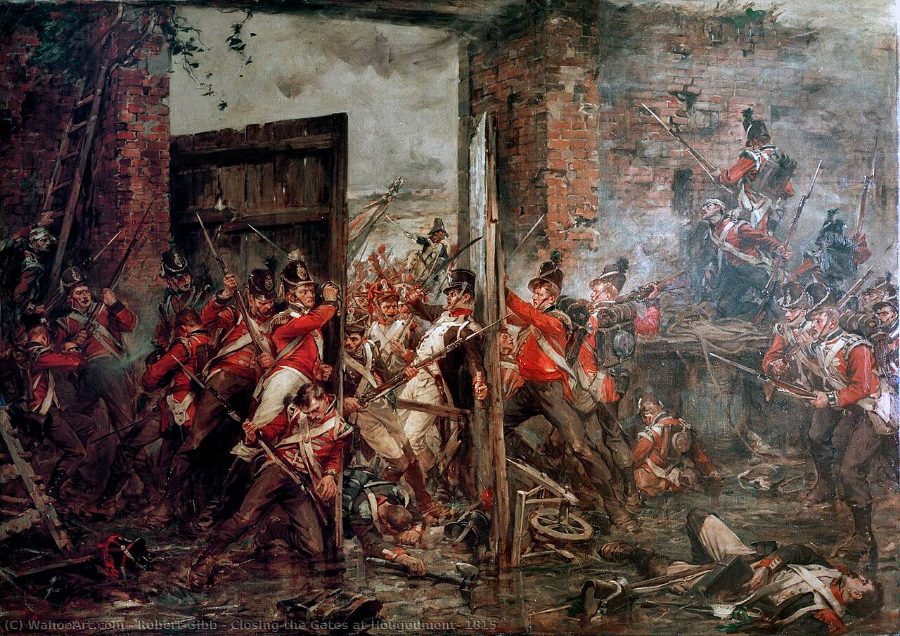
Reille's corps opens the battle. Prince Jérôme's division clears the wood south of Hougoumont and attacks the walled farm, held by the Guards' light companies, Nassauers and Hanoverians. The French break into the north courtyard; Macdonell and a handful of men force the gate shut. The fight here draws in French troops all day.
- 1:30 PM
D'Erlon's grand attack
After the Grand Battery's bombardment, d'Erlon's I Corps advances in huge columns against the Allied left-centre. Bylandt's brigade, exposed on the forward slope, gives way; Picton's Highlanders and Kempt's brigade meet the columns at the hedge line and Picton is killed. Quiot attacks La Haye Sainte and Durutte attacks Papelotte.
- 2:00 PM
The British heavy cavalry charge
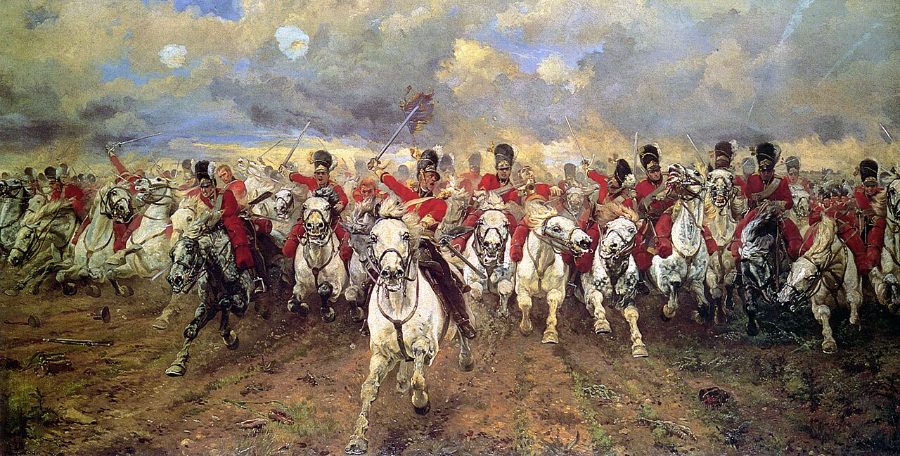
Uxbridge launches the Household and Union Brigades into d'Erlon's columns, still on the slope where layer 2 left them. Two eagles are taken and some 2,000 prisoners. The Scots Greys and the Union Brigade gallop on into the Grand Battery, where French cuirassiers and Jacquinot's lancers cut them down.
- 4:00 PM
Ney's cavalry charges
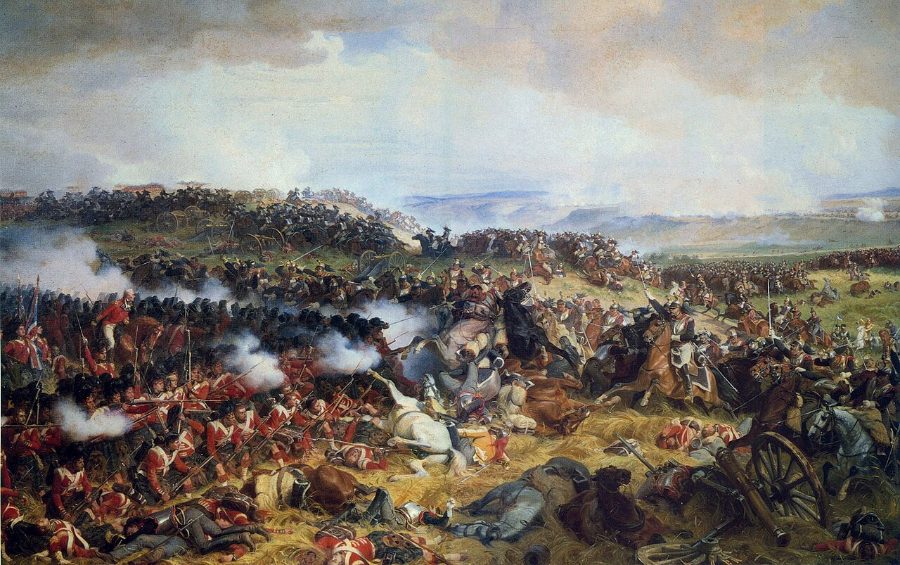
Ney mistakes Allied movements behind the ridge for a retreat and sends Milhaud's cuirassiers, then Kellermann's and the Guard cavalry, between Hougoumont and La Haye Sainte. The Allied battalions form squares; the horsemen swirl around them, rally in the hollow below, and charge again, without infantry support.
- 4:30 PM
The Prussians strike Plancenoit
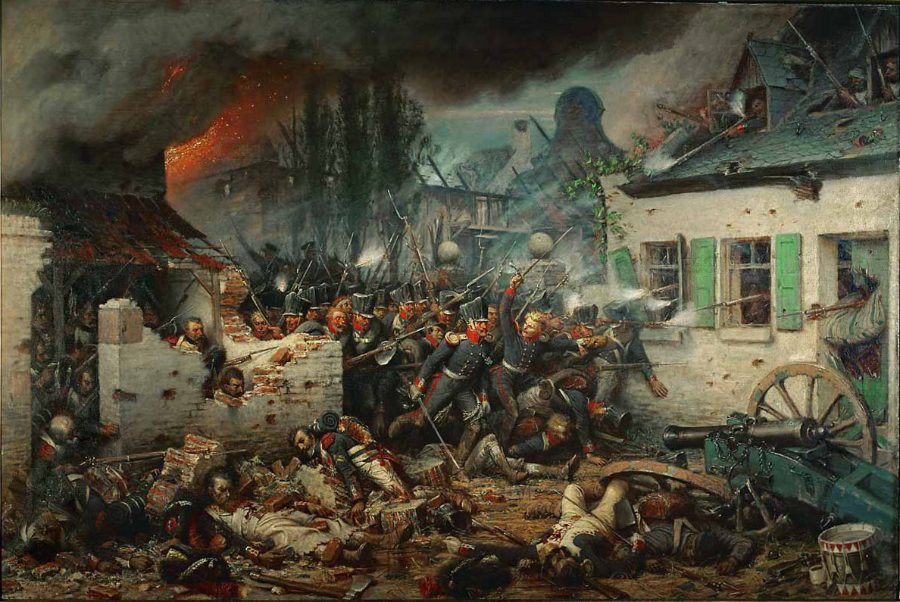
Bülow's IV Corps, marching since dawn from Wavre, emerges from the Bois de Paris behind Napoleon's right. Lobau's VI Corps holds them, then gives way; the Young Guard retakes Plancenoit, loses it, and two battalions of the Old Guard storm it back with the bayonet. The village changes hands three times.
- 6:00 PM
La Haye Sainte falls
Major Baring's 2nd Light Battalion KGL, about 400 riflemen, has held La Haye Sainte all day. Out of rifle ammunition, they are overrun when Ney throws Donzelot's and Quiot's infantry at the farm. French guns and skirmishers now fire into the Allied centre at close range. Ompteda's counter-attack is destroyed by cuirassiers.
- 7:30 PM
The Imperial Guard attacks
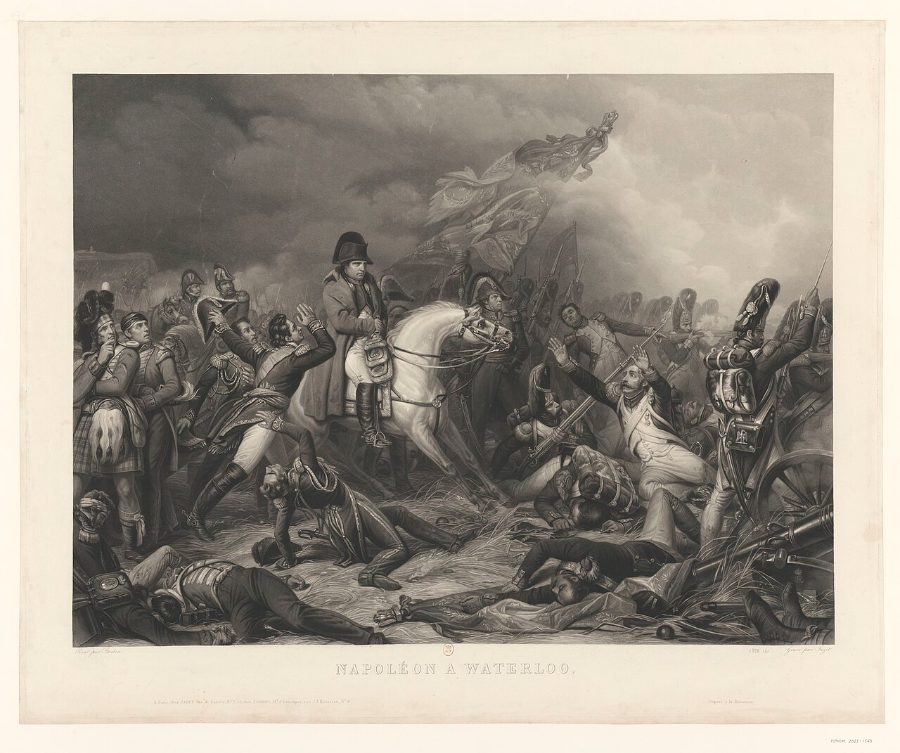
Napoleon commits the Middle Guard — 3rd and 4th Grenadiers and Chasseurs — against the Allied right-centre, led by Ney. Maitland's 1st Foot Guards rise from the crop and fire at point-blank range; Colborne's 52nd wheels onto the Guard's flank; Detmers' Dutch-Belgians charge. The Guard falls back — 'La Garde recule!'
- 8:15 PM
General advance and rout
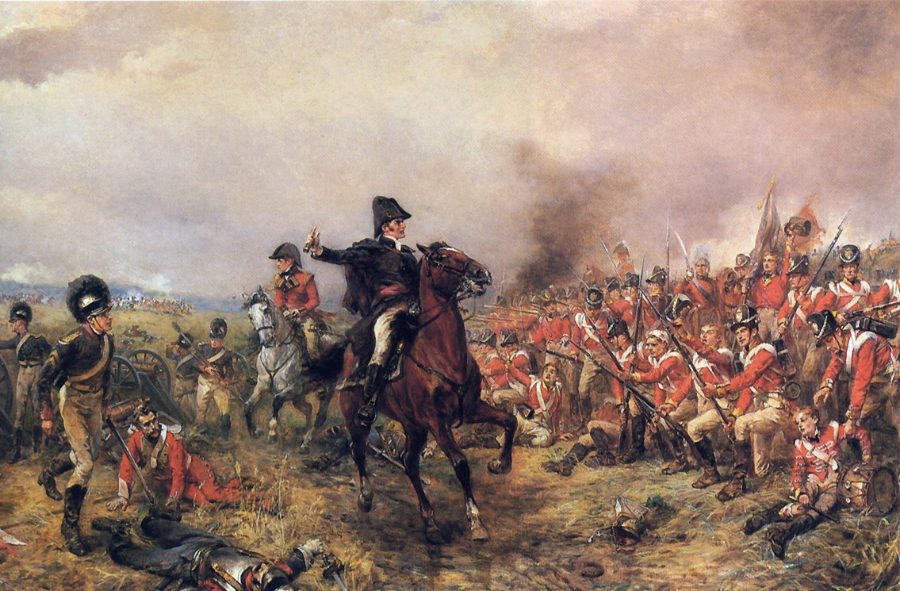
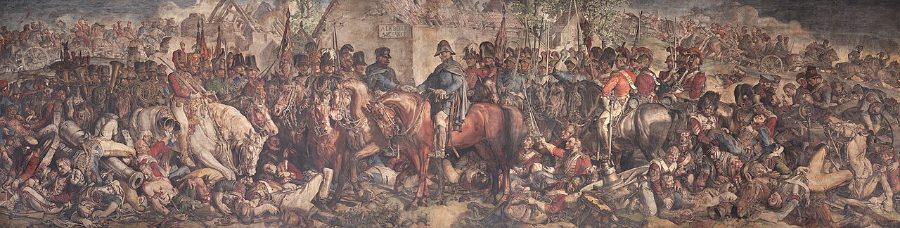
Wellington waves his hat and the whole line advances. Vivian's and Vandeleur's hussars ride down the last French formations; the Old Guard's squares near La Belle Alliance cover the retreat while Napoleon escapes. With the Prussians through Plancenoit, the French army dissolves toward Genappe. Wellington and Blücher meet near La Belle Alliance around 9 PM.
Paintings and photographs







Sources and method
How to use: pick one entry under "The battle". Tall blocks are the units in that attack at its climax, flat yellow outlines show where they started, arrows join them, low grey blocks are everyone else. Red = Allied, blue = French, green = Prussian.