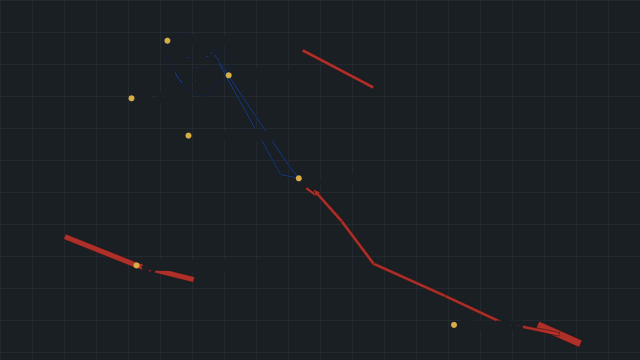
Siege of Vienna, 1529. No U.S. Army staff ride handbook covers this siege. The course of the siege, the garrison's sectors, the Ottoman camps, the mine and assault dates and the casualty statements follow Karl August Schimmer,
The Sieges of Vienna by the Turks (translated by the Earl of Ellesmere, London, John Murray; written from the contemporary relations), checked against Günther Probszt,
'Österreichische Bergleute im Kampf gegen die Türken',
Der Anschnitt 14 (1962), no. 5/6 (the mine war, the breaches of 9 October, the powder taken from the mines, the garrison of 'hardly more than 17,000'), and an anonymous 19th-century account,
'Wiens erste Belagerung durch die Türken im Jahre 1529' (Wienbibliothek digital; the camp ring, the Salztor sally port and the inner wall from the Stuben to the Kärntner gate). Strengths: Gábor Ágoston,
'Vienna, Sieges of',
Europe, 1450 to 1789: Encyclopedia of the Early Modern World (Ottomans 80,000–100,000; defenders 18,000–25,000) and
Encyclopaedia Britannica (more than 100,000; about 16,000 Ottoman dead in the siege; its dating of the last assault to late October is not followed). The Wienbibliothek account's 300,000 for the Ottoman host is inflated and not used. Probszt is the source for placing the breach of 11 October about 16 fathoms (some 30 meters) from the Kärntner tower. The boundary between Pfalzgraf Philipp's and Reischach's sectors ('the middle of the curtain toward the Kärnthner gate', Schimmer) is approximate, and Schimmer does not name the four squares that held the cavalry reserve. The wall line is traced along the modern streets that follow the medieval ring (after Kienmandl,
'Die Wiener Stadtmauer', 2023), anchored on the
'Hier stand der Kärntnerturm' plaque on Walfischgasse (HMdb), St. Stephen's Cathedral, the Stubentor, the Schottentor and the Hofburg; it is a reconstruction accurate to some tens of meters, not a survey. The contemporary picture of the siege is Niklas Meldeman's round view from the tower of St. Stephen's, printed in Nuremberg in 1530 (
Wien Geschichte Wiki;
Wien Museum, inv. 48.068), with Martin Scheutz and Ferdinand Opll's
study of it; it shows the burning suburbs, Simmering and Mödling in flames and the Ottoman camp, but mixes events without regard to time. City of Vienna,
History of the Turkish sieges; Wien Museum,
Camesina's 1850 lithograph of the siege relief on Salm's tomb. The standard modern studies (Walter Hummelberger,
Wiens erste Belagerung durch die Türken 1529, 1976; the Historical Museum's catalog
Wien 1529, 1979) were not consulted directly. Camp areas are schematic and the exact breach positions along the wall are approximate; Schimmer gives no explicit day for the great sortie (about 5 October by his sequence; 6 October in other accounts) and names no gate for it, and sources disagree on which assault cost the Janissaries most. The points for the Spinnerin am Kreuz, St. Ulrich and the Neugebäude, and the place of the pursuit near Oberlaa, are approximate. The flotilla is drawn in the old Danube arms of 1529, which are dry land today.