Plate armour
Full harness of steel plates · about 1400–1600 (transitional mail and plate earlier)
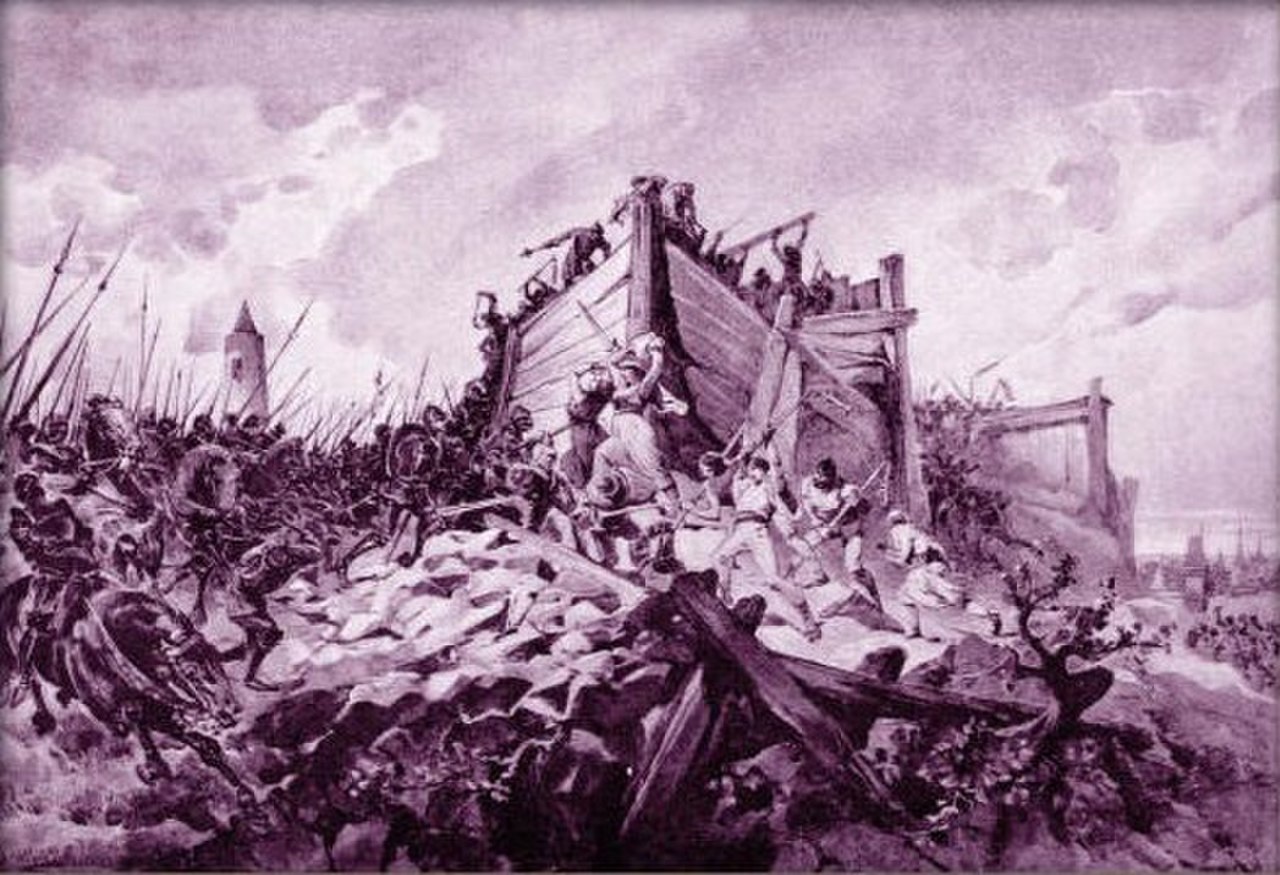
At Vítkov Hill: Meissen and Thuringian knights rode up the narrow ridge in armour; many were thrown down the steep slopes.
By 1415 a man-at-arms could be enclosed head to foot in steel. It kept most arrows out, but at Agincourt the French men-at-arms advanced across soaked, ploughed ground under arrow fire and arrived exhausted, packed so tightly that many could not lift their weapons. At Poitiers in 1356 armour was still transitional: mail, coats of plates and growing plate limb defences.
- Weight
- about 20–30 kg, spread over the body
- Protection
- proof against most arrows except at short range or weak points
- Weakness
- heat, exhaustion and mud
Photo: Gothic plate armour · Rama · CC BY-SA 2.0 fr